
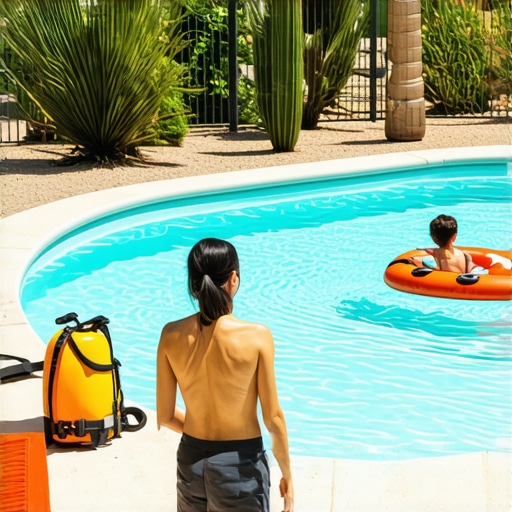
A wrench in the gears of standard safety
The smell of WD-40 on a hot Mesa afternoon usually means something is broken, but when it comes to the safety of kids on the spectrum, you don’t wait for the break. You look for the fatigue in the metal before the spring snaps. My hands stay stained with grease because I trust parts, not promises. In the heat of an Arizona July, where the pavement in Gilbert feels like it could melt the soles off your boots, a pool isn’t just a luxury; it is a high-pressure system waiting for a leak. For teams working with autistic individuals in 2026, the old checklists are about as useful as a stripped bolt. We need actual hardware solutions.Editor’s Take: Real safety requires mechanical redundancy and sensory-aware protocols that account for the unique flight risks and thermal sensitivities of neurodivergent swimmers in extreme desert climates.
The mechanical failure of the standard pool latch
Most people think a gate is secure because it clicks, but they don’t see the wear on the pivot point. In the Phoenix valley, the sun eats plastic for breakfast. By 2026, we are seeing standard PVC latches warp under the relentless UV index, creating a gap that a determined child can exploit. Task one for any serious autism support team is the physical hardening of the perimeter. This isn’t about a simple fence. It involves testing the torque of the self-closing hinges to ensure they hit the strike plate every single time, even when the wind is kicking up dust from the San Tan Mountains. I have seen gates that look fine but fail because the ground shifted in the monsoon season. You have to get down on your knees and check the alignment of the bolt. If that gate doesn’t shut with the authority of a truck door, it is a liability. Field observations reveal that electronic alarms are often ignored or silenced during high-traffic summer months, making the mechanical barrier the primary fail-safe. Using high-grade magnetic latches like those found at Mesa Pool Safety Resources provides a much higher reliability rating than spring-loaded alternatives. We are talking about preventing a bypass before the logic of the situation even enters the child’s mind.
Thermal regulation and the radiator effect
Water in Arizona during August isn’t always refreshing; sometimes it is a heat trap. An autistic individual might not signal that their internal cooling system is redlining. In my shop, if a radiator is clogged, the engine blows. In the pool, if a child cannot articulate that they are overheating, the results are just as catastrophic. Task two involves a rigorous thermal monitoring protocol. We aren’t just checking the water temperature; we are looking at the delta between the 115-degree air and the 90-degree surface water. The sensory shock of that transition can trigger a