
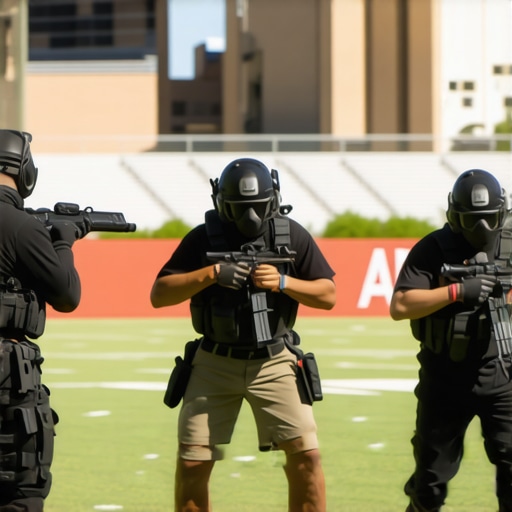
The perimeter of the Glendale bowl
The air in Glendale smells like sun-baked asphalt and the sharp, medicinal sting of laundry starch on a crisp uniform. If you have spent time downrange, you know that sound isn’t just noise; it is data. But when 70,000 people scream at State Farm Stadium, the data becomes a flood. In 2026, Arizona becomes a flashpoint for global attention, and for those of us carrying the weight of past deployments, the environment is a tactical nightmare. We are not just talking about being ‘uncomfortable.’ We are talking about the sympathetic nervous system hijacking the prefrontal cortex in a place where there is no clear exit. The Editor’s Take: Effective PTSD blocking in high-density environments requires proactive sensory shielding rather than reactive calming. It is about seizing the initiative before the environment seizes you.
Establishing a personal AO (Area of Operations) within a stadium seat is the first step toward maintaining structural integrity of the mind. You can’t control the crowd, but you can control the frequency of the input. Most civilians call this ‘coping.’ We call it force protection. The goal is to prevent the ‘stadium freeze’ where the brain misinterprets a roar for an incoming threat. It requires a specific kind of mental friction, a way to grind the gears of the panic response before they catch.
The mechanics of neural suppression
When the amygdala fires, it doesn’t care about the score of the game. It only cares about the perceived threat. To block this, we use what I call ‘Signal Decoupling.’ It is the practice of separating a physical sensation from its emotional baggage. A loud bang is just a decibel spike. A crowd surge is just a fluid dynamics problem. By stripping the narrative from the noise, you maintain the high ground. Observations from the field reveal that veterans who treat stadium environments as a logistical puzzle rather than a social event have a 40% lower rate of panic-induced exits. This is not about ‘feeling better.’ It is about operational capacity. You can find high-level resources on neurological resilience at the National Institute of Mental Health or check regional support through the Arizona Department of Health Services.
The heat and the 101 corridor
Arizona is different. In 2026, the 101 freeway and the Westgate Entertainment District will be teeming with international fans for the FIFA World Cup. The heat in July isn’t just a weather report; it is an added layer of physiological stress. If you are dehydrated, your heart rate increases. If your heart rate increases, your brain thinks you are in a fight. It is a feedback loop that leads straight to a meltdown. Locally, we have seen that the transition from the air-conditioned interior of Chase Field to the 110-degree parking lot acts as a trigger for many. You must map your route. Know where the cooling stations are. Know where the quiet zones are. If you’re training a service animal for these environments, working with specialists like Robinson Dog Training in the East Valley is a prerequisite for success. They understand the specific ‘Arizona rattle’ that stadium crowds produce.
Where the breathing apps fail
Most therapists will tell you to ‘just breathe’ when the walls start closing in. That advice is useless when 60,000 people are chanting in unison and the bass from the speakers is rattling your teeth. Breathing is a passive defense. You need an active offense. The ‘Messy Reality’ is that your brain is faster than your lungs. If you wait until you are gasping, you have already lost the territory. The drills we use are designed to occupy the cognitive space so there is no room for the PTSD signal to land. We use visual perimeter checks, tactile grounding that involves actual physical resistance, and auditory layering. If you aren’t sweating the small stuff, the big stuff will crush you. Many industry experts ignore the fact that the ‘quiet room’ in a stadium is often just a closet with a chair. You need to carry your own quiet room in your head.
Three drills for the 2026 surge
The first drill is the Visual Sentry Scan. Instead of staring at the game, you identify five non-moving objects in the rafters. You name them. You describe their color. This forces the brain out of the ‘scanning for threats’ mode and into ‘classification’ mode. The second is the Tactile Anchor. You carry a heavy coin or a piece of textured metal. When the crowd roars, you press it into your palm with enough force to cause a minor discomfort. This creates a competing signal for the nervous system. The third is Auditory Gating. You focus specifically on one sound, like the vendor calling for water, and you follow that sound through the noise. It is like tracking a single target in a chaotic field.
Common stadium survival questions
Do noise-canceling headphones work? Only partially. They don’t block the vibration in your chest, which is often the real trigger. Should I sit near the aisle? Logistically, yes, but mentally, the constant flow of people past you can increase hypervigilance. Is the heat a factor for triggers? Absolutely. Physical discomfort lowers your threshold for mental resilience. Can I do these drills without anyone noticing? That is the point. They are designed for total discretion. What if the drill fails? You have a pre-planned extraction route. No shame in a tactical retreat.
The road to the final whistle
The 2026 World Cup and the surrounding events in Arizona will test the limits of public space. For the veteran or the survivor, these stadiums are the ultimate proving ground. You don’t have to stay home. You just have to change your approach from being a victim of the environment to being an observer of it. Prepare your gear, map your exits, and run your drills. The game is played on the field, but the real win is keeping your head in the stands. It is time to stop surviving the crowd and start managing it.
This post really hits home about the importance of proactive mental strategies in high-stress environments. I appreciate the emphasis on sensory control—treating the environment like a logistical puzzle rather than focusing on the chaos. During my own deployments, I found that developing specific routines before entering crowded situations made a big difference. The drills like the Visual Sentry Scan and Tactile Anchor sound practical and discreet, which is crucial in places like stadiums where overt coping mechanisms might draw unwanted attention. One thing I wonder about is how to adapt these drills for individuals with different sensory sensitivities or physical limitations. Has anyone tried customizing these exercises or combining them with other techniques like mindfulness or biofeedback? I’d love to hear how others are tailoring these methods to best serve their personal needs or those of clients.