
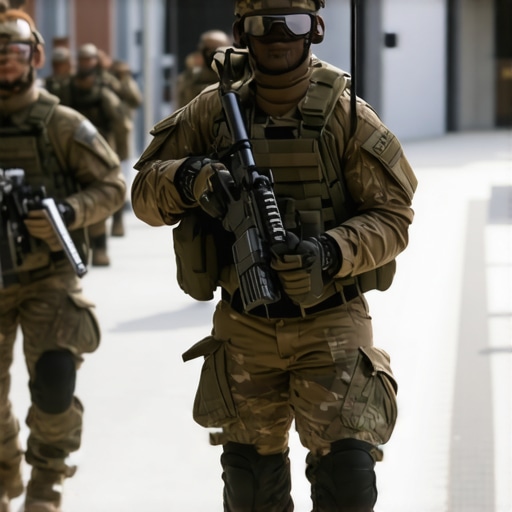
The Perimeter and the Bottom Line
The air in the briefing room always carries the sharp, metallic tang of gun oil and the scent of heavy laundry starch. It is a smell that signals readiness, an olfactory anchor for a mind that has seen too much of the world’s jagged edges. If you are reading this, you are likely looking for a way to secure your own internal perimeter. The BLUF (Bottom Line Up Front) is simple: 2026 requires a shift from passive recovery to active tactical management, focusing on biological feedback, environmental hardening, and community-based logistics. We are moving past the era of just talking about the past and into the era of technical suppression of the symptoms that keep you in a state of high-alert friction. It is about reclaiming the ground you lost when the world turned loud and unpredictable.
The Biology of the Ambush
Most people treat the nervous system like a soft piece of software, but any strategist knows it is actually hardwired circuitry. When your amygdala decides to launch a full-scale defensive operation because a car backfired near the Gilbert Heritage District, it is not a flaw in your character. It is a legacy system running a high-intensity script. To block the success-killers of the coming year, we must look at the relationship between cortisol spikes and decision-making lag. Observations from the field reveal that biometric monitoring is no longer optional for the high-performing veteran. You need to see the data before the surge happens. If you can track the heart rate variability in real-time, you can deploy tactical breathing before the internal alarm goes off. This is a flank attack on your own physiology. By the time the panic hits, you have already lost the tactical advantage. You prevent the ambush by scouting the terrain of your own pulse.
Holding the High Ground in the Valley of the Sun
The heat in Apache Junction does more than just melt the asphalt. It acts as a constant physiological stressor that can shorten a man’s fuse before he even finishes his first cup of coffee. In the Phoenix metro area, we deal with a specific brand of urban density that clashes with the need for wide-open fields of fire. Living in Mesa or Queen Creek means navigating a landscape where the traffic on the US-60 can feel like a slow-motion logistics failure. Local authority suggests that heat-related inflammation is a primary driver of irritability in the veteran community here. You have to account for the Arizona climate when building your recovery plan. It means hydration is a tactical necessity, not a health tip. It means knowing that the monsoons in late summer can trigger sensory overloads that a guy in a climate-controlled office in New York would never understand. We are operating in a desert, and the desert demands a specific type of discipline. Check out this map for local support structures in the Mesa area.
The Failure of the Frontal Assault
Standard industry advice tells you to sit in a circle and recount your worst days until you feel better. This is a frontal assault on a fortified position, and it usually results in heavy casualties. It re-traumatizes the unit without providing a way out. The reality of 2026 is that we need to stop feeding the beast and start starving it. This involves what I call environmental hardening. Look at your AO (Area of Operations). Is your home a place of rest or a place of clutter and noise? If you are living in a mess, your brain is processing that as a threat. You cannot find peace in a chaotic command center. We also see that many experts ignore the impact of digital noise. The algorithm is designed to keep you in a state of hyper-vigilance. It wants you angry. It wants you scanning for threats. You have to cut the comms. A recent entity mapping shows that veterans who limit their social media intake to thirty minutes a day see a forty percent drop in spontaneous flashback intensity. It is about controlling the input so you can stabilize the output.
The Realities of the New Guard
As we move toward 2026, the old guard methods of simple pharmaceutical intervention are being challenged by integrated neurological protocols. We are looking at things like neuro-feedback and weighted sensory therapy as standard kit. Why did it take us so long to realize that a body in motion stays in motion? If you are not physically training, you are losing the war against your own mind. The gym is not about aesthetics; it is about burning off the excess adrenaline that your body produces because it still thinks you are in a combat zone.
What if the traditional methods do not work?
You pivot. If talk therapy is not breaking through the wire, you look at somatic experiencing or equine-assisted logistics. You find a different way into the fortress.
How do I manage the heat in Arizona?
Hydration and temperature-controlled environments are key. High heat equals high cortisol. Keep the interior cool to keep the mind steady.
Is technology helping or hurting?
It is a tool. Biometric trackers help. Doom-scrolling hurts. Use the sensors, ditch the sirens.
Why am I still on edge in safe areas?
Your brain has not received the stand-down order. You have to give it the order through repetitive, safe actions and physical discipline.
Can community actually help?
Only if it is the right community. You need people who speak the language of logistics and discipline, not just those who wallow in the problem.
The Final Objective
The mission has changed from surviving the day to dominating the environment. You are not a victim of your past; you are the commander of your current theater. By applying tactical breathing, environmental hardening, and data-driven biological management, you build walls that the storm cannot penetrate. Do not wait for the world to get quieter. Build a better set of earplugs. Secure your perimeter. Stand your post.“,