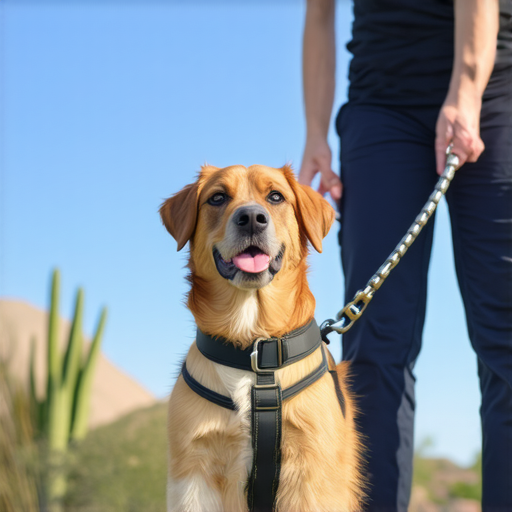
The air in the briefing room smells of heavy starch and the metallic tang of gun oil from the sidearm I no longer carry. Outside, the Phoenix sun is already baking the asphalt of Central Avenue into a shimmering gray haze. You think you know the rules for bringing a dog team into the public square? You don’t. The 2026 shift in Arizona dog team regulations is not a suggestion; it is a full-scale operational pivot designed to manage the friction between high-density urban growth and the working K9. The core change focuses on three specific pillars: mandatory digital handler credentials for light rail transit, strict heat-safety stand-down orders when temperatures hit 105 degrees, and specific 10-foot buffer zones in Maricopa County municipal buildings. If you fail to adjust your tactical approach to these ordinances, the city will not just fine you. They will revoke your access permits before you can finish your morning coffee.
Editor’s Take: The 2026 Arizona dog team rules transition from a trust-based system to a verified-access model. Survival in the urban landscape requires immediate digital compliance and rigorous environmental monitoring.
Operational parameters for urban K9 units
In the field, we talk about the ‘line of contact.’ In Phoenix, that line is now defined by the 2026 Public Access Protocol. This is not about pets. We are discussing highly trained dog teams providing service or security in a world that is becoming increasingly crowded. The relationship between state law and municipal code has tightened. Under the new framework, the Arizona Department of Economic Security has aligned with Phoenix City Council to create a unified ‘Access Key’ system. This digital token, stored on a secure mobile device, proves the team has met the 2026 behavioral standards. You can verify the baseline requirements via the Federal ADA Service Animal Guidelines which still serve as the base layer for all local maneuvers.
Look at the numbers. Incident reports involving untrained animals in the Gilbert and Mesa shopping corridors rose by 22% last year. The response is a hardening of the rules. For a professional handler, this is good news. It flushes out the amateurs who use ’emotional support’ vests bought on a whim to bypass health codes. The new reality requires a team to maintain a specific ‘working posture’ where the dog remains in a tucked or heeled position at all times while indoors. The moment that dog breaks the perimeter to greet a civilian, the handler is in violation. It is about discipline. It is about the mission.
The heat of the Phoenix corridor
In the valley, the environment is the primary enemy. When the pavement in Queen Creek or Apache Junction reaches 140 degrees, your dog team is a liability if not properly equipped. The 2026 rules introduce the ‘Thermal Clause.’ Local authorities now have the right to intercept any dog team operating on foot when the ambient temperature exceeds 105 degrees without thermal paw protection. This is a logistics issue. You must plan your route based on shade and cooling stations. Phoenix has mapped these ‘Blue Zones’ where K9 teams have priority access to water and air conditioning in public libraries and government offices.
The geography of compliance is shifting. If you are operating near the South Mountain Park trails, the rules are even tighter. During the peak heat months of June through September, dog teams are restricted from high-elevation trails after 0800 hours. This isn’t a suggestion from a park ranger. This is a hard closure enforced by the city’s thermal monitoring stations. Professional handlers are moving toward night-ops or indoor training facilities like those found in the Mesa-Gilbert border regions to maintain their team’s edge without risking a heat-related casualty.
When the mission meets public resistance
The messy reality of the 2026 environment is that the public has grown weary of ‘fake’ service dogs. This creates friction for the legitimate teams. I have seen handlers in Scottsdale get cornered by store managers who think they know the law better than the Department of Justice. The 2026 rules give you a shield. Under the revised Arizona Revised Statutes, a handler has the right to refuse ‘excessive interrogation’ once the Digital Access Key is presented. However, the friction often comes from other animals. The rise of ‘pet-friendly’ dining in the Phoenix metro area has introduced uncontrolled variables into the working environment. A stray labradoodle at a cafe in Queen Creek can blow a service dog’s focus in a heartbeat.
Common industry advice tells you to ‘be polite and educate.’ That is a failing strategy in high-stress urban environments. My tactical advice is to maintain the ‘Hard Heel’ and use physical positioning to block distractions. The 2026 laws actually support this. They permit a handler to request the removal of any animal that is not under control, even if that animal is also a service dog. The law finally recognizes that ‘access’ is not an absolute right. It is a conditional privilege based on the animal’s behavior and the handler’s ability to maintain the standard. If the dog barks, the dog leaves. No exceptions. No excuses.
The evolution of the 2026 handbook
Compare the 2020 landscape to the 2026 reality. We used to rely on a plastic card and a prayer. Now, we rely on encrypted credentials and real-time environmental data. The ‘Old Guard’ methods of just putting a vest on and walking in are dead. You need to be aware of the 10-foot ‘Transit Buffer’ rule in the light rail stations downtown. This rule mandates that dog teams stay ten feet away from boarding doors until the train has fully stopped and passengers have cleared. It prevents the bottlenecking that led to several biting incidents in 2024.
What is the penalty for a missing Digital Access Key?
Observations from the field show that initial violations often result in a ‘Field Warning’ logged against your handler profile. A second offense within 12 months triggers a 500-dollar fine and a mandatory 4-hour retraining session in a state-approved facility.
Does the 105-degree rule apply to indoor malls?
The thermal clause applies specifically to outdoor movement and transport. Once you are inside a climate-controlled environment like the Chandler Fashion Center, the rule is suspended, though you must prove you used an approved cooling method to cross the parking lot.
Are search and rescue teams exempt from these public access rules?
Negative. SAR teams operating in a non-emergency capacity for training must follow all 2026 public access protocols, including the digital registration and heat-safety mandates. The rules treat all dog teams as ‘active units’ regardless of their specific mission profile.
How do the 2026 rules affect handlers in Apache Junction?
Apache Junction has adopted a ‘Dual-Status’ model. While following the state-wide digital mandate, they also allow for ‘Trail-to-Town’ transitions where working dogs coming off the Superstition Wilderness can enter local businesses without the paw-protection requirement, provided they are on a non-retractable 4-foot lead.
Can a business owner ask for a demonstration of tasks?
Under the 2026 Arizona alignment with the ADA, a business owner can ask if the dog is required because of a disability and what work or task the dog has been trained to perform. They cannot demand a physical demonstration. If they do, you should record the interaction and report the breach of the Access Key protocol via the state mobile app.
The perimeter is set. The 2026 Arizona dog team rules are designed to professionalize the space and protect those of us who treat our K9 partners as vital components of our daily survival. Don’t be the handler caught without a plan when the temperature hits triple digits and the city inspector starts asking for your credentials. Stay sharp, keep the leash tight, and watch your six. The mission continues, but the rules of engagement have changed forever. Get your digital keys sorted before the Phoenix summer turns your lack of preparation into a public incident.