
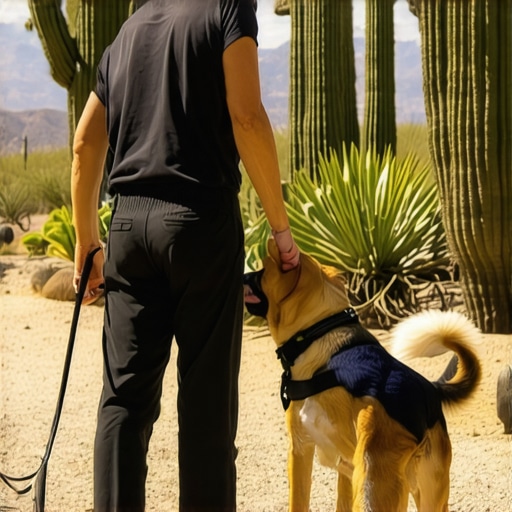
Unlocking the Secrets of Owner-Trained Service Dogs in Arizona: A 2024 Perspective
In the vibrant landscape of Arizona, where the desert meets diverse urban environments, training a service dog is both an art and a science. As a dedicated owner, understanding the innovative strategies that elevate your service dog’s performance can make a profound difference in daily life. This article delves into expert-approved methods tailored for Arizona’s unique climate and lifestyle, empowering owners to cultivate highly trained, reliable service companions.
Why Owner-Training Matters More Than Ever in the Grand Canyon State
Arizona’s expansive terrain and bustling cities demand a training approach that emphasizes adaptability, obedience, and emotional resilience. Unlike generic training programs, owner-trained strategies foster a deeper bond, ensuring the dog responds precisely to your specific needs. According to the American Kennel Club, owner involvement in training enhances the dog’s confidence and reliability, particularly for mobility and medical alert tasks.
Key Strategies for Effective Service Dog Training in Arizona
Harnessing Natural Environments for Real-World Training
Arizona offers a variety of settings—from urban Phoenix streets to remote desert trails—that can be utilized for diverse training scenarios. Exposure to these environments conditions your dog to maintain focus amid distractions, a critical trait for service animals. Incorporating local sights and sounds into training routines helps your dog adapt seamlessly to everyday situations.
Temperature-Resilient Conditioning Techniques
The state’s extreme heat necessitates specialized conditioning. Training sessions should be scheduled during cooler parts of the day, and hydration must be prioritized. Using positive reinforcement to teach your dog to seek shade or water can turn these into helpful cues during outings. Experts recommend gradually acclimating your dog to Arizona’s climate to prevent heat-related stress.
Understanding Legal Frameworks & Local Resources
Arizona’s laws regarding service animals align with federal standards, but local nuances may impact training and access. Connecting with reputable organizations like Arizona Department of Economic Security can provide valuable resources and legal guidance. Proper training ensures your service dog meets ADA requirements, facilitating smooth access to public spaces.
How Can You Ensure Your Service Dog’s Training Is Up to Par?
Consistency and ongoing education are vital. Regularly update your training techniques, stay informed about new advancements, and participate in community support groups. Observing your dog’s behavior and seeking feedback from professionals enhances training outcomes. Remember, a well-trained service dog is a lifelong commitment that benefits from continuous refinement.
For a deeper understanding of service dog training techniques tailored to desert climates, consult authoritative sources such as the Americans with Disabilities Act. Their guidelines ensure your training aligns with legal standards while prioritizing your dog’s well-being.
What Are the Common Challenges in Owner-Trained Service Dogs and How to Overcome Them?
Owners often face difficulties with distraction management and consistency. Address these by establishing clear routines and using desensitization methods. Professional trainers can offer personalized feedback, but the key lies in persistent practice and patience.
Share your experiences in the comments or join local Arizona training groups to exchange insights and support. Remember, the journey to a well-trained service dog is ongoing, and your dedication makes all the difference.
Deepening Your Connection: The Next Level of Owner-Training in Arizona
Building on foundational training techniques, many owners wonder how to refine their service dog’s skills to handle increasingly complex situations. In Arizona, where the environment can be unpredictable, personalizing training to your dog’s unique temperament and your specific needs becomes essential. For example, integrating scent work can enhance your dog’s alertness for medical conditions, while advanced obedience drills help maintain focus during hectic outdoor events or crowded urban settings.
How Do You Keep Your Service Dog Mentally Stimulated and Engaged?
One effective approach is to vary training routines, incorporating new commands and scenarios that challenge your dog’s problem-solving skills. Puzzle toys, scent trails, and agility exercises are excellent tools to keep your dog mentally active. As I’ve experienced firsthand, engaging your dog’s mind not only prevents boredom but also improves their adaptability and responsiveness—key traits for service animals operating in Arizona’s diverse environments.
Integrating Community and Support Networks for Better Outcomes
Connecting with local organizations and support groups can significantly enhance your training journey. Arizona offers a range of resources, from veteran service dog programs to community training classes. Participating in these groups allows you to exchange insights, celebrate milestones, and troubleshoot challenges with peers who understand the unique demands of Arizona’s climate and terrain. For instance, the Arizona Department of Economic Security provides valuable updates on legal rights and training resources.
What Are the Hidden Challenges of Owner-Training, and How Can You Overcome Them?
Many owners underestimate the importance of patience and consistency, especially when faced with setbacks. Dogs may regress or become distracted, but the key is persistent reinforcement and positive reinforcement techniques. Recognizing signs of fatigue or heat stress during Arizona summers is also crucial—training sessions should be brief, frequent, and scheduled during cooler parts of the day, like early mornings or late evenings. Remember, your resilience and adaptability set the tone for your dog’s success.
For additional guidance, exploring authoritative sources such as the Americans with Disabilities Act can clarify legal expectations and help ensure your training aligns with national standards. Practical, ongoing education combined with genuine compassion creates a powerful foundation for your service dog’s development.
What Innovations in Owner-Training Will Shape the Future of Service Dogs in Arizona?
Emerging technologies like wearable GPS trackers and health monitors offer exciting possibilities for owner-trained service dogs. These devices can provide real-time data on your dog’s location, activity levels, and health status, allowing for immediate intervention if needed. As someone who has integrated smart tools into my training routine, I can attest to how these innovations boost confidence and safety. Staying informed about such advancements is vital for any owner committed to excellence in service dog training.
Share your own experiences with owner-training or ask questions in the comments below—your insights can inspire others on the same journey. Remember, the path to a well-trained service dog is continuous, filled with learning, patience, and heartfelt dedication.
Innovative Approaches to Owner-Training: Leveraging Technology and Customization in Arizona
As the landscape of service dog training evolves, owners are increasingly turning to cutting-edge tools and personalized methods to enhance their dogs’ capabilities. In Arizona’s unique climate and diverse environments, integrating technology such as GPS health monitors and scent detection devices can provide real-time data that informs training adjustments and ensures safety. According to recent studies by the Journal of Applied Animal Welfare Science, these innovations significantly improve the precision and responsiveness of owner-led training programs.
Customization remains key—adapting training routines to your dog’s individual temperament and specific disability needs fosters a more resilient and reliable service companion. For example, incorporating scent work tailored to medical alert tasks can deepen a dog’s alertness, especially vital in unpredictable Arizona environments where weather and terrain vary drastically. The use of positive reinforcement, combined with these personalized exercises, creates a dynamic training experience that builds trust and competence.
How Can Data-Driven Techniques Elevate Your Service Dog Training?
Data-driven techniques involve meticulously tracking your dog’s responses and progress through digital tools. Wearable devices can monitor stress levels, activity, and location, offering insights that help refine training methods. This approach not only enhances obedience but also ensures your dog remains healthy and stress-free—crucial in the hot Arizona summers where heat stress is a real concern. Integrating these insights into regular training routines allows for a proactive approach, reducing setbacks and accelerating skill acquisition.
Furthermore, training in varied and challenging environments—such as urban areas, desert trails, and public transit—can be systematically planned using data analytics. This ensures comprehensive exposure, preparing your dog for the multifaceted demands of service work across Arizona’s diverse settings.
Are There Ethical Considerations in High-Tech Owner-Training?
While technology offers remarkable benefits, ethical considerations around data privacy and animal welfare must be prioritized. Ensuring that devices are used responsibly and that training remains humane is essential. According to the American Veterinary Medical Association, maintaining a balance between technological augmentation and compassionate training practices safeguards the well-being of your service dog.
Engaging with professional trainers and veterinary behaviorists can help you navigate these advancements ethically. They can advise on appropriate use and help interpret data to make informed training decisions, ensuring that your dog’s physical and emotional health are protected at every step.
Maximizing Community Resources for Advanced Owner-Training Success
Arizona’s robust network of service dog organizations and veteran programs offers invaluable support for owners seeking to elevate their training. Participating in specialized workshops, like those offered by Arizona Department of Economic Security, provides access to expert mentorship and peer learning. These communities foster shared knowledge and troubleshooting, vital for overcoming complex training challenges.
Moreover, connecting with local clubs and online forums allows for continuous learning and emotional support. Sharing experiences about integrating new technologies, handling environmental challenges, or refining specific skills enriches your training journey and broadens your perspective.
What Are the Future Trends in Owner-Based Service Dog Training?
Looking ahead, the integration of artificial intelligence and machine learning in training devices promises to revolutionize owner-led programs. Predictive analytics could soon tailor training plans to your dog’s evolving needs, while virtual reality scenarios might simulate complex environments for safe, controlled practice. Staying informed about these developments will be crucial for owners committed to maintaining the highest standards of service dog training.
Engage with industry experts, attend conferences, and subscribe to authoritative publications like the Animal Law & Welfare Journal to remain at the forefront of this exciting field. The future of owner-trained service dogs in Arizona is bright—driven by innovation, compassion, and a relentless pursuit of excellence.
Harnessing Technological Innovation for Superior Service Dog Training in Arizona
As the landscape of service dog training continues to evolve, integrating sophisticated tools such as wearable health monitors and GPS trackers can dramatically enhance training efficacy. These devices provide real-time insights into your dog’s physiological responses and location, enabling precise adjustments to training routines. According to the Journal of Applied Animal Welfare Science, data-driven approaches are revolutionizing how owners tailor their training methods, ensuring optimal outcomes and safety.
Personalizing Training with Adaptive Techniques for Complex Environments
Arizona’s diverse terrains—from urban settings to desert landscapes—demand highly adaptable training strategies. Utilizing scent work tailored to medical alert tasks or integrating agility exercises can prepare your service dog for unpredictable scenarios. Customizing these routines to your dog’s temperament and specific disability ensures resilience and reliability. For example, scent detection training can be fine-tuned to improve alertness for medical conditions, leveraging natural instincts in varied environments.
Expert-Recommended Ethical Considerations in High-Tech Training
While technological advancements offer remarkable benefits, maintaining ethical standards is paramount. Responsible use of data and humane training practices safeguard your dog’s welfare. The American Veterinary Medical Association emphasizes the importance of balancing innovation with compassion, ensuring your training remains respectful and health-focused. Consulting veterinary behaviorists and professional trainers can help navigate these ethical considerations effectively.
Leveraging Community Resources for Progressive Owner-Training
Arizona boasts a vibrant network of organizations and veteran programs that support advanced training initiatives. Participating in workshops offered by agencies like the Arizona Department of Economic Security provides access to expert mentorship and peer collaboration. These communities facilitate knowledge exchange about integrating new technologies, handling environmental challenges, and refining complex skill sets, fostering continuous growth.
Future Trends: Artificial Intelligence and Virtual Reality in Service Dog Training
Looking forward, AI-powered training systems and virtual reality environments are poised to transform owner-led programs. Predictive analytics can customize training plans dynamically, while VR simulations allow safe practice of intricate scenarios like crowded urban environments or emergency situations. Staying abreast of these innovations ensures your training remains cutting-edge, aligning with best practices and legal standards.
Expert Tips: Ensuring Holistic Development of Your Service Dog
Holistic training involves not only skill acquisition but also mental and emotional well-being. Incorporate puzzle toys, scent trails, and problem-solving exercises to keep your dog engaged. Regular health monitoring and stress management, especially during Arizona’s hot summers, are vital. Collaborate with veterinary professionals to ensure your dog’s physical health supports their role, and adapt training schedules to avoid heat stress while maintaining progress.
Engage and Elevate Your Service Dog Training Journey Today
By embracing innovative tools, personalized routines, and community support, you can elevate your owner-training capabilities to new heights in 2024. Continual learning and ethical practice are the cornerstones of a successful partnership with your service dog. Explore these advanced strategies and join a community committed to excellence—your journey towards a highly trained, dependable service companion begins now.
Frequently Asked Questions (FAQ)
How can I effectively train my service dog as an owner in Arizona?
Effective owner training in Arizona involves consistent routines, exposure to diverse environments, positive reinforcement techniques, and leveraging local resources. Tailoring training to your dog’s temperament and your specific needs enhances reliability and confidence, especially in Arizona’s unique climate and terrain.
What are the legal considerations for owner-trained service dogs in Arizona?
Arizona aligns with federal ADA standards, requiring that service dogs are trained to perform tasks related to their handler’s disability. Ensuring your dog is well-trained and legally compliant facilitates access to public spaces. Connecting with organizations like the Arizona Department of Economic Security can provide guidance on legal rights and responsibilities.
What environmental challenges should I prepare my service dog for in Arizona?
The extreme heat and diverse terrains necessitate acclimation and conditioning. Schedule training during cooler times, provide ample hydration, and incorporate environmental exposure such as desert trails and urban settings to ensure your dog can focus and perform reliably in all scenarios.
How do I maintain my service dog’s mental stimulation and prevent boredom?
Engage your dog with scent work, puzzle toys, agility exercises, and varied routines. Mental stimulation enhances problem-solving skills, responsiveness, and overall resilience, which are vital for service dogs operating in Arizona’s dynamic environments.
What role does technology play in modern owner training of service dogs?
Emerging tools like GPS trackers, health monitors, and scent detection devices provide real-time data to refine training and ensure safety. Data-driven approaches can personalize routines, improve responsiveness, and help monitor your dog’s health, especially in hot climates where heat stress is a concern.
How can I ethically incorporate high-tech tools into my service dog’s training?
Use technology responsibly, respecting your dog’s welfare. Consult veterinary behaviorists and professional trainers to ensure humane application. Prioritize your dog’s emotional and physical health while leveraging innovations to enhance training outcomes.
What community resources are available in Arizona to support owner-trained service dogs?
Arizona offers workshops, support groups, and programs through organizations like the Arizona Department of Economic Security. Participating in these communities provides mentorship, peer support, and access to advanced training techniques, fostering continuous growth and confidence.
What future trends could impact owner training of service dogs in Arizona?
Future advancements include AI-based training systems, virtual reality scenarios, and predictive analytics. These innovations will enable more personalized, efficient, and safe training, helping owners adapt to Arizona’s environmental challenges and improve their dog’s performance.
How do I ensure the ethical use of new technologies in my training routine?
Maintain transparency, prioritize animal welfare, and seek guidance from experts. Responsible use of technology should complement humane training practices, ensuring your dog’s well-being remains the primary focus.
What are the key benefits of ongoing community involvement in owner training?
Community engagement offers shared knowledge, emotional support, and access to expert advice. It helps troubleshoot challenges, celebrates milestones, and keeps you updated on new techniques and legal standards, all crucial for successful owner-led training in Arizona.
Trusted External Sources
- American Veterinary Medical Association (AVMA): Provides guidelines on humane training practices and animal welfare considerations essential for ethical owner training.
- Arizona Department of Economic Security: Offers legal resources, training programs, and support networks tailored to Arizona’s specific needs and regulations.
- Journal of Applied Animal Welfare Science: Reports on technological innovations and their application in animal training, including data-driven methods and ethical considerations.
- Americans with Disabilities Act (ADA): The primary legal framework ensuring access rights and standards for service dog training and certification nationwide.
- Animal Law & Welfare Journal: Features research on emerging trends, ethical practices, and technological advancements impacting service dog training.
Conclusion: Final Expert Insights on Owner-Trained Service Dogs in Arizona
Mastering owner training for service dogs in Arizona demands a blend of local environmental understanding, innovative techniques, and ethical practices. Embracing technology, engaging with community resources, and maintaining consistent routines foster a resilient, reliable partnership. As the landscape evolves with new advancements and legal standards, staying informed and compassionate ensures your service dog not only meets but exceeds expectations, enriching your quality of life. Share your journey, seek expert advice, and explore innovative tools—your dedication shapes a successful, lifelong bond with your service dog in Arizona’s vibrant setting.