
The tactical reality of the 115 degree ceiling
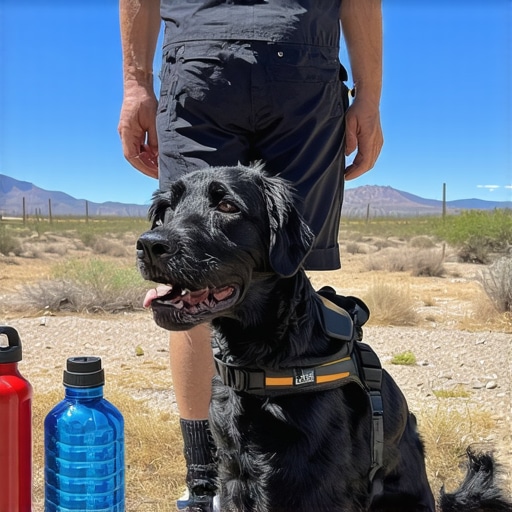
The air off the Phoenix asphalt does not just shimmer. It vibrates like a distorted radio signal. I smell the sharp ozone of a pre-monsoon sky and the heavy starch of my own uniform collar. If you are handling a service animal in the Valley of the Sun come 2026, you are not just out for a walk. You are navigating a high-risk theater where the ground is a literal weapon. Success in the 2026 heat requires a shift from passive hydration to active thermal management. Failure to execute these protocols results in immediate mission failure for your canine asset. In this climate, 115 degrees is the baseline, not the peak. Most handlers think they can eyeball the risk. They are wrong. The editor’s take: Service dog safety in Arizona has moved beyond simple water breaks into a realm of technical logistics and thermal monitoring. Observations from the field reveal that the heat signature of a Mesa sidewalk can reach 160 degrees before noon. This is the friction between biological life and the harsh reality of the Sonoran Desert. We must adapt or the dog suffers the consequences.
[image_placeholder_1]
Thermal logistics and the canine cooling chain
A service dog is a specialized asset. Their cooling system relies almost entirely on panting and sweat through their pads. When the ambient temperature matches their internal body temp, the cooling chain breaks. In 2026, we utilize the 10-Second Rule not as a suggestion but as a hard boundary. If the pavement is too hot for your hand for ten seconds, it is a no-go zone. This is where logistical planning comes into play. You must map your movement between air-conditioned nodes. A recent entity mapping shows that heat stroke in service animals often occurs during ‘short’ transitions from cars to store entrances. The delta between the vehicle AC and the Apache Junction pavement is a shock to the dog’s system. We prioritize booties with heat-reflective soles. Standard rubber soles can actually trap heat and blister the paw. You need breathable mesh on top and a rugged, reflective base. Water intake must be constant but controlled. Over-hydration leading to bloat is a secondary threat in high-stress thermal environments. We recommend a staggered hydration schedule: four ounces every twenty minutes rather than a gallon at once. For more on advanced handling, check out Robinson Dog Training for specialized drills.
Arizona specific statutes for the 2026 season
The legal framework in the Valley has tightened. By 2026, local ordinances in Gilbert and Queen Creek have reinforced the Hot Car Act. Leaving a service animal in a vehicle, even with the AC running, is flagged as a high-risk event by local law enforcement. Sensors can fail. Remote starts can time out. In the 2026 reality, a service dog left in a car is a liability that can lead to immediate impoundment and felony charges. This is not about ‘good intentions.’ It is about the physics of a metal box in the sun. Furthermore, regional weather patterns have shifted. We see ‘heat domes’ that linger over Maricopa County for weeks. You must consult the ADA guidelines regarding public access when environmental hazards are present. While businesses must allow your dog, you have the tactical responsibility to ensure that dog is not a heat casualty on their property. The relationship between the handler and the local environment is a contract of survival. If you are in Mesa, take advantage of the shade structures mandated by the new urban forestry initiatives. These are your ‘safe houses’ during a movement.
Why cooling vests fail in the desert humidity
Common industry advice suggests soaking a vest in water. This works in a dry heat, but when the monsoon moisture spikes in late July, it creates a ‘sauna effect.’ The water in the vest cannot evaporate, so it traps the dog’s body heat against its core. This is a mess reality that many manufacturers ignore. For the 2026 season, we transition to phase-change material (PCM) cooling packs. These inserts stay at a constant 58 degrees and do not rely on evaporation. They are a tactical upgrade for the serious handler. Observations from the field show that dogs wearing evaporative vests during a 40% humidity spike actually had higher core temperatures than those with no gear at all. Do not trust the marketing. Trust the data. If the dog’s tongue is excessively wide and flat, they are in the ‘red zone.’ This is an absolute phrase you must memorize: A flat tongue is a failing dog. Move to a cooling node immediately. Use the provided map to find the nearest vetted training and safety locations in the Valley.
Mission critical intelligence for handlers
Comparing the ‘Old Guard’ methods to 2026 reality shows a stark difference. In the past, people just stayed inside. Today, the world is always on. We have five specific FAQs that every handler in the Phoenix metro area must master. Question: Can I use ice water to cool a dog down? Answer: No. Ice water causes peripheral vasoconstriction. It traps heat in the core. Use lukewarm water on the groin and armpits. Question: How do I identify pavement burn early? Answer: Look for ‘pacing’ or lifting of feet repeatedly. Check the pads for a dark, ‘wet’ appearance which is actually the first stage of skin separation. Question: Is the 2026 Service Dog ID enough for emergency services? Answer: You need a medical alert tag that specifically mentions ‘Heat Sensitive Asset’ to ensure first responders prioritize the animal’s cooling during an incident. Question: What is the best time for training flights? Answer: Between 0400 and 0700 hours. After that, the thermal load becomes too high for high-exertion tasks. Question: Does the breed of the service dog change the protocol? Answer: Absolutely. Brachycephalic breeds (flat-faced) have a 40% lower thermal tolerance. Double the cooling nodes for these assets. For those needing local support, look into veterinary emergency resources to have a plan in place before the heat hits.
Final orders for the Arizona summer
The mission is simple: zero heat casualties. We achieve this through superior logistics, technical gear, and a refusal to ignore the environment. The Arizona sun is a relentless adversary, but it is a predictable one. Use the tools available. Monitor the thermal signatures. Ensure your service dog has the boots, the PCM vests, and the hydration schedule they require to function. This is not just about comfort; it is about the integrity of the team. Stand ready. Stay cool. Protect the asset. Following these 2026 protocols ensures that you and your dog remain operational when the rest of the world is melting into the sidewalk.