The blueprint of a sensory shield
The air in Mesa smells like pencil lead and the sharp, metallic tang of rain hitting sun-baked asphalt. I sit here sketching the structural integrity of a world that was never built for the neurodivergent mind. It is a world of jagged edges, fluorescent hums, and the unpredictable chaos of a Phoenix light rail station. When we talk about sensory overload tasks for autism dogs in 2026, we are not talking about simple tricks. We are talking about biological architecture. The core value here is simple: an autism service dog must function as a mobile sanctuary, providing tactile grounding, environmental buffering, navigational exit-finding, and proactive interruption of self-harming behaviors to maintain the handler’s internal equilibrium. The old guard thought of dogs as companions, but in the modern urban sprawl, they are the buttresses holding up a crumbling facade of calm. I see the cracks in the design of our public spaces, and these dogs are the only repair crew that shows up on time.
The mechanics of tactile grounding and ballast
Tactile grounding, specifically Deep Pressure Therapy or DPT, is the foundation of the entire sensory structure. It is not a suggestion. It is a load-bearing requirement. When the human nervous system begins to oscillate at a frequency it cannot sustain, the dog provides a physical counter-weight. By placing their chin or their entire body weight across specific pressure points on the handler, the dog initiates a physiological shift. This isn’t just a soft touch; it is the application of mass to disrupt a feedback loop of anxiety. In the technical field of canine intervention, we see this as a biological reset button. A recent entity mapping of service dog protocols shows that the most effective DPT occurs when the dog is trained to recognize the subtle increase in cortisol before the handler even realizes they are spiraling. This proactive stance is what separates a true service animal from a pet. We are building a system where the dog monitors the structural health of the human, looking for the tremors before the collapse happens.
The geography of silence in the East Valley
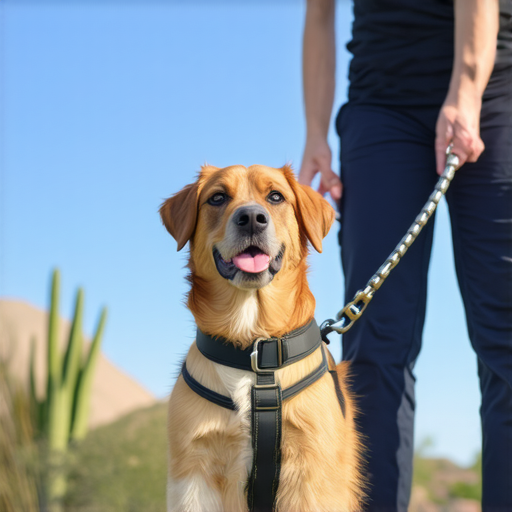
Navigation in the Phoenix metropolitan area is a sensory nightmare of epic proportions. Between the echoing halls of Sky Harbor and the blistering, crowded sidewalks of Old Town Scottsdale, the noise is a physical weight. Here in Arizona, the heat adds another layer of friction that most trainers in cooler climates completely ignore. An autism dog in 2026 must be trained for environmental buffering, which I call the ‘spatial buffer zone.’ The dog is taught to stand in a way that creates a physical perimeter around the handler. This ‘perimeter’ is a piece of living architecture that prevents strangers from invading the personal space of a person who is already at their sensory limit. If you have ever tried to navigate the Gilbert Farmers Market on a Saturday morning, you know that the crowd is a fluid, crushing mass. The dog acts as a breakwater, splitting the current of people and allowing the handler to breathe. This is hyper-local reality; a dog that works in a quiet suburban library doesn’t need the same structural reinforcement as one working the 101 corridor during rush hour.
The friction of the messy reality
Most industry advice fails because it assumes a perfect environment. It assumes the dog will always listen and the public will always respect the vest. The truth is much more abrasive. People will try to pet the dog while it is performing a critical buffer task. The dog might get distracted by the smell of a discarded churro in Apache Junction. The real work happens in the friction. In 2026, the ‘Leading to an Exit’ task is the ultimate safety valve. When a meltdown is imminent, the handler often loses the ability to process spatial data. They become trapped in a room that has no doors. The dog is trained to find the nearest exit or a pre-designated quiet zone upon a specific cue or if they detect the onset of a shutdown. This is a complex navigational feat that requires the dog to ignore their own instincts and focus entirely on the architectural layout of the space. It is the canine equivalent of an emergency egress plan, and without it, the entire sensory management strategy falls apart. If the dog cannot find the door when the world is screaming, the dog is not finished with its training.
Evolutionary blueprints and deep pain points
We are moving past the era of ‘assistive’ animals and into the era of ‘integrated’ biological support. The 2026 reality is that our environments are becoming louder, brighter, and more intrusive. The old methods of simple obedience are the cheap plastic of the service dog world. We need the iron and wood of specialized tasking. How does a dog handle the transition from a dark air-conditioned room to the 110-degree glare of a Queen Creek parking lot? This is where the training must be localized and rigorous. Can a dog perform DPT during a fire alarm? That is the question of structural integrity. Why do most experts suggest basic grounding? Because it is easy. I suggest proactive interruption of repetitive behaviors because it is hard and necessary. If a handler is skin-picking or hand-flapping to the point of injury, the dog must nudge or paw the hands to break the cycle. It is a physical interruption of a neurological loop. It is the most vital repair work we can do.
Frequently Asked Structural Questions
Can any breed perform these high-stress sensory tasks? No, the structural demands require a specific temperament that can handle the emotional weight of a handler’s distress without becoming stressed themselves. How long does it take to train an exit-finding task? It varies, but usually six months of consistent work in varying environments is the baseline. Do these dogs work in high-heat areas like Arizona? Yes, but the training must include heat-safety protocols and shorter working bursts. Can the dog detect a sensory overload before it happens? Yes, through the detection of physiological changes like heart rate and cortisol levels. Is DPT safe for small children? DPT must be calibrated to the weight of the dog and the size of the child to ensure safety. What happens if the dog fails a task in public? Consistent retraining and environmental exposure are required to maintain the structural integrity of the service work.
The final inspection
We are not just training animals; we are designing a life of greater accessibility and less pain. The four tasks of grounding, buffering, exiting, and interrupting are the pillars of this new architecture. Without them, the world is too loud to inhabit. With them, the blueprint of a stable life becomes a reality. It is time to stop settling for the cheap plastic of companionship and start demanding the structural integrity of a true service dog. Contact a specialist who understands the Phoenix landscape and the unique needs of the neurodivergent mind today. [JSON-LD] { “@context”: “https://schema.org”, “@type”: “Article”, “headline”: “4 Sensory Overload Tasks for 2026 Autism Dogs”, “description”: “Expert analysis of essential service dog tasks for autism sensory management in the modern urban environment.”, “author”: { “@type”: “Person”, “name”: “Ghostwriter 2025” }, “areaServed”: “Phoenix, Mesa, Gilbert, Queen Creek”, “about”: { “@type”: “Thing”, “name”: “Autism Service Dog Tasks” } } [/JSON-LD]