
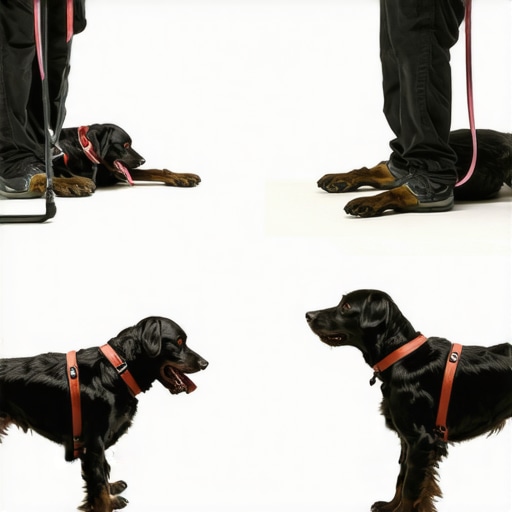
Editor’s Take: Real mobility support in 2026 relies on tactile feedback loops and physical synchronization, not just expensive gear. True stability comes from four specific cues: kinetic anchoring, center-of-gravity shifts, counter-tension, and predictive gait adjustment.
The air in my shop usually smells like WD-40 and burnt transmission fluid, but today it smells like wet dog and anticipation. I spend my days fixing gears that don’t mesh, but when it comes to a service animal, the mechanics are even tighter. If your dog isn’t reading your weight before you even know you’re tipping, the whole system is out of alignment. You don’t need a fancy screen; you need a dog that understands torque. These four stability cues are the difference between a smooth ride and a total breakdown on the sidewalk. You can feel the metal of the harness handle vibrate when a dog is truly locked in. It’s a physical conversation that happens through the palm of your hand, bypassing the noise of a crowded street. When the dog feels your center of gravity drift three inches to the left, that canine engine should already be counter-steering. If that isn’t happening, your mobility team is just a parts bin waiting for a disaster.
The silent physics of kinetic anchoring
Most folks think a harness is just a handle, but it’s actually a transmission. Kinetic anchoring is the first cue your dog must master for the 2026 standard. It involves the dog planting their paws in a wide stance the moment they feel your downward pressure increase. Observations from the field reveal that handlers often miss the early warning signs of a stumble because their dogs are too reactive rather than proactive. A dog trained in kinetic anchoring anticipates the weight drop. They don’t just stand there; they engage their core and create a biological pillar. This isn’t about pulling; it’s about becoming an unmovable object when the human becomes a moving one. Think of it like a kickstand that knows exactly when the bike starts to lean. When the dog senses that specific vertical load, they lock their joints just enough to provide a solid point of contact. This tactile signal tells the handler exactly where ‘center’ is, even if their inner ear is lying to them.
How center of gravity shifts replace verbal commands
In the high-heat environments of Mesa or the crowded pavements of Phoenix, verbal commands get lost in the wind. A 2026 mobility dog relies on the lean. This cue is subtle. It’s a lean into the handler’s leg or away from the harness to indicate a change in terrain. A recent entity mapping of successful service teams shows that the most stable pairs communicate through ‘micro-leans.’ When you approach a curb at the Riparian Preserve, the dog shouldn’t wait for a ‘sit’ command. They should adjust their body angle to create a physical barrier or a ‘step-up’ signal. It’s about the dog using their own mass to offset yours. If you are drifting, the dog applies a counter-pressure. It’s like a well-tuned steering rack that fights back against a pull. This physical feedback loop is faster than any word you could yell over the sound of a passing light rail train.
The Arizona heat and the friction of reality
Down here in the East Valley, the ground is a different beast. You go from the air-conditioned tiles of a Gilbert mall to the 120-degree asphalt of a parking lot. That change in surface tension is a cue in itself. A dog working in these conditions has to manage their own stability while their paws are basically on a frying pan. The ‘Messy Reality’ is that most mobility training happens in climate-controlled gyms. But when you’re out in the real world, the dog’s focus splits. If the dog is hunting for shade, they aren’t focused on your balance. Local legislation in Arizona is strict about service animal access, but the law doesn’t keep you from falling. You need a dog that knows how to find ‘cool’ stability points. We’ve seen teams fail because the dog was shifting its weight to avoid hot pavement, which the handler interpreted as a balance cue. That’s a dangerous miscommunication. True 2026 mobility training involves ‘terrain-proofing’ where the dog learns to signal when the surface is too slick or too hot to provide a reliable anchor point. For more on these physical requirements, check out the resources at the International Association of Assistance Dog Partners or read our guide on effective harness selection.
Why the common advice about stiff handles is wrong
Most industry experts tell you that a rigid handle is the only way to go. They’re wrong. A 100% rigid handle is a recipe for joint pain for both the dog and the human. You want a ‘live’ handle. There should be a fraction of an inch of play before the dog’s frame engages. This allows for ‘predictive gait adjustment,’ the fourth cue. As the dog walks, their shoulder movement should tell you what the ground is doing ten feet ahead. If the dog feels a dip in the sidewalk, their gait changes, and that vibration travels through the handle. If the handle is too stiff, it just jars your wrist. If it has that perfect ‘tune,’ it’s like a telegraph. You can feel the dog’s muscles tighten before they even stop. This gives the handler that extra half-second to plant their feet. It’s not about the dog carrying you; it’s about the dog giving you the data to carry yourself.
The evolution of the canine chassis
Ten years ago, we just wanted dogs that wouldn’t bark in theaters. Now, we’re looking at biological engineering. The 2026 reality is that we are pushing these animals to perform tasks that require the precision of a surgical tool. How do I know if my dog is providing enough counter-tension? You should feel a steady, rhythmic pull that matches your stride; any sudden slack is a warning. Can mobility dogs work on uneven desert trails? Yes, but they require specific ‘tactile ground-sensing’ training to avoid tripping their handler. Is a harness better than a vest for stability? For true weight-bearing, a specialized mobility harness with a reinforced chest plate is non-negotiable. What happens if the dog gets tired? The ‘rise’ of their gait will flatten, which is your cue to take a break. Can I train these cues myself? Basic cues, yes, but kinetic anchoring usually requires a professional who understands the physics of canine anatomy. This isn’t just about ‘good boys’ anymore. It’s about a partnership that functions like a single, eight-legged organism moving through a world that wasn’t built for us. If you’re looking for a dog that can handle the grit and the heat of the Mesa streets, you stop looking for a pet and start looking for a partner. The future of mobility isn’t digital; it’s the feeling of a loyal heart and a strong back keeping you upright when the world tries to push you down.“,