
A sharp crease in the morning mist
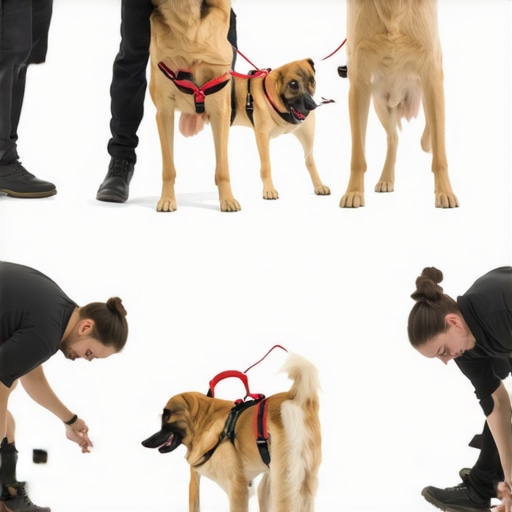
The smell of hot steam hitting heavy wool is a constant in my shop, even when the Mesa sun is already threatening to bake the sidewalk outside. People think tailoring is about aesthetics, but for a mobility dog handler in the Phoenix valley, a suit or a simple pair of trousers is a mechanical interface. The 2026 standards for mobility assistance have moved beyond simple retrieval. We are looking at a future where the dog is as much a part of the dressing process as the person wearing the clothes. The Editor’s Take: In 2026, dressing assistance tasks have evolved into a high-precision dance of tugs and grips, specifically focusing on sleeve management, zipper operation, sock removal, and footwear preparation. This isn’t just about convenience; it’s about the preservation of dignity through technical cooperation. I see the wear and tear on garments every day. A dog’s mouth is a powerful tool, but without the right training and the right textile reinforcements, it’s a recipe for shredded silk and ruined hems. To get the answer out of the way for those in a hurry: the four primary tasks for the coming year include the ‘Sleeve Slide,’ the ‘Vertical Zip,’ the ‘Heel-Pinch Sock Strip,’ and the ‘Shoe Throat Expansion.’ Each requires a specific grip strength and an understanding of fabric tension that most trainers ignore.
The tension between teeth and textile
In my experience with service dog tasks, the physics of a sleeve tug is often misunderstood. It isn’t a mindless pull. A 2026 mobility dog must learn the ‘Sleeve Slide,’ where they grip the cuff—ideally a reinforced tab—and apply a steady, downward pressure while the handler stabilizes their arm. If the dog jerks, the shoulder seam of a bespoke jacket will pop. I’ve seen it happen to a gentleman from Gilbert who thought a standard cotton blend could withstand a Lab’s enthusiasm. It can’t. We are seeing more demand for ‘bite-zones’—subtle, aesthetically integrated patches of Cordura or heavy-duty canvas hidden under cuffs and along zipper tracks. These zones provide the dog with a non-slip grip that doesn’t damage the primary fabric. According to the International Association of Assistance Dog Partners, the reliability of these tasks depends heavily on the ‘soft mouth’ technique, ensuring the dog doesn’t apply enough PSI to pierce the leather or synthetic fibers of modern 2026 activewear. The ‘Vertical Zip’ is another masterclass in mechanics. It involves a dog gripping a three-inch loop attached to a zipper slider. The dog must pull with a vector that is perfectly parallel to the zipper track. Any deviation—a lateral pull—and the teeth of the zipper will jam or derail. This is why we see a shift toward magnetic closures in high-end adaptive fashion, though the dog still needs to ‘break’ the magnetic seal to begin the opening process.
How the Valley heat alters the thread
Operating in Mesa or Apache Junction adds a layer of complexity that a New York tailor wouldn’t grasp. The heat here doesn’t just affect the handler; it makes the fabrics brittle. Sweat and salt buildup on a garment act like sandpaper against a dog’s teeth. Local trainers at [image placeholder] Robinson Dog Training often emphasize the need for cleaning gear more frequently to prevent this abrasive effect. In the Queen Creek area, where dust is a constant companion, Velcro—once the darling of adaptive clothing—is failing. The hooks get clogged with desert silt, making it impossible for a dog to ‘unpeel’ a closure. We are moving back to heavy-duty snaps and toggles that a dog can manipulate with their incisors. Proximity to local training hubs means we see a lot of ‘Shoe Throat Expansion’ training. This is where the dog uses its snout to widen the opening of a sneaker or boot, allowing the handler to slide their foot in without bending over. In the 115-degree Phoenix summers, the friction between a swollen foot and a dry leather shoe is immense. The dog’s role is to provide that extra half-inch of clearance. This is a regional necessity that global manufacturers are finally starting to acknowledge in their 2026 lines.
The invisible damage of a wet grip
The most significant ‘messy reality’ I encounter is the saliva factor. Dog saliva contains enzymes that, over time, break down the proteins in silk and wool. If a dog is performing the ‘Heel-Pinch Sock Strip’ three times a day, the heel of that sock is going to disintegrate within a month if it isn’t a high-performance synthetic. Most ‘expert’ advice tells you to use any old sock. That’s a lie. You need a reinforced heel with a ‘pull-tab’ that sits away from the skin. The friction here isn’t just fabric-on-fabric; it’s the dog’s teeth against the handler’s heel. A slight miscalculation in the ‘pinch’ leads to bruising. This is where the Mobility Dog Training in Mesa focuses its efforts—teaching the dog to identify the ‘void space’ between the fabric and the skin. If your dog is struggling with these tasks, the problem is likely the hardware, not the hound. Cheap, mass-produced zippers from big-box retailers aren’t designed for the directional torque a Golden Retriever applies. They are designed for a human thumb and forefinger. When you switch to a mobility-focused garment, you aren’t just buying clothes; you are buying a tool.
Answers for the curious mind
The industry is moving toward ‘Smart Textiles’ for 2026, but the fundamentals remain the same. Can a dog actually button a shirt? No, and anyone telling you otherwise hasn’t watched a dog try to manipulate a 10mm button with a wet nose. We use ‘faux-buttons’ with hidden magnetic snaps. Does the dog need to be a certain size? Generally, yes. A dog needs a certain ‘muzzle-to-floor’ height to comfortably remove socks without the handler having to over-extend. Will the dog ruin my expensive clothes? Only if you don’t use reinforced pull-points. How long does it take to train the ‘Vertical Zip’? Typically, four to six months of consistent reinforcement. Are there specific fabrics to avoid? Stay away from loose-knit sweaters; a dog’s claw or tooth will snag and unravel the whole piece in seconds. Is this covered by the ADA? Yes, these are recognized ‘tasks’ that mitigate a disability under ADA guidelines. What is the biggest mistake handlers make? Using loops that are too small, which forces the dog to use its molars rather than its front teeth, leading to more garment damage.
The future is custom fit
As we look toward the 2027 horizon, the integration of canine assistance and apparel design is only going to get tighter. We are moving away from the ‘one size fits all’ mentality of the early 2020s and toward custom-tailored solutions that account for the dog’s height, the handler’s range of motion, and the specific environmental stressors of places like Arizona. When a dog helps you dress, they aren’t just performing a task; they are weaving themselves into the very fabric of your daily independence. It’s time we started treating our wardrobes with the same technical respect we give our service animals.