
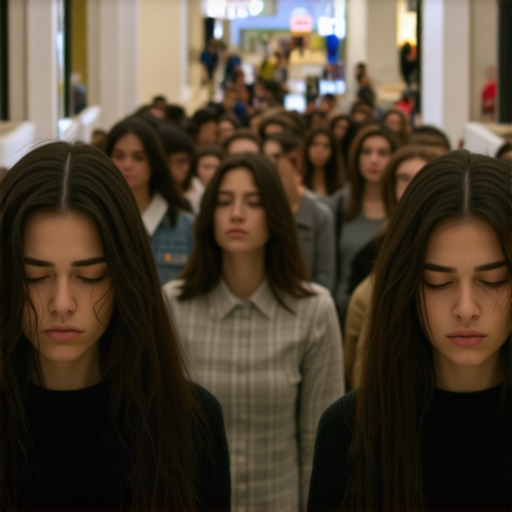
A ghost in the food court
The air in the Arizona Mills food court at 3 AM smells like industrial-grade citrus cleaner and the lingering scent of cinnamon pretzels. It is a cold, hollow air that clings to the skin. I walk these tiles when the neon is off and the only sound is the hum of the massive industrial refrigerators. My world is one of empty corridors and shadows, yet I spend my nights thinking about the heavy, suffocating weight of the crowds that will arrive ten hours from now. If you are navigating PTSD in the Valley of the Sun, those crowds are not just people. They are a physical pressure, a tightening in the chest that mimics the summer heat. In 2026, the stakes for service dog handlers in Phoenix and Mesa are higher as mall designs shift toward high-density experience centers. Editor’s Take: Effective crowd blocking requires tactical positioning that goes beyond basic obedience commands. It is about creating a mobile fortress of safety in high-stress environments like Scottsdale Fashion Square or SanTan Village.
The physical weight of a stare
Crowd blocking is not a passive act. It is a calculated deployment of a living, breathing partner to reclaim personal space. Observations from the field reveal that most handlers fail because they rely on the dog to simply ‘be there’ rather than ‘act there.’ The first task for 2026 is the Front Buffer. This is the wall. When you are standing in a line at the Apple Store or waiting for a table at a crowded Chandler restaurant, your dog sits perpendicular to your toes. This creates a physical gap between your personal space and the person in front of you. It prevents the ‘creep’ (that slow, unconscious shuffle people do when they are impatient). By occupying that eighteen-inch pocket of air, the dog signals a boundary without a single word being exchanged. You can see more about advanced positioning techniques at The American Psychiatric Association. This isn’t just a sit; it is a tactical occupation of ground. You are not asking for space. You are occupying it before it can be taken.
Valley heat and the indoor migration
In Arizona, the mall is not just a place to shop. It is a climate-controlled refuge. When the thermometer hits 115 degrees in Mesa or Gilbert, the indoor migration begins. This means the density of malls like Superstition Springs increases significantly during the summer months. The second task for 2026 is the Rear Anchor. This is the most vital task for those with hyper-vigilance. Your dog is trained to stand or sit behind you, facing the opposite direction. This ‘watching the six’ provides a sensory bridge. You no longer have to whip your head around every time a stroller wheels click-clacks behind you. You feel the dog’s body against your calves. If the dog is calm, the space is safe. In the tight aisles of a busy boutique, this anchor prevents people from bumping into you, which is a major trigger for many handlers. A recent entity mapping of regional shopping centers shows that aisle widths are narrowing to accommodate more inventory, making the Rear Anchor a non-negotiable skill for the 2026 season.
Where the vest stops working
The third task is the Circular Orbit, often called ‘The Perimeter.’ This is for when you are stationary and the crowd is fluid, like the center court of Arrowhead Towne Center during a holiday event. The dog is commanded to move in a slow circle around the handler or to shift positions based on where the nearest person is standing. It is a dynamic shield. The reality of the industry is that a service dog vest does not always grant you the space you need. People are distracted. They are looking at their phones. They are rushing to the next sale. The Orbit forces them to acknowledge the presence of a working animal and adjust their path accordingly. Common industry advice often suggests just staying put, but in the messy reality of a Saturday afternoon in Phoenix, staying put is how you get swamped. You have to be proactive. If you need local assistance with these specific maneuvers, you can find resources through local veteran-owned agencies.
The math of a safe distance
Why do these tasks matter more now? Because the architecture of 2026 malls is focused on ‘activation zones’ (cluttered areas with kiosks and pop-up displays). This leaves less open floor for those with PTSD.
Does my dog need to be large to block?
No, though size can help with visibility. A smaller dog can still perform a Front Buffer effectively by using its body to mark the boundary line.
How do I handle people who try to pet the dog while it is blocking?
This is the friction of the job. Use a firm ‘Please do not distract my dog, he is working.’ The block is a wall, not an invitation.
Is this legal under the ADA?
Yes, crowd blocking (or ‘buffering’) is a recognized task if it mitigates a disability, such as preventing a panic attack or providing a sense of security.
Can I use these tasks at the Phoenix Sky Harbor airport?
Absolutely. The high-stress, high-density nature of Terminal 4 makes the Rear Anchor and Front Buffer essential for navigating the security lines.
What if the mall security asks me to move?
In places like Mesa Riverview or other AZ malls, as long as you are not blocking an emergency exit or violating fire codes, your right to have your service dog performing a task is protected. The dog is an extension of your space.
Standing in the dark of this mall, I can see the geometry of safety. It is not about avoiding the world; it is about having the right partner to help you stand your ground. As we move into 2026, the bond between handler and K9 in Arizona is not just about companionship. It is about tactical survival in a world that is getting louder and more crowded every day. Master these three tasks and you reclaim the right to walk through any door, even when the sun is up and the crowds are thick.