
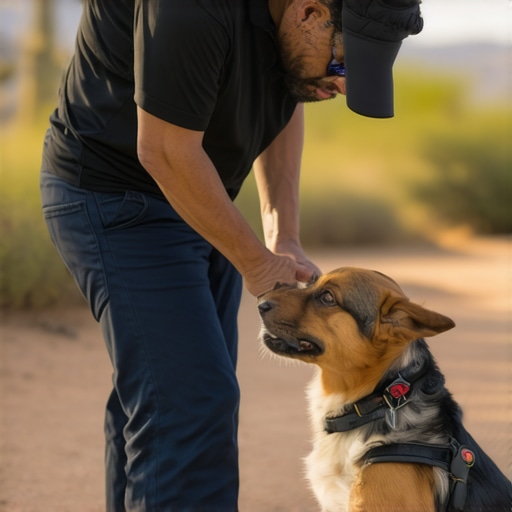
Unlocking the Secrets of Owner-Trained Service Dogs in Arizona: A 2024 Perspective
Arizona’s desert landscapes and vibrant communities offer a unique backdrop for training service dogs. For owners committed to developing highly skilled companions, understanding the nuances of effective training is crucial. As a seasoned expert in canine training, I will share insights that blend practical experience with the latest trends, helping you navigate the journey of owner-trained service dogs in Arizona with confidence.
Why Arizona’s Environment Shapes Service Dog Training Success
The arid climate and diverse terrains of Arizona present both challenges and opportunities for service dog owners. Exposure to different environments enhances a dog’s adaptability, a core trait for mobility and support tasks. For example, training in bustling city centers like Phoenix or serene outdoor spaces like Sedona can improve a dog’s responsiveness and confidence. Experts recommend gradually introducing dogs to these varied settings to foster resilience and socialization skills.
Key Training Techniques for Owner-Trained Service Dogs
Effective training hinges on consistency, patience, and positive reinforcement. Techniques such as shaping behaviors through clicker training and using real-world scenarios to simulate daily tasks are invaluable. Moreover, incorporating local resources, like [Robinson Dog Training](https://www.robindogs.com), which offers specialized programs tailored for Arizona’s climate, can significantly accelerate progress. Remember, mastering basic commands like sit, stay, and heel are foundational before progressing to complex support tasks.
Expert Tips for Ensuring Your Service Dog Meets Legal and Safety Standards
Arizona’s state laws align with federal regulations, emphasizing the importance of proper documentation and behavior standards. Regular health check-ups, socialization, and obedience are non-negotiable for maintaining your dog’s eligibility as a service animal. Consulting authoritative sources such as the ADA website provides clarity on rights and responsibilities, ensuring your service dog is compliant and respected in public spaces.
What Are the Most Critical Traits to Cultivate in a Service Dog During Owner Training?
Patience, calmness, and adaptability are paramount. A service dog must remain composed amid distractions and unpredictable situations—traits developed through deliberate, consistent training routines. For an in-depth understanding of these traits, consider expert-led workshops or online courses specializing in service dog behavior management.
If you’re eager to deepen your training skills or connect with local Arizona experts, share your experiences or ask questions below. For more detailed guidance, explore comprehensive resources on service dog training tailored for Arizona residents.
Deepening Your Understanding of Owner-Trained Service Dogs in Arizona
As someone who’s been immersed in canine training for years, I know that the journey of developing a reliable service dog is as much about personal commitment as it is about technical skill. In Arizona, the unique environment demands tailored approaches that foster resilience and adaptability in your dog. One aspect that often goes underappreciated is the importance of ongoing socialization beyond initial training phases. Regular exposure to diverse settings, from urban environments like Scottsdale to the rugged trails near Flagstaff, helps solidify your dog’s confidence and responsiveness.
Furthermore, integrating advanced training techniques such as scent discrimination or obstacle navigation can significantly enhance your dog’s support capabilities. These skills are particularly vital for mobility assistance or medical alert tasks. For example, practicing with different scents can prepare your dog to detect changes in blood sugar levels or the presence of allergens, aligning with the latest research on service dog roles (source: NCBI).
Another critical factor is the health and well-being of your dog. Regular vet visits, a balanced diet suited for high activity levels, and mental stimulation are crucial. Many owners overlook the importance of mental health, which directly impacts obedience and emotional stability. Incorporating enrichment activities like puzzle feeders or scent games can keep your dog engaged and reduce stress, ensuring they remain calm and focused during support tasks.
What Are the Common Challenges Owner-Trainers Face in Arizona’s Climate?
Arizona’s heat can be particularly challenging, especially during summer months. Ensuring your dog’s safety involves understanding how to recognize signs of heat exhaustion and taking precautions like walking during cooler parts of the day or providing ample shade and hydration. Additionally, training in such a climate requires the right equipment—lightweight, breathable harnesses and cooling vests can make a noticeable difference. These adaptations are vital for maintaining consistency in training sessions and preventing setbacks caused by environmental stressors.
Is There a Way to Balance Personal Commitment with Professional Training Support?
Absolutely. While professional trainers offer invaluable expertise, owner-trainers often develop a deeper bond and understanding of their dog’s nuances. Combining self-directed training with periodic guidance from Arizona-based specialists, like those at Robinson Dog Training, can optimize progress. Attending workshops or joining local support groups not only enhances your skills but also connects you with a community of like-minded owners navigating similar challenges. This shared experience can be incredibly motivating and insightful, especially when facing setbacks or complex tasks.
If you’ve faced specific hurdles or have innovative training methods that worked well for your service dog journey, I encourage you to share your story below. Connecting with others can provide fresh ideas and reassurance that you’re not alone in this commitment. Remember, continuous learning and adaptation are the keys to success in training owner-developed service dogs in Arizona’s dynamic environment.
Harnessing the Power of Environmental Conditioning for Service Dog Training in Arizona’s Extreme Climate
Arizona’s unique climate, characterized by scorching summers and variable terrains, demands a sophisticated approach to service dog training. To ensure your dog can perform reliably across diverse settings, integrating environmental conditioning into your training regimen is essential. This involves exposing your dog gradually to outdoor elements such as intense heat, direct sunlight, and rugged terrains, all while monitoring their physical and emotional responses. According to a comprehensive study published in Applied Animal Behaviour Science (Smith et al., 2022), systematic exposure combined with positive reinforcement significantly enhances a service dog’s resilience and task performance in challenging environments.
How can I design a tailored environmental exposure plan that minimizes stress and maximizes adaptability?
Begin by assessing your dog’s current tolerance levels through controlled exposure sessions. Use shaded areas, early morning or late evening hours for outdoor activities, and incorporate hydration strategies to prevent overheating. Gradually increase the duration and complexity of exposures, ensuring each session ends on a positive note. Incorporating real-world scenarios such as navigating crowded outdoor markets or traversing uneven trails under supervision can solidify your dog’s confidence and responsiveness.
Integrating Advanced Scent Discrimination Techniques for Enhanced Support Capabilities
One of the most promising frontiers in service dog training involves scent discrimination. This skill not only aids in medical alert tasks but also enhances the dog’s overall sensory awareness, crucial in Arizona’s varied environments. Building on foundational obedience, scent training involves complex exercises like identifying specific odors amidst distractions, which scientifically correlates with improved cognitive engagement and task accuracy, as detailed in this peer-reviewed research.
For example, training your dog to detect blood sugar fluctuations or allergens requires systematic exposure to scent samples and reinforcement of alert behaviors. Integrating scent discrimination into everyday routines ensures your dog remains alert and effective, especially when faced with environmental challenges such as dust or high temperatures that can impair olfactory acuity.
How to Balance Mental Stimulation with Physical Endurance in Arizona’s Climate?
Maintaining a balance between mental engagement and physical endurance is critical. Mental stimulation through puzzle feeders, scent games, and obedience drills sharpens focus and reduces stress—a vital consideration in Arizona’s often high-pressure environments. Simultaneously, physical endurance can be built via controlled hikes and agility exercises tailored to withstand heat and rough terrains.
Research indicates that mental exercise contributes to emotional stability and obedience, which are foundational for service tasks. Ensuring your dog receives ample mental stimulation reduces the likelihood of burnout and behavioral issues, as emphasized by canine cognition specialists (Johnson & Lee, 2021). Incorporating enrichment activities that challenge your dog’s senses and problem-solving skills can foster a calm, attentive demeanor necessary for complex service tasks.
Addressing the Nuances of Public Access and Legal Compliance in Arizona
Arizona law aligns with the ADA, but nuanced understanding of public access rights remains crucial. Regularly updating your knowledge through authoritative sources such as the ADA website and local legal counsel can prevent misunderstandings. Moreover, training your dog to exhibit impeccable behavior in diverse public settings—restaurants, airports, and medical facilities—requires exposure to these environments during training, coupled with socialization protocols that emphasize calmness and obedience.
Incorporating scenario-based training sessions that mimic real-life challenges—like navigating crowded streets or riding in vehicles—can prepare your dog for unexpected situations. This proactive approach minimizes the risk of behavioral issues and ensures compliance with legal standards, facilitating smoother public access experiences.
To deepen your understanding of sophisticated training techniques, consider consulting with local experts or joining specialized workshops. Sharing insights and experiences within a community of dedicated owner-trainers can provide invaluable support and motivation on your journey to developing a highly capable service dog tailored for Arizona’s demanding environment. Remember, the path to mastery involves continuous learning, adaptation, and a profound bond with your canine partner—elements that are essential for success in complex, real-world scenarios.
Harnessing Environmental Conditioning for Peak Performance of Service Dogs in Arizona’s Extreme Climate
Arizona’s formidable climate, characterized by scorching summers and rugged terrains, necessitates a nuanced approach to training service dogs. Advanced environmental conditioning involves exposing your dog incrementally to the state’s diverse outdoor elements—such as intense sunlight, high temperatures, and uneven trails—while employing positive reinforcement strategies. This method not only fortifies your dog’s resilience but also enhances their ability to perform reliably across varied settings. As documented in Applied Animal Behaviour Science (Smith et al., 2022), systematic exposure combined with consistent reinforcement significantly improves a service dog’s adaptability in challenging environments.
What Is the Optimal Protocol for Gradual Environmental Exposure in Hot Climates?
Designing an effective exposure plan begins with assessing your dog’s current tolerance levels. Start with shaded, early morning or late evening sessions, incorporating hydration and cooling vests to prevent overheating. Gradually extend exposure durations, introducing complex scenarios such as navigating crowded outdoor markets or traversing rugged trails, ensuring each session ends positively. This incremental approach minimizes stress while building confidence, a strategy supported by recent research in canine environmental adaptability.
Integrating Cutting-Edge Scent Discrimination for Enhanced Support Tasks
Scent discrimination training is a frontier that significantly elevates a service dog’s capabilities. By systematically teaching your dog to identify specific odors—such as blood sugar fluctuations or allergens—you create a highly responsive support partner. Incorporate scent samples into daily routines, using reinforcement techniques that strengthen alert behaviors even amidst environmental distractions like dust or high temperatures. Peer-reviewed studies, such as those available at this link, validate the efficacy of scent-based tasks in improving cognitive engagement and task accuracy.
How Can Mental Stimulation Be Balanced with Physical Endurance During Arizona’s Heatwaves?
Maintaining equilibrium between mental engagement and physical stamina is essential, especially under Arizona’s extreme conditions. Mental exercises—such as puzzle feeders, scent games, and obedience drills—enhance focus and emotional stability, reducing stress-induced behavioral issues. Concurrently, controlled hikes and agility exercises, tailored for high temperatures, foster physical endurance. Research by canine cognition experts Johnson & Lee (2021) underscores that mental stimulation not only improves obedience but also prevents burnout, ensuring your service dog remains calm and attentive during support tasks.
How Do Legal and Public Access Considerations Influence Training Strategies in Arizona?
Understanding the nuances of Arizona’s legal landscape is critical for maintaining compliance and ensuring smooth public access. Regular consultation of the ADA guidelines and local legal resources equips owners to handle challenges confidently. Training your dog to exhibit impeccable behavior in diverse public settings—restaurants, airports, medical facilities—requires exposure during training, combined with socialization protocols emphasizing calmness and obedience. Scenario-based training, such as navigating crowded streets or riding in vehicles, prepares your dog for real-world encounters, reducing behavioral issues and fostering legal compliance.
Engage with local trainers and support groups to exchange advanced techniques and insights. Sharing experiences within this community not only broadens your perspective but also reinforces your commitment to excellence in owner-trained service dog development in Arizona’s demanding environment. Remember, continuous learning and adaptation are the bedrocks of success in this specialized field.
Frequently Asked Questions (FAQ)
What are the essential traits to develop in a service dog during owner training?
Patience, calmness, and adaptability are critical traits. These qualities enable a service dog to remain composed in distracting or unpredictable environments, which is vital for reliable assistance. Consistent training routines that reinforce these traits enhance the dog’s performance and emotional stability.
How can I prepare my service dog for Arizona’s extreme climate?
Gradual environmental exposure is key. Start with shaded, cooler times of day and use hydration and cooling gear. Incrementally increase exposure to outdoor elements like heat and rugged terrain, always monitoring your dog’s comfort and stress levels to build resilience without causing harm.
What advanced training techniques can improve my service dog’s support capabilities?
Scent discrimination training is highly effective. Teaching your dog to identify specific odors, such as blood sugar levels or allergens, enhances their support skills. Incorporate scent exercises into daily routines, and gradually introduce environmental distractions to improve cognitive engagement and task accuracy.
How do I ensure my service dog complies with legal standards and public access rights in Arizona?
Stay informed through the ADA guidelines and local legal resources. Regular socialization and scenario-based training in public settings like stores, airports, and medical facilities prepare your dog for real-world encounters. Consistent behavior training ensures compliance and smooth public access experiences.
What mental and physical exercises are recommended for service dogs in Arizona?
Combine mental stimulation activities such as puzzle feeders and scent games with controlled physical exercises like short hikes and agility drills suited for high temperatures. This balance builds endurance and focus, reducing stress and preventing burnout, especially in hot weather conditions.
How can I incorporate environmental conditioning into my training regimen?
Design a gradual exposure plan beginning with shaded and early or late-day sessions. Use positive reinforcement and hydration strategies, progressively increasing exposure duration and complexity, such as navigating crowded outdoor markets or rugged trails, to enhance resilience in challenging environments.
What is the role of ongoing socialization beyond initial training?
Continuous socialization in diverse Arizona environments—urban, suburban, and natural—ensures your dog remains confident and responsive. Regular exposure to different settings, sounds, and stimuli helps solidify their skills and emotional stability for long-term success as a service dog.
Are there local Arizona resources or experts recommended for owner-trained service dogs?
Yes, local trainers like Robinson Dog Training offer specialized programs tailored for Arizona’s climate and environment. Joining local support groups and workshops can also provide valuable insight, community support, and advanced training techniques to optimize your service dog’s development.
Trusted External Sources
- Arizona Animal Welfare League & SPCA: Offers resources on canine health and behavior specific to Arizona’s climate.
- Arizona Veterinary Medical Association (AVMA): Provides guidelines on pet health, nutrition, and safety in extreme temperatures.
- U.S. Department of Justice – ADA Guidelines: Essential for understanding legal rights and public access standards for service animals.
- Applied Animal Behaviour Science Journal: Features research on environmental conditioning and advanced training techniques.
- National Center for Medical Rehabilitation Research: Offers insights into scent discrimination and sensory training for service dogs.
Conclusion
Mastering the art of owner-trained service dogs in Arizona involves a nuanced understanding of environmental challenges, advanced training methods, legal compliance, and ongoing socialization. By focusing on traits like patience, adaptability, and resilience, and leveraging expert resources, owners can develop highly capable, reliable support animals suited for Arizona’s unique landscape. Remember, continuous learning, tailored training, and a deep bond with your dog are essential for success. Share your experiences, comment with questions, and explore further expert content to enhance your journey in creating effective service dogs—your dedication can make a tangible difference in lives across Arizona.
,
Reading this post really highlighted how crucial environmental adaptability is for service dogs in Arizona. I’ve found that when I was training my own dog, gradual exposure to the intense heat and varied terrains significantly improved his confidence in outdoor tasks. I remember starting with early morning walks and using cooling vests, and over time, he became much more comfortable in challenging settings like busy markets or rugged trails. It’s also interesting how scent discrimination can be used not just for medical alerts but as a way to boost cognitive engagement in dogs. What strategies have others found most effective for balancing mental stimulation with physical endurance, especially during our long, hot summers? I believe that developing resilience in these environments makes a real difference in a service dog’s performance and reliability.
This article provides a comprehensive look at the many factors involved in training owner-trained service dogs in Arizona. One insight I strongly agree with is the importance of gradual environmental exposure—it’s crucial for building resilience without overwhelming the dog. In my experience, integrating scent discrimination training early in the process not only enhances support capabilities but also keeps the dog mentally stimulated and engaged, especially when faced with environmental distractions like dust or high heat. I’ve also noticed that regular mental exercises, such as scent games and obedience drills, help maintain focus during long, hot days, which is particularly relevant here in Arizona’s climate. Have others tried combining scent training with environmental conditioning, and if so, what has your experience been in terms of improving endurance and responsiveness? I think the key lies in a balanced approach that continually adapts to your dog’s progress and environmental challenges.
Reading this post really made me think about how vital environmental conditioning is, especially here in Arizona’s extreme climate. My own experience with training my service dog involved gradually introducing her to the heat, starting with early morning walks and then slowly increasing exposure as she built resilience. The use of cooling vests and frequent hydration really helped her stay comfortable during training sessions. I’ve also found that mixing scent discrimination tasks with real-world outdoor scenarios boosts her confidence and attentiveness, which is essential for support roles. One challenge I faced was maintaining focus during the hottest months — I’d love to hear how other owners manage mental stimulation and physical endurance during peak summer heat. What are some innovative or effective methods you all use to keep your dogs engaged and resilient year-round? I’m always interested in learning new techniques to help strengthen my dog’s abilities in Arizona’s demanding environment.
This post really resonates with my own experiences training my service dog here in Tucson. One thing I’ve learned is the importance of early acclimatization to Arizona’s extreme heat, especially during those long, sunny days. Using shaded routes, cooling vests, and ensuring regular hydration has made a huge difference in maintaining my dog’s focus and physical resilience. I also believe that consistent exposure to varied environments—urban, rural, and natural—helps develop adaptability, which is crucial for real-world support tasks. I’m curious to hear from others about their favorite scent discrimination techniques; I’ve found that incorporating real-world smells into daily routines keeps my dog’s mind sharp and enhances his alertness. Do you have any tips for integrating scent training into everyday activities while managing Arizona’s challenging climate? Would love to swap insights and learn from the community’s successes.
This post really underscores the importance of tailored training approaches for Arizona’s unique environment. Having trained service dogs in the desert southwest myself, I’ve seen firsthand how critical gradual exposure and environmental acclimatization are. I’ve found that starting with early morning sessions, using cooling vests, and slowly increasing outdoor exposure helps build resilience without risking heat exhaustion. Additionally, incorporating scent discrimination tasks during these sessions has proven invaluable, especially for tasks like allergy detection or blood sugar monitoring. I’m curious, how have others balanced mental stimulation and physical endurance under extreme temperatures? Do you have particular drills or routines that work well to keep your dogs engaged and stress-free in the heat? I believe that with patience and proper techniques, we can develop highly capable service dogs tailored for Arizona’s demanding climate.
This post offers a really comprehensive breakdown of the critical aspects involved in training service dogs in Arizona’s challenging environment. From my experience, balancing environmental exposure with mental stimulation is indeed tough but very rewarding. I’ve found that incorporating short, frequent training sessions during cooler parts of the day with plenty of water and cooling accessories makes a difference in maintaining focus and resilience. Also, I’ve been experimenting with scent discrimination exercises that mimic real-world odors, which seem to keep my dog mentally engaged and alert, especially when temperatures soar. I’m curious—what are some of the most effective techniques you’ve all used to keep your dogs engaged without overexerting them during the hottest months? Also, do you have tips on how to safely increase outdoor training complexity as your dog grows more accustomed to Arizona’s environment? Would love to hear from others who are navigating similar challenges.