
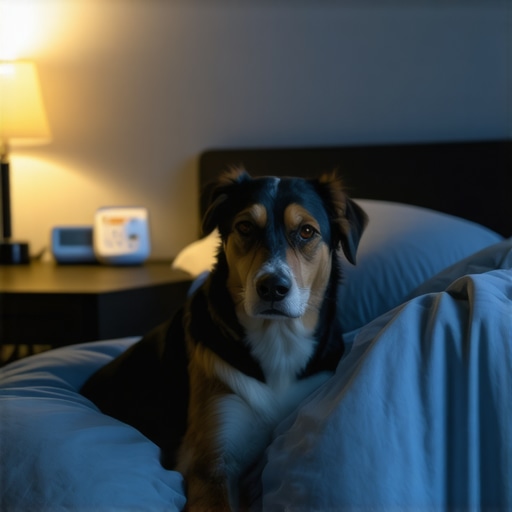
The air in this corridor smells of industrial lemon cleaner and that sharp, metallic scent of cold ventilation. It is 3:00 AM. While Mesa sleeps, I watch the monitors. Most people think safety is a steady state, but I know it is a series of fragile systems barely holding together. For families living with seizure disorders, the night is not a rest. It is a blind spot. A seizure dog is the biological sensor in that darkness, yet even the best-trained K9 from a facility like the American Kennel Club standards can face technical and environmental hurdles when the sun goes down. Fixing nighttime alert reliability for 2026 requires more than just a vest and a prayer. It demands a tactical overhaul of the sleeping environment and the hardware that bridges the gap between dog and human.
The silent failure of modern bedroom acoustics
Static. That is the sound of a missed alert. In the dead of night, the hum of a Dyson fan or a white noise machine in a Gilbert suburban home becomes an accidental jammer. If your dog alerts by barking or pawing a bedside rail, but you are buried under a weighted blanket and drowning in a digital rainstorm soundscape, the system fails. We see this in security all the time. One sensor triggers, but the siren is muffled by a closed fire door. To fix this, we move toward haptic redundancy. The dog should not just rely on sound. New 2026 protocols suggest integrated vibrating pads beneath the primary caregiver’s mattress. When the dog hits a floor-level pressure plate or a wearable sensor detects a specific frequency of motion, the bed itself provides the wake-up call. It is blunt. It is effective. It cuts through the fog of a deep REM cycle. We are looking at a shift where the dog acts as the biological trigger for a mechanical fail-safe. Think of it as a hardwired alarm for a high-security vault. You do not leave the vault door to chance.
The physical physics of a 3 AM emergency
Your hallway is a deathtrap at night. I have seen the footage. People trip over shoes, laundry baskets, or the dog itself during a post-seizure panic. If a dog alerts you in Queen Creek at 2:00 AM, the path to the patient must be clear and illuminated without blinding the responder. Smart lighting shouldn’t just turn on; it should glow at a low-frequency red to preserve night vision. High-authority medical resources like The Epilepsy Foundation often emphasize the importance of a clear environment, but they rarely talk about the tactical lighting required for a K9 to navigate a darkened room. In 2026, we are integrating motion-activated path lights that sync with the dog’s smart collar. When the collar’s accelerometer hits a specific threshold of ‘alert movement,’ the path from the caregiver’s room to the patient’s bed lights up like a runway. No fumbling for switches. No stubbed toes. Just a clear line of sight to the person who needs help. This is not about convenience. This is about shaving seconds off a recovery window.
Why your Wi-Fi is the weakest link in Mesa
I see the signal bars drop every night when the atmospheric pressure shifts or the local grid throttles. Relying on a cloud-based app for a life-saving alert is a gamble I would never take with a high-value asset. If your seizure dog’s collar needs to talk to a server in Virginia before it pings your phone in Apache Junction, you are in trouble. Local Mesh Networks are the 2026 standard. This means the dog’s wearable communicates directly with your home hub via Bluetooth Long Range or Zigbee protocols, bypassing the internet entirely. Even if the Cox or CenturyLink lines go dark, the alert stays live within the four walls of your house. It is the same logic we use for closed-circuit security. It is private, it is fast, and it does not care if the neighborhood router is rebooting. We are moving away from ‘smart’ and moving toward ‘resilient.’
The heat factor in the Valley of the Sun
People forget that Arizona nights are not always cool. In Phoenix, a bedroom can hold onto 85 degrees well into midnight if the AC is struggling or set to ‘Eco’ mode. A dog that is overheating is a dog that is distracted. Their respiratory rate increases, their focus blurs, and their ability to detect subtle scent changes—the chemical precursors to a seizure—diminishes. We are seeing a rise in the use of localized K9 cooling mats that utilize phase-change materials rather than just gel. These mats stay at a constant 65 degrees for up to ten hours without needing a plug. When the dog stays cool, the dog stays sharp. It is the difference between a guard who is nodding off in a stuffy booth and one who is standing in a crisp, air-conditioned lobby. You want the latter. If you are working with a local professional, such as those found through Assistance Dogs International, ask about thermal management. A dog’s work ethic is high, but their biology has limits.
The messy reality of battery fatigue
Everything dies at 3 AM. The smoke detector chirps. The phone dies. The collar battery gives up. In my line of work, we call this ‘equipment complacency.’ To fix this for 2026, we are implementing dual-battery systems in K9 wearables. One primary cell for the GPS and activity tracking, and a shielded backup cell dedicated solely to the alert trigger. More importantly, we are seeing the introduction of inductive charging beds. The dog doesn’t need to be ‘plugged in.’ They just need to sleep on their designated spot, and the bed charges the collar wirelessly. No more forgetting to plug in the vest on the kitchen counter. If the dog is in position, the dog is powered up. It removes the human element from the safety equation, which, frankly, is usually the part that breaks first. People are tired. People are forgetful. The system shouldn’t be.
Frequently asked questions from the night shift
What is the biggest mistake people make with nighttime K9 alerts? They assume the dog will always be loud. Many dogs try to alert quietly at first because they don’t want to ‘break the rules’ of a quiet house. You have to train for the high-intensity alert specifically for the 2:00 AM window. Do smart watches replace the need for a dog? No. Watches measure heart rate and movement, but they miss the chemical aura. A dog is a multi-modal sensor. The watch is just a data point. Use both. How often should I test the nighttime path lighting? Every Sunday. Walk the path in total darkness. If you hesitate, the system is poorly designed. Does the dog need to sleep in the same bed? Not necessarily, but they need to be within the ‘scent plume’ of the patient. If the AC is blowing the air away from the dog, they won’t smell the seizure coming. What happens if the dog sleeps too deeply? This is rare for a working dog, but it is why we use haptic collars that can vibrate to wake the dog up if a bedside sensor detects seizure-like movement before the dog does. It is a loop of mutual accountability.
The final sweep
Safety is not a product you buy; it is a perimeter you maintain. As 2026 approaches, the integration of local hardware, biological intuition, and environmental control is the only way to sleep soundly in the East Valley. The shadows are long, and the night is quiet, but with the right fixes, you aren’t just hoping for the best. You are controlling the variables. Watch the sensors. Keep the batteries full. Trust the dog, but verify the tech. The shift never ends, but it can be managed. Stay vigilant.