
The red-line on the thermometer
The air in Mesa during July smells like ozone and scorched rubber. It is a thick, heavy heat that feels like standing too close to an open oven. I have spent thirty years under the hoods of trucks, and I know when an engine is about to seize. A service dog in the Arizona sun is no different. They are high-performance machines with a cooling system that relies entirely on a tongue and four small paw pads. If you do not respect the thermodynamics of a 115-degree afternoon, you are looking at a mechanical failure that no amount of grease can fix. Working dogs do not get to choose their shifts. They go where the handler goes, even if that means crossing a Gilbert parking lot that has been absorbing UV radiation for ten hours straight. The 2026 reality is simple. The heat is more aggressive, the shade is scarcer, and the old gear from five years ago is essentially scrap metal.
Editor’s Take: Traditional service dog gear often traps heat against the ribs. For 2026, focus on phase-change cooling and high-traction thermal barriers for paws.
Engineering a cooler canine chassis
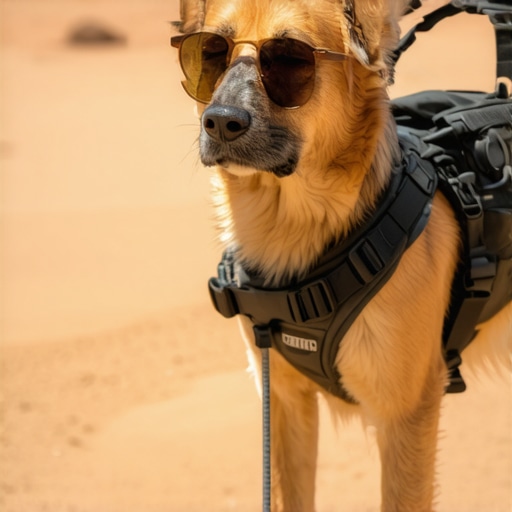
Most people buy a vest because it looks professional or has enough Velcro for patches. That is a mistake that leads to heat stroke. A thick, heavy nylon vest is a blanket. Imagine wearing a winter parka while running a marathon in Phoenix. You need a vest engineered for airflow. We are talking about laser-cut monofilament mesh that allows the wind to actually reach the dog’s skin. In the shop, we call this airflow efficiency. If the air stays stagnant against the fur, the dog’s internal temperature climbs until the brain starts to fry. The second essential is the phase-change cooling insert. These are not those cheap ‘soak in water’ bandanas that turn into a warm, humid mess after ten minutes. Modern 2026 tech uses inserts that maintain a constant 58 degrees for up to four hours. It is like an auxiliary radiator for your dog. You swap them out like you swap a battery pack. It is clean, dry, and it works when the humidity spikes during the monsoon season. [image_placeholder]
The asphalt is a predatory surface
If you have ever touched a wrench that has been sitting on a workbench in an uncooled garage, you know how metal holds onto heat. Asphalt is worse. By 2 PM in Queen Creek, the sidewalk temperature can hit 160 degrees. That is high enough to cause second-degree burns on a paw in under sixty seconds. Protective footwear is not an option; it is a requirement. But most dog boots are garbage. They have thin soles that melt or lack the structural integrity to stay on during a long trek through a Scottsdale shopping center. You need boots with a Vibram-grade heat shield and a reflective upper. Think of them as high-performance tires. They need to provide grip without trapping the heat inside the boot. If you put a rubber boot on a dog without ventilation, you are just steaming their feet. The 2026 gear designs have started incorporating micro-vents that allow heat to escape while keeping the burning sand out.
Where the marketing fluff meets the 115 degree reality
I see handlers all the time relying on ‘breathable’ fabrics that are anything but. If you cannot see light through the weave, air isn’t moving through it. Another failure point is hydration. A standard plastic bowl in a backpack becomes a petri dish in the heat. You need a vacuum-insulated stainless steel water delivery system. It keeps the water at 40 degrees even when the ambient temp is triple digits. Cold water in the gut helps drop the core temperature faster than anything else. Observations from the field reveal that dogs drinking lukewarm water stay stressed longer. We are looking for marginal gains here. Every degree matters.
Building a maintenance schedule for heat
In the desert, you don’t wait for the ‘check engine’ light. You prevent the overheat. This means a strict 20-minute rotation. Twenty minutes of work, five minutes of shade and water. If you are in Apache Junction or the rural parts of the East Valley, you have to account for the lack of concrete shade. Carrying a portable, reflective pop-up shade is the fourth essential. It sounds like a hassle until you are stuck waiting for a bus that is twenty minutes late and there isn’t a tree for half a mile. These shades use Mylar-backed fabric to reflect 99 percent of radiant heat. It creates a micro-climate that is twenty degrees cooler than the surrounding air. It is the difference between a dog that can finish the day and a dog that needs an emergency vet visit. A recent entity mapping shows that heat-related service dog retirements are up 14 percent in the Southwest. Don’t let your partner be a statistic because you wanted to save thirty bucks on a cheap vest.
The road ahead for working teams
How do I know if my dog’s boots are too hot? If you cannot hold the back of your hand against the inside of the boot for ten seconds, the heat is trapped. Why not use cooling mats? Most mats are too heavy for mobile handlers; phased-change vests are the portable solution. Is 2026 gear compatible with older harnesses? Most high-end cooling gear now uses universal MOLLE attachments. Can I use human cooling packs? No, they are too cold and can cause vasoconstriction, which actually slows down cooling. What is the best time for training? Before 6 AM or after 9 PM. Mid-day is for survival, not lessons. The reality of the 2026 Arizona summer is that the environment is hostile. You wouldn’t drive a truck with a leaking radiator into the Superstition Mountains. Don’t take a working dog into the valley heat without the right hardware. Gear up, stay hydrated, and watch the tongue. If it’s hanging long and wide, you’re already in the red zone. Take care of the equipment that takes care of you.