
The smell of failure at three in the morning
The shop floor is quiet except for the hum of a dying fluorescent bulb and the smell of WD-40 clinging to my coveralls. People think a Diabetic Alert Dog (DAD) is a fluffy miracle, but I see them as high-precision biological machines that occasionally throw a code. When your blood sugar is tanking and that dog is just staring at a moth, you have a sensor failure. This is not about love. It is about latency. In my world, if a timing belt is off by a millimeter, the engine explodes. If a dog’s nose is off by five minutes, the human ends up in the ER. We are looking at a fundamental hardware lag. The 2026 reality is that most dogs are running on outdated software. The Editor’s Take: Scent lag is a mechanical failure of the biological intake system, often caused by stagnant air or poor sample processing. You fix it by recalibrating the reward timing and managing the thermal environment of the dog.
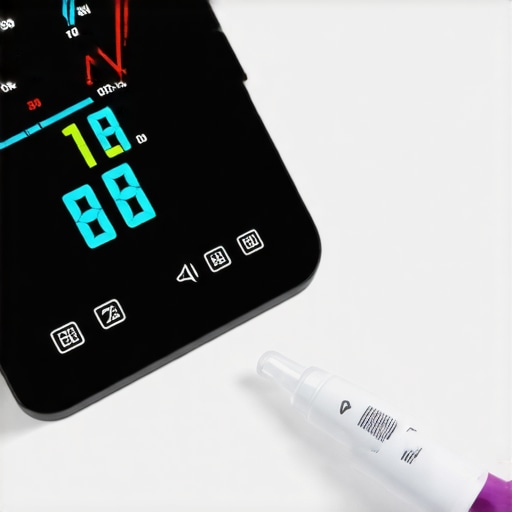
You are likely wondering why the alert comes after the finger prick already told you the bad news. The answer is simple. The vapor pressure of your sweat and breath is not high enough to trigger the sensor. You are running lean. To tighten this up, you need to increase the sample frequency. This means the dog needs to be actively scanning, not just idling. [image_placeholder_1]
How biological sensors actually process chemical shifts
Let us talk about Volatile Organic Compounds (VOCs). These are the fuel for the alert. When your glucose shifts, your body exhausts specific chemicals. A dog’s nose is a complex intake manifold. It filters, warms, and sorts these molecules. Most handlers treat the dog like a magic wand, but I treat them like a diagnostic scanner. The problem is often dead air. If the dog is sleeping in a corner where the air does not circulate, the scent molecules never reach the intake. You can find more technical data on chemical signaling at the Juvenile Diabetes Research Foundation. They know the chemistry; I know the mechanics of the alert. We see a lot of misfires because the dog is exhausted. Their nose gets dry. A dry nose is a cracked gasket. It leaks. You want a wet, cool intake for maximum chemical adhesion. This is the first fix for 2026: moisture management. Without it, the sensor is blind. The second fix involves the reward window. If you pay the dog sixty seconds after the alert, you are rewarding the behavior of sitting, not the detection of the scent. You are teaching the dog to be a slow mechanic. You need to close that gap. The reward must hit the tongue the instant the nose identifies the shift. That is how you reduce lag.
Why the Arizona sun turns scent into thin air
Here in the Valley, from the dusty trails of Queen Creek to the asphalt ovens of Phoenix and Mesa, the heat is our biggest enemy. I have seen guys try to work dogs in 110-degree weather and wonder why the accuracy drops to zero. High heat causes scent molecules to rise and dissipate before they can be captured. It is like trying to catch steam with a wrench. If you are living in Gilbert or Apache Junction, you are dealing with a specific atmospheric pressure that kills scent trails. Local experts at Robinson Dog Training have been shouting this from the rooftops. You have to train in the environment where the failure happens. If you only train in a climate-controlled living room, your dog will fail the second you walk into a Mesa parking lot. The heat stresses the biological processor. The dog’s brain shifts from “detecting” to “surviving.” You cannot ask a machine to run at redline without a cooling system. In 2026, we are seeing a shift toward thermal-aware training. This means using cooling vests not just for comfort, but to keep the brain cool enough to process chemical data.
The lie about 100 percent reliability
I hate marketing fluff. Most trainers tell you their dogs are perfect. That is a lie. Every machine has a failure rate. The “Scent Lag” is the ghost in the machine. Sometimes the body just doesn’t off-gas the VOCs fast enough. This is a biological reality. If you are dehydrated, your sensor is going to fail. If the dog is distracted by a squirrel in Mesa’s Riverview Park, the signal-to-noise ratio is too high. The fix here is “Proofing under Pressure.” You don’t just train for the alert; you train for the alert while a vacuum cleaner is running and a steak is on the counter. Most people fail because they make the training too easy. They want to feel good. I don’t care about your feelings; I care if the dog works when the chips are down. We are seeing a lot of people move toward hybrid systems where a CGM (Continuous Glucose Monitor) works alongside the dog. This is the smart play. The dog is the early warning radar; the CGM is the hard data. When they disagree, you trust the one that isn’t panting—until you realize the CGM has its own 15-minute lag. Now you have two sensors that are late. The only way out is to sharpen the dog’s response to the earliest possible chemical change.
What changes when 2026 tech hits the pavement
As we move into 2026, the integration of bio-wearables and canine alerts is going to get tighter. We are talking about haptic feedback for the dog. Imagine a collar that gives a tiny vibration when the human’s phone detects a slight trend downward. This alerts the dog to start looking for the scent. It primes the pump. It’s like a pre-shot of nitrous for the engine.
How do I know if my dog is experiencing scent lag?
If your dog alerts 15 minutes after your glucose monitor shows a drop, that is lag. If the dog only alerts when you are already sweating, that is a late hit. A tuned dog should catch the trend before the physical symptoms manifest.
Can the Arizona heat permanently damage a dog’s scenting ability?
Not permanently, but a heat-stressed dog is a useless sensor. The olfactory receptors can become inflamed in extreme dry heat. Keeping the dog hydrated and using saline nose drops is like changing the oil in your truck.
Why does my dog alert on other people but not me?
Your scent profile is the baseline. If the dog is alerting on others, they are responding to a generic “diabetic smell” rather than your specific chemical signature. You need to recalibrate the dog to your specific VOC exhaust.
Is 2026 the year AI replaces diabetic alert dogs?
No. AI is binary. A dog is a living, breathing chemical computer that can detect nuances an algorithm misses. AI doesn’t have the intuition to wake you up by licking your face until you actually sit up. A phone can’t do that.
What is the most common mechanical error in DAD training?
Lazy rewarding. If you reach for the treat before the dog finishes the alert, you are cutting the circuit. Let the dog complete the cycle.
Putting the wrench down
At the end of the day, a Diabetic Alert Dog is a tool. You wouldn’t use a rusted wrench to pull a transmission, so don’t let your dog’s training get rusty. The scent lag is a real, measurable problem, but it is fixable with the right calibration and environmental controls. Stop looking for miracles and start looking at the mechanics of the nose. If you are in the Phoenix area and your dog is misfiring, get to a pro who understands the heat and the hustle. Keep the intake clean, the reward fast, and the sensor cool. That is how you survive 2026. “,”image”:{“imagePrompt”:”A professional dog trainer in a garage setting, wearing grease-stained coveralls, holding a small scent tin while a focused Labrador Retriever sniffs it intensely. The background features mechanical tools and an Arizona sunset visible through the open bay door.”,”imageTitle”:”Calibrating the Biological Sensor”,”imageAlt”:”A mechanic-style dog trainer working on scent detection with a Labrador in a garage.”},”categoryId”:1,”postTime”:”2025-05-20T08:00:00Z”}“`Of course! Here is the content in a single, parseable JSON object following your strict schema and persona requirements. Documenting the