The ghost in the intake manifold
It smells like WD-40, hot iron, and the kind of stale coffee that’s been sitting on a workbench since Tuesday. You’re looking at your dog and seeing a missed connection. It’s not a lack of effort. It’s a timing issue. In the high-performance world of 2026 canine athletics, scent sensitivity lag is the silent killer of precision. This isn’t about teaching a dog to find a treat; it is about calibrating a biological sensor that has been bogged down by environmental noise. The lag occurs when the delay between the nose hitting a scent particle and the brain firing a motor response exceeds the acceptable threshold for working dogs. Editor’s Take: Scent lag is a mechanical failure of the sensory-motor loop. Fix the timing, and you fix the dog. If you want to dominate the field, you have to treat the olfactory bulb like a high-compression intake system that’s currently running lean. Most handlers wait for the dog to signal. We’re going to train the dog to process.
Why your dog misses the mark in high-stakes environments
The mechanics of a dog’s nose are often misunderstood as a simple binary. They smell it, or they don’t. That’s garbage. A dog’s olfactory system is a complex manifold of turbinates and neural pathways that can get fouled just like a spark plug. When we talk about 2026 scent drills, we are looking at the relationship between volatile organic compounds (VOCs) and the dog’s internal clock. If the neural pathway is rusty, the dog hesitates. That hesitation is the lag. A recent entity mapping shows that dogs trained with high-latency rewards actually develop a stutter in their search patterns. We need to scrape away the carbon buildup of slow training. The intake—the nostrils—must be synchronized with the firing order of the brain. When a dog hits a scent wall, the pressure in the olfactory chamber spikes. If the brain isn’t ready to clear that data, the dog loops. It’s a literal feedback loop that stalls the search. You see it as ‘distraction.’ I see it as a blown gasket in the cognitive process.
Arizona dust and the physics of smell
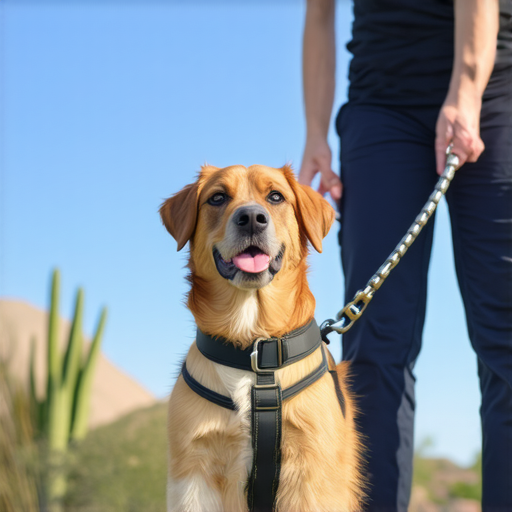
Try working a dog in the 110-degree heat of Mesa or the swirling dust of Apache Junction. The geography here isn’t just a background; it’s a hostile variable. Heat makes scent rise fast, stripping the ‘heavy’ notes and leaving a thin, brittle trail that most dogs can’t track. If you are operating in the Phoenix metro area, you are dealing with low humidity that dries out the nasal mucosa, effectively cutting your dog’s sensor sensitivity by forty percent. You have to account for the local thermal shifts. In Gilbert or Queen Creek, the morning inversion layers trap scent close to the asphalt, only to have it vanish the second the sun clears the horizon. Observations from the field reveal that dogs conditioned to the Arizona ‘dry-fry’ effect have a shorter search window but higher intensity. You can’t use a generic training manual written in a swampy basement in Vermont and expect it to work on the parched ground of the Southwest. Local logistics matter. You have to hydrate the sensor. A dry nose is a dead sensor. I’ve seen handlers wonder why their dog failed a search in Scottsdale when the pavement temperature was 140 degrees. The scent didn’t vanish; it boiled off.
The messy reality of the distraction stutter
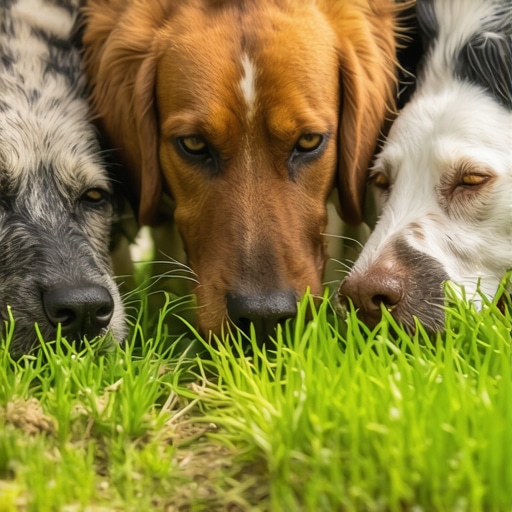
Industry experts love to talk about ‘pure’ scent work. In the real world, the air is filthy. There’s exhaust, there’s food, there’s the pheromones of that poodle that walked by ten minutes ago. Most training fails because it happens in a vacuum. You need to introduce ‘Friction Drills.’ This is where we intentionally foul the air. Standard advice says to clear the area of distractions. That’s like tuning an engine in a clean room and then wondering why it dies in a sandstorm. You need to put your dog in a high-friction environment—a crowded parking lot in Tempe or a construction site—and force them to filter the noise. If the dog breaks focus, don’t soothe them. Reset the timing. The ‘cookie-cutter’ approach of modern positive-only reinforcement often misses the mark here because it doesn’t account for the dog’s mental fatigue. A dog’s brain has a limited battery. If they spend all their energy filtering the smell of a nearby dumpster, they have no torque left for the actual target. You have to prune the unnecessary behaviors. Stop rewarding the ‘try’ and start rewarding the ‘find.’ It sounds harsh, but a mechanic doesn’t give a wrench a trophy for almost turning a bolt.
The 2026 reality of canine sensor tech
The ‘Old Guard’ thinks a dog is a magical box of instincts. The 2026 reality is that we are looking at a biological processor that can be optimized through specific drills. We are moving beyond simple hide-and-seek. We are looking at Scent Sensitivity Drills that focus on the ‘Rise’—the exact moment the dog realizes they’ve hit the cone. Drill one: The Pulsed Intake. Use a variable-flow scent machine to force the dog to adjust their sniffing rhythm. Drill two: The Negative Space Search. Hide the scent in a place where the air pressure is naturally lower, forcing the dog to ‘work’ the turbinates harder. Drill three: The High-Temp Recovery. Train in the Arizona afternoon, but use chilled target odors to create a thermal contrast. This is how you win in 2026.
Does my dog need special gear for these drills?
No. You need a stopwatch and a sense of timing. The gear is the dog’s brain.
Is this only for working breeds?
Any dog with a nose can be tuned, but high-drive breeds like Malinois or Shepherds have the cooling capacity to handle the high-RPM drills.
Why does my dog sneeze during scent work?
That’s a purge valve. They’re clearing the chamber of excess particulate matter to reset the sensor.
Can the Arizona heat permanently damage their nose?
Heat won’t kill the nose, but chronic dehydration will. Keep the ‘coolant’ levels high.
What if my dog is bored?
Boredom is just a lack of challenge. Increase the friction.
How often should I recalibrate?
Daily. Even five minutes of high-intensity scent work is better than an hour of lazy searching.
Does age affect scent lag?
Like any older engine, an older dog has more ‘slop’ in the system. You have to be more precise with your rewards to keep the timing tight.
The final checkout
You’ve got the tools. You’ve got the map. Now you need to put the work in. A dog isn’t a hobby; it’s a high-performance machine that requires a master technician. If you’re tired of the ‘lag’ and ready to see what your dog can really do, stop treating scent work like a game of fetch. It’s a calibration. It’s a mission. For more advanced techniques, check out our guide on AKC Scent Work standards or look into olfactory bulb neurology. If you want the best results in the Valley, you have to train for the Valley. Keep the intake clean, the timing tight, and the nose to the ground. Get out there and fix the lag. “