
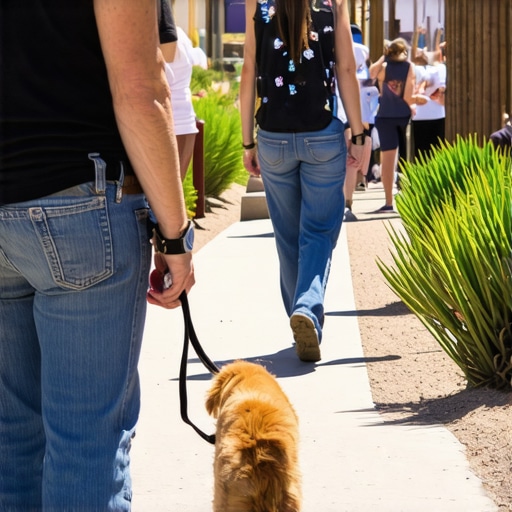
Understanding the Vital Role of PTSD Service Dogs at Large Events
As crowds grow denser and events become more complex, the need for specialized support for veterans and individuals with post-traumatic stress disorder (PTSD) increases substantially. Service dogs trained to assist in these situations offer more than companionship—they’re equipped to handle the chaotic environment of a crowded gathering with precision and confidence.
What Are PTSD Service Dogs and How Do They Help?
PTSD service dogs are specially trained animals that assist individuals coping with symptoms such as flashbacks, anxiety, and hypervigilance. Unlike emotional support animals, these dogs have legal protections and are trained to perform specific tasks that mitigate the effects of PTSD. Tasks include grounding tactics, warning about incoming anxiety attacks, and providing a physical anchor during stressful situations.
Why Do Crowded Events Require Specialized Tasks?
Events with large crowds present unique challenges: loud noises, unpredictable movements, and sensory overload can trigger PTSD symptoms. Service dogs must be prepared to adapt swiftly, helping their handlers navigate through chaos safely. This preparation includes training them to recognize approaching panic episodes and respond appropriately.
How Might These Tasks Evolve by 2026?
Looking ahead, service dogs will likely be trained in innovative ways to counter new crowd-related challenges. Technology integration, such as wearable devices for communication, could enhance their responsiveness. Ensuring these dogs can operate effectively in densely packed venues is essential as event capacities expand and environments become more dynamic.
Understanding the Vital Role of PTSD Service Dogs at Large Events
As crowds grow denser and events become more complex, the need for specialized support for veterans and individuals with post-traumatic stress disorder (PTSD) increases substantially. Service dogs trained to assist in these situations offer more than companionship—they’re equipped to handle the chaotic environment of a crowded gathering with precision and confidence.
What Are PTSD Service Dogs and How Do They Help?
PTSD service dogs are specially trained animals that assist individuals coping with symptoms such as flashbacks, anxiety, and hypervigilance. Unlike emotional support animals, these dogs have legal protections and are trained to perform specific tasks that mitigate the effects of PTSD. Tasks include grounding tactics, warning about incoming anxiety attacks, and providing a physical anchor during stressful situations.
Why Do Crowded Events Require Specialized Tasks?
Events with large crowds present unique challenges: loud noises, unpredictable movements, and sensory overload can trigger PTSD symptoms. Service dogs must be prepared to adapt swiftly, helping their handlers navigate through chaos safely. This preparation includes training them to recognize approaching panic episodes and respond appropriately.
For instance, some dogs are trained to sense shifts in their handler’s body language or scent, alerting them before a panic attack fully manifests. This proactive approach can prevent escalation and enable the individual to regain control swiftly. Additionally, dogs are taught to provide tactile grounding, such as nudging or pawing, to bring focus back to the present moment amidst overwhelming stimuli.
How Might These Tasks Evolve by 2026?
Looking ahead, service dogs will likely be trained in innovative ways to counter new crowd-related challenges. Technology integration, such as wearable devices for communication, could enhance their responsiveness. Ensuring these dogs can operate effectively in densely packed venues is essential as event capacities expand and environments become more dynamic.
Advanced training programs may incorporate virtual reality scenarios, exposing dogs to simulated crowded environments to boost their adaptability. Moreover, ongoing research into behavioral science might lead to customized training regimens tailored to individual handler needs — optimizing the effectiveness of each pair’s cooperation in diverse settings.
Enhancing Service Dog Training with Innovative Techniques
To prepare PTSD service dogs for the unpredictable environment of large gatherings, advanced training methodologies are essential. Incorporating technology, behavioral science, and simulated environments can significantly augment their readiness.
Utilizing Virtual Reality for Behavioral Conditioning
- Simulate crowded scenarios in controlled settings.
- Expose dogs to stimuli like loud noises, moving crowds, and flashing lights.
- Gradually increase complexity to enhance adaptability.
Integrating Wearable Technology
- Equip dogs with sensors to monitor physiological responses.
- Use data to identify stress levels and refine training protocols.
- Enable real-time communication with handlers through connected devices.
Personalized Training Regimens
- Assess individual handler needs and triggers.
- Create customized task lists and training modules.
- Ensure optimal pairing of dog temperament and handler requirements.
Common Misconceptions About PTSD Service Dogs
Many believe that service dogs are just emotional support animals or that any dog can be trained for such tasks. In reality, only dogs with the right temperament, training, and legal recognition qualify.
Myth: All Dogs Can Become Service Dogs
Fact: Only select breeds with specific behavioral traits and proper training can serve effectively in high-stakes environments.
Myth: Service Dogs Are Only for Physical Disabilities
Fact: They assist a wide range of conditions, including PTSD, where their training focuses on managing psychological symptoms.
How to Advance Your Training Protocols
- Start early with socialization in diverse environments.
- Implement virtual reality and sensory integration exercises.
- Use data analytics to monitor progress and adjust training plans.
- Foster ongoing education for handlers and trainers to stay updated on technological advancements.
Harnessing Emerging Technologies to Elevate Service Dog Performance
Integrating cutting-edge technology is revolutionizing how service dogs are prepared for and assist during large gatherings. Wearable sensors provide real-time data on a dog’s physiological state, enabling trainers to monitor stress indicators such as heart rate and cortisol levels. This insight allows for dynamic adjustments in training protocols, ensuring each dog is optimally conditioned for unpredictable environments. Additionally, connected devices facilitate seamless communication between handlers and trainers, enhancing responsiveness and coordination during events.
Virtual Reality Training for Enhanced Adaptability
Virtual reality (VR) offers an immersive platform to simulate crowded scenarios, exposing service dogs to stimuli like loud noises, flashing lights, and sudden movements in a controlled setting. Gradually increasing the complexity of these simulations builds resilience and adaptability, ensuring dogs can maintain focus amidst chaos. This innovative training method accelerates learning curves and enhances confidence, making dogs more prepared for real-world situations.
Personalized and Scenario-Specific Training Programs
Recognizing that each handler’s needs and triggers vary, trainers are developing tailored training plans. These programs incorporate detailed behavioral assessments to customize task lists and response protocols. For example, if a handler has a specific sensory trigger, the training emphasizes desensitization techniques related to that stimulus. Personalization ensures a more harmonious partnership, maximizing the dog’s effectiveness in diverse event settings.
Addressing Common Misunderstandings and Raising Awareness
Public misconceptions often undervalue the specialized skills of PTSD service dogs. Clarifying that only select breeds with rigorous training qualify counters the myth that any dog can serve effectively. Moreover, educating the community about the broad range of conditions these dogs support—beyond physical disabilities—fosters greater acceptance and understanding. Highlighting success stories and ongoing research initiatives can further enhance awareness and advocacy efforts.
People Also Ask: How Do Service Dogs Differ from Emotional Support Animals?
Service dogs are specially trained to perform tasks that assist individuals with disabilities and are granted legal protections to access public spaces. In contrast, emotional support animals provide comfort but lack specific training or legal access rights, and are not restricted to particular breeds or tasks.
Future Outlook: Preparing for an Evolving Landscape of Large-Scale Events
As event venues grow larger and more complex, the role of PTSD service dogs will expand further. Innovations in training, technological support, and community integration will be essential for ensuring these animals can operate effectively in high-pressure environments. Continuous research and collaboration between trainers, veterinarians, and psychologists will drive new standards and best practices, optimizing outcomes for handlers and their canine partners.
Frequently Asked Questions
1. How are service dogs trained to handle crowded environments?
Service dogs undergo specialized training that includes simulated crowded scenarios using virtual reality, exposure to loud noises and movement, and behavioral conditioning. This training enhances their ability to maintain focus and perform their tasks amidst chaos.
2. Can technology improve the effectiveness of PTSD service dogs at events?
Absolutely. Wearable sensors monitor stress indicators like heart rate, enabling trainers to customize training and respond proactively. Additionally, connected devices facilitate seamless communication between handlers and dogs, increasing responsiveness.
3. Are all breeds suitable for becoming PTSD service dogs?
No. Only specific breeds with appropriate temperaments and traits, combined with rigorous training, qualify for service roles. Not all dogs are suitable for the high demands of assisting in large, noisy environments.
4. What misconceptions exist about PTSD service dogs?
Many believe any dog can become a service dog or that they are merely emotional support animals. In reality, service dogs require specialized training, specific behavioral traits, and legal recognition to perform their crucial tasks effectively.
5. How can training evolve to meet future challenges?
Incorporating virtual reality simulations, advanced wearable technology, and personalized training regimens will prepare service dogs to better handle the complexities of evolving large-scale event environments by 2026 and beyond.
As the landscape of large events continues to grow in scale and complexity, the role of PTSD service dogs becomes increasingly vital. Through innovative training techniques, technological integration, and a deep understanding of handler needs, these loyal companions are now more equipped than ever to provide safety, support, and confidence amid the chaos. The future promises even greater advancements, ensuring that individuals with PTSD can participate in public gatherings with dignity and security. Embracing these developments not only enhances the capabilities of service dogs but also solidifies our commitment to supporting our veterans and civilians alike in the face of modern challenges.
Explore more about innovative training methods and how these animals are transforming lives by visiting [Robinson Dog Training](https://www.google.com/maps/embed?pb=!1m18!1m12!1m3!1d3333.4677930532835!2d-111.6112426!3d33.3327266!2m3!1f0!2f0!3f0!3m2!1i1024!2i768!4f13.1!3m3!1m2!1s0x872bab4a752ef4c3%3A0x54aa4d0f27ba8c4e!2sRobinson%20Dog%20Training%20%7C%20Veteran%20K9%20Handler%20%7C%20Mesa%20%7C%20Phoenix%20%7C%20Gilbert%20%7C%20Queen%20Creek%20%7C%20Apache%20Junction) and join us in supporting these remarkable partners in resilience and recovery.