
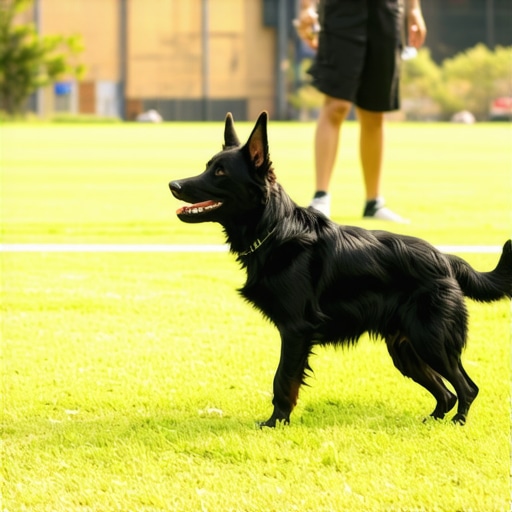
Music venues in 2026 aren’t just loud; they are aggressive. For an Arizona handler with a Psychiatric Service Dog, a sold-out show at a Phoenix stadium is the ultimate test of preparation.
Navigating the High-Sensory Arizona Concert Surge
Arizona’s music scene is hitting a new peak. By 2026, the Phoenix metro area anticipates record-breaking attendance for outdoor festivals and stadium tours. For most, this means long lines and loud music. For handlers with a Psychiatric Service Dog (PSD), it means managing potential sensory overload while maintaining a rock-solid bond with their canine partner. A dog that stays calm at a local coffee shop in Gilbert might react differently when thousands of fans scream in a confined stadium. This isn’t just about basic obedience; it’s about tactical environmental conditioning that prepares the animal for the physical weight of a crowd.
The Reality of High-Volume Venues
Live music environments are sensory minefields. The air vibrates with low-frequency bass that dogs feel through their pads and fur. Flashing LED arrays can trigger startle responses even in steady workers. In Arizona, we also fight the relentless sun, which turns asphalt and concrete into heating pads. Training for these specific pressures requires more than a standard pet class. It demands drills that simulate the unpredictable nature of a crowded pit or a busy concourse. You need a dog that can ignore a dropped hot dog while simultaneously monitoring your heart rate.
Why Local Arizona Conditions Impact PSD Performance
Heat exhaustion often looks like anxiety. When a dog’s internal temperature rises, their cognitive focus slips. In the 2026 concert circuit, many venues will prioritize high-density seating to maximize revenue. This leaves little room for a dog to perform tasks like grounding or deep pressure therapy (DPT). Specialized Arizona drills focus on tight-space navigation and heat-stress management. You need your dog to distinguish between a medical alert and their own environmental discomfort. If they can’t find their footing on a vibrating metal floor, they can’t help you when the crowd begins to close in.
[image_placeholder]
Can Your Service Dog Handle Sudden Bass Drops?
Many handlers wonder how their dogs will handle the sheer volume of a modern sound system. The answer lies in progressive desensitization. We don’t just walk into the show and hope for the best. We build up to it. Dogs perceive sound frequencies differently than humans, catching shifts we miss entirely. Training must account for the physical sensation of the sound, not just the noise itself. If a dog flinches at a car door, they aren’t ready for a sub-woofer array. Identifying these triggers early prevents a full-blown panic response in the middle of a crowded show. We focus on building a dog that views chaos as just another day at the office.
Mastering the Tactical Tuck in High-Density Seating
By 2026, many Arizona venues have transitioned to modular, high-density seating to accommodate the growing population in the Valley. This means the generous legroom of the past is gone. For a Psychiatric Service Dog (PSD) handler, the tactical tuck is no longer an optional skill; it is a survival requirement. Your dog must be able to fold into a tight footprint directly under your seat or between your legs without displaying signs of claustrophobia. In our specialized Arizona service dog drills, we simulate these cramped quarters using stadium-style risers and confined floor spaces. If a dog’s tail is in the aisle, it’s a liability—not just for the safety of the dog, but for the accessibility rights of the handler. A single tripped fan can escalate into a confrontation that jeopardizes your focus and your dog’s safety.
The ‘Wall of Sound’ and Canine Ear Protection
We cannot ignore the physiological impact of 100-decibel environments. While humans often wear high-fidelity earplugs, service dogs are frequently left unprotected. In the 2026 concert landscape, where immersive audio technology pushes sound boundaries, canine ear protection is mandatory for the longevity of your partner’s working life. We train dogs to accept specialized over-ear protection as part of their work uniform. This isn’t about pampering; it’s about mitigating the cortisol spike that occurs when a dog is subjected to painful noise levels. A dog in pain cannot task. They will focus on the source of the discomfort rather than their handler’s heart rate. When your PSD associates the venue with physical ear pain, you risk the development of work-refusal behaviors that can take months to deprogram.
[image_placeholder]
Navigating the ‘Fan Surge’: Crowd Pressure Management
Arizona stadium tours in 2026 often feature active pits and standing-room-only zones. Even if you have a reserved seat, the concourses are a chaotic flow of people. A PSD must be conditioned to handle unintentional contact. Fans will bump into them, spill drinks, and drop stadium food. We utilize heavy-distraction drills where the dog is surrounded by moving bodies in a high-heat environment to teach them to maintain their bubble. The goal is absolute stoicism. The dog should move like a shadow, staying glued to your hip regardless of the physical pressure from the crowd. We also focus on reverse-heeling, allowing you to back out of a tightening crowd while the dog guides your path from behind, preventing you from being boxed in by the surge.
Psychiatric Tasking Mid-Performance
The most difficult aspect of concert work is ensuring the dog can still perform their primary tasks while the handler is at the height of sensory engagement. If you are experiencing a dissociative episode or a panic attack during a bass-heavy finale, the dog needs to recognize that specific internal shift over the external noise. We train for the disruption of repetitive behaviors and deep pressure therapy (DPT) in high-vibration settings. Your dog needs to learn that when the lights are flashing and the crowd is screaming, your leg tap or hand tremor still means I need you now. This requires a level of focus that only comes from repeated, controlled exposure to high-energy environments. We don’t just want a dog that tolerates the concert; we want a dog that can actively pull you back to reality when the sensory input becomes too much to bear.
Strategic Recovery: Managing the Cortisol Dump
A common mistake among Arizona handlers is assuming a successful concert ends when the house lights come up. In reality, the physiological impact of a high-decibel Phoenix stadium show lingers for days. In the 2026 music scene, where immersive audio is the standard, a PSD’s adrenal system is pushed to its limit. We teach a 72-hour decompression protocol. This involves zero-demand environments—no training, no crowds, and minimal sensory input—immediately following a major event. If you jump back into a busy Scottsdale farmer’s market the next morning, you are stacking stressors that lead to working burnout. A service dog’s focus is a finite resource; spend it at the concert, but reimburse it with structured rest.
The Myth of the ‘Bombproof’ Dog
There is a dangerous misconception that a fully trained service dog should be bombproof—immune to fear or distraction. By 2026, venue technology like haptic floors and ultrasonic arrays makes this impossible. No dog is a machine. Advanced handling means recognizing micro-signals of displacement: a quick lip lick, a subtle paw lift, or a change in panting cadence that precedes a break in tasking. If you ignore these because you believe your dog is invincible, you risk a public access fail in a high-stakes environment. True expertise lies in knowing when to advocate for your dog and step out of the crowd before a threshold is crossed.
[image_placeholder]
The 5-Step Tactical Extraction Protocol
When sensory overload hits—either for you or your partner—getting out of a 60,000-seat stadium in Glendale requires more than just walking. Follow this tactical sequence:
- Identify the Cold Zone: Pre-locate the nearest first-aid station or family restroom before the show starts. These are often the only sound-dampened spaces.
- Initiate the Reverse-Heel: In a surging crowd, turning around is hard. Teach your dog to back up between your legs, allowing you to use your body as a shield.
- Utilize Touch Targets: Use a hand-touch command to keep the dog’s brain engaged and focused on you, rather than the screaming fans or flashing lights.
- Visual Anchoring: Find a stationary object to pause at for 30 seconds to lower heart rates before moving to the next exit stage.
- The Post-Exit Check: Once outside, immediately check paw pads for heat damage and provide high-electrolyte water.
Thermal Management and Metabolic Stress
In the Arizona desert, even indoor stadiums present thermal challenges due to the sheer body heat of thousands of fans. High-stress environments cause a dog’s internal temperature to rise faster than usual. By 2026, we utilize phase-change cooling vests that maintain a consistent temperature without being wet or bulky. However, handlers must understand that a dog panting heavily to cool down cannot effectively use its nose for scent-based medical alerts. If your dog is struggling with the heat of the Mesa or Phoenix sun, their tasking accuracy will drop. Advanced handlers monitor the panting-to-tasking ratio; if the dog is purely focused on cooling, the handler must take over the sensory monitoring until the dog is regulated.
The Evolution of Legal Access in the 2026 Concert Landscape
As we move into late 2026, the legal framework surrounding Psychiatric Service Dogs (PSDs) at major Arizona venues has become more integrated with digital technology. Major stadium management in Phoenix and Glendale now utilizes streamlined entry protocols that prioritize handler privacy while ensuring safety in high-density zones. For the Arizona handler, this means staying updated on local venue policies that may involve designated ‘service dog fast-lanes’ to avoid the crushing weight of the main gate surge. Training your dog to remain in a focused heel while you navigate digital kiosks and biometric ticket scanners is essential. The 2026 environment demands a dog that is not only sound-conditioned but tech-literate, unfazed by the whirring of security robots or the flash of facial recognition cameras at the entrance of Footprint Center or State Farm Stadium.
Why does my service dog seem more tired after a concert than a long desert hike?
This is a question many Arizona handlers ask after their first stadium tour. The answer lies in cognitive load vs. physical exertion. While a hike in the Superstition Mountains is physically demanding, it is sensory-consistent. A concert, however, is a non-stop barrage of ‘novel stimuli.’ Your dog is constantly processing irregular vibrations, overlapping scent profiles from thousands of people, and the intense emotional shifts of the crowd. This leads to mental exhaustion, which can be far more taxing than a ten-mile walk. When a dog is tasking in a concert environment, their brain is working at 100% capacity to filter out the noise and find your specific chemical or behavioral signals. This is why the decompression protocols we use in our Phoenix-based drills are non-negotiable for long-term career health.
[image_placeholder]
Biometric Integration: The Smart-Collar Revolution
By 2026, advanced PSD handlers are increasingly adopting biometric smart collars to monitor their partner’s stress levels in real-time during loud events. These devices sync to haptic wearables on the handler’s wrist, providing a silent vibration when the dog’s heart rate or cortisol-indicative movement patterns spike. In the middle of a bass-heavy set in a Mesa amphitheater, you might not feel your dog’s subtle tremor, but the data won’t lie. This technology allows for proactive handling—the ability to exit a high-stress zone before a full threshold break occurs. Integrating this tech into your training routine ensures that your PSD isn’t just ‘toughing it out,’ but is actually operating within a safe physiological window.
Holographic Performances and the Phantom Visual Challenge
The 2026 concert circuit has seen a massive rise in holographic and ‘mixed reality’ performances. For a Psychiatric Service Dog, these present a unique psychological challenge: the presence of a life-like human figure that has no scent and produces no physical displacement. Traditional PSD training focuses on solid, physical distractions, but holographic tours require visual-disparity conditioning. We are seeing dogs become confused or ‘spooked’ by 30-foot-tall projections that seem to move toward the audience. Training in Arizona now includes exposure to high-lumen projectors and spatial audio to teach the dog that these ‘phantoms’ are non-threats. A dog that can ignore a shimmering holographic pop star while still alerting to their handler’s rising anxiety is the gold standard for the modern music era.
AI-Driven Crowd Analytics and PSD Safety
Many Arizona stadiums are now using AI-driven crowd analytics to predict and manage fan surges. As a handler, you can often access ‘live density maps’ through venue apps. This is a game-changer for PSD safety. By monitoring these maps, you can identify the exact moment a concourse will clear or when a specific exit will become a bottleneck. We train our handlers to use this data to plan their movement through the stadium, ensuring the dog is never trapped in a ‘dead zone’ where the crowd pressure exceeds their training level. It’s about merging tactical dog handling with modern data to create the safest possible experience for both ends of the leash.
Frequently Asked Questions
What should I do if my PSD alerts during the main set?
In the high-decibel environment of a 2026 Phoenix stadium, an alert means it is time to move. Use your pre-mapped ‘Cold Zone’ or tactical extraction route immediately. Do not try to ‘push through’ the sensory overload; your dog’s alert is your cue to prioritize safety over the performance.
Is canine ear protection mandatory for Arizona indoor venues?
While not a legal requirement, it is a biological necessity. Modern 2026 immersive audio systems can reach levels that cause immediate cortisol spikes in dogs. Protecting their hearing ensures they remain focused on tasking rather than pain management.
How do ‘fast lanes’ work for service dog handlers in Glendale stadiums?
Many venues now offer prioritized entry to prevent the physical pressure of the main gate surge on service animals. These are accessible by identifying yourself as a handler to security staff, ensuring a low-stress transition into the venue footprint.
The Bottom Line: Success Through Tactical Integration
The 2026 Arizona concert landscape demands more than just a well-behaved dog; it requires a team that can operate within a high-tech, high-pressure environment. By integrating biometric data, mastering the tactical tuck, and adhering to strict post-event decompression, you protect the longevity of your service dog’s career. Live music in Phoenix and beyond remains accessible when preparation meets precision handling. Trust your training, use the tools available, and always advocate for the animal that advocates for you.
Take the Next Step: Have you navigated a high-density venue in the Valley recently? Share your tactical tips in the comments or reach out for advanced PSD environmental conditioning tailored to the Arizona circuit.