
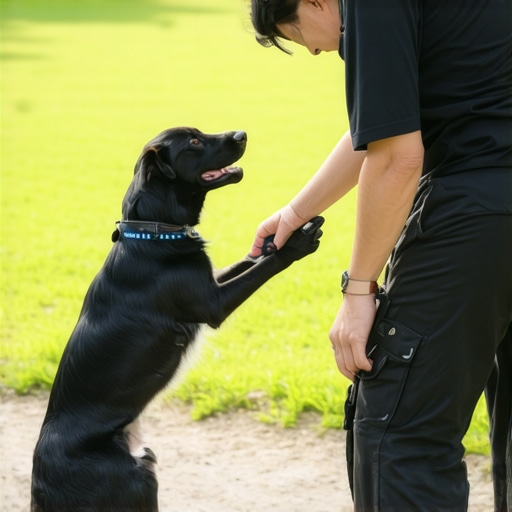
The fluorescent lights of the Scottsdale Fashion Square hum with a frequency that seems to vibrate inside your skull. You feel the familiar tightening in your chest, the telltale spike in heart rate that signals an oncoming panic attack. Your Golden Retriever, supposedly your lifeline, is sniffing a discarded soft pretzel three feet away. You whisper the command. Nothing. You wait. The lag feels like an eternity when the world is closing in. It is not just frustrating; it is a breakdown of a survival mechanism. Our Editor’s Take (BLUF): Fixing DPT (Deep Pressure Therapy) lag in Arizona’s high-stress environments requires shifting from rigid command-response cycles to sensory-integrated awareness, focusing on scent-based triggers and environmental heat management that often dulls a dog’s processing speed.
The Weight of the Silence
Deep Pressure Therapy operates on the principle of biological grounding. When a dog applies their body weight to specific pressure points on a human, it stimulates the parasympathetic nervous system. It slows the heart. It grounds the mind. But when a psychiatric service dog (PSD) hesitates, the psychological fallout for the handler is massive. This delay often stems from a mismatch in communication styles. Humans rely on vocal cords; dogs rely on the chemistry of the air. In the dry, searing heat of the Sonoran Desert, scent molecules behave differently, often evaporating before they reach a dog’s olfactory receptors. This physical reality creates what we call the ‘Arizona Lag.’ To bridge this gap, handlers must understand that a dog isn’t being stubborn. They are navigating a sensory desert. By moving away from the idea of the dog as a tool and seeing them as a bio-feedback partner, we start to see why the ‘wait’ happens. It is a processing error, not a disobedience issue.
Fix DPT Lag: 5 Psychiatric Service Dog Training AZ Tips (2026)
The first step involves a radical shift in how we cue the pressure. In the Valley of the Sun, sound bounces off hard stucco and concrete, creating an acoustic mess. Stop relying on the word ‘Pressure.’ Instead, lean into the scent of cortisol. You can capture this by swiping a cotton swab on your neck during a high-stress moment and using it in low-stakes training sessions. When the dog smells the stress, they move. No words needed. This cuts the lag because the dog isn’t waiting for a signal; they are reacting to a biological shift. Next, consider the ‘Heat Factor.’ A dog with hot paws is a dog with a distracted brain. If you are training in Mesa or Gilbert, those paw pads are sensitive. Use booties or stick to indoor training at places like the Psychiatric Service Dog Partners resource hubs to ensure their focus remains on your heart rate, not their burning feet. The third tip is the ‘Reverse Chain’ method. Start the DPT session already on the floor. Let the dog find the position, then slowly increase the distance. This builds a magnetic pull toward the DPT position. Fourth, generalize in high-traffic, high-sensory areas like Phoenix Sky Harbor. The noise there is a perfect stress-test for a dog’s resolve. Finally, vary the pressure duration. Sometimes they stay for ten seconds, sometimes ten minutes. It keeps the dog engaged and prevents the ‘autopilot’ drift where they think the job is done before your heart rate has actually leveled out.
The Reality of Mesa Training Grounds
Training a service dog in the Phoenix metro area is a gritty, sweaty endeavor. It is not the polished version you see on social media. It involves standing in a parking lot at 7:00 AM because by 9:00 AM, the ground is a frying pan. It involves dealing with ‘pet-friendly’ stores where untrained dogs bark and break your PSD’s concentration. This is where the lag is born. If your dog is constantly scanning for threats or distractions, they cannot monitor your internal state. We often see handlers get frustrated, their own anxiety spiking because the dog missed the cue, which in turn makes the dog more anxious. It is a feedback loop of failure. You have to break it by being the calm center. When practicing near the East Valley training sites, focus on the ‘Quiet Lead.’ No talking. Just movement. If the dog lags, you stop. You wait for them to check in. It builds the bond that ‘commands’ never can.
Why the Old Ways Are Fading
Traditional obedience focuses on the ‘Sit-Stay’ mentality. It is rigid. It is binary. You are either right or you are wrong. In the world of psychiatric support, this is failing. Modern handlers are moving toward ‘Cooperative Care.’ This means the dog has a say. If the dog isn’t performing DPT, maybe the floor is too slippery, or maybe there is a weird scent in the air that you can’t perceive. Research, including studies cited by the International Association of Assistance Dog Partners, suggests that dogs who are given agency in their work actually perform with higher accuracy and lower latency. They aren’t just robots; they are sentient beings managing a complex task. The shift in 2026 is toward this intuitive partnership. We aren’t training ‘at’ the dog anymore; we are training ‘with’ them.
Common Obstacles in the Arizona Corridor
Why does my dog do DPT at home but not at the grocery store? Home is a low-arousal environment. The grocery store is a sensory assault. The lag you see is the dog’s brain trying to filter out the cart squeaks, the crying baby, and the cold air blowing from the freezer section. You need to ‘proof’ the behavior in incrementally louder spaces. Does the breed matter for DPT lag? While any breed can do DPT, heavier breeds like Labs or Goldens provide better tactile feedback, but they also overheat faster in AZ. A panting dog cannot focus on DPT. How do I know if it is lag or a strike? A strike is intentional. Lag is a delay in processing. If your dog looks at you then looks away, they are overwhelmed. If they are looking at you with a blank stare, they haven’t processed the cue yet. Patience is the only fix here. The heat is a constant. The noise is a constant. Your bond is the only variable you can control. Fix the bond, and the lag will follow suit. Start today by just sitting with your dog. No cues. No expectations. Just presence.