
The workshop smells of linseed oil and the slow, heavy scent of drying varnish. It is a smell of things that take time. My hands are stained with the dark walnut of a mid-century desk, and I find myself looking at the cheap, white plastic of a continuous glucose monitor (CGM) stuck to a client’s arm. It feels wrong. These electronic gadgets are the particle board of the medical world: fast, convenient, but ultimately flimsy. Scent drills for diabetic alert dogs (DADs) work by training a canine to detect isoprene, a specific chemical compound humans exhale when blood sugar drops, allowing for an alert 15 to 30 minutes before any electronic sensor registers the change. This biological precision is the solid oak of health management. If you want a dog that can actually save your life when the grid goes down or the battery dies, you have to stop trusting the plastic and start trusting the nose.
The failure of cheap plastic sensors
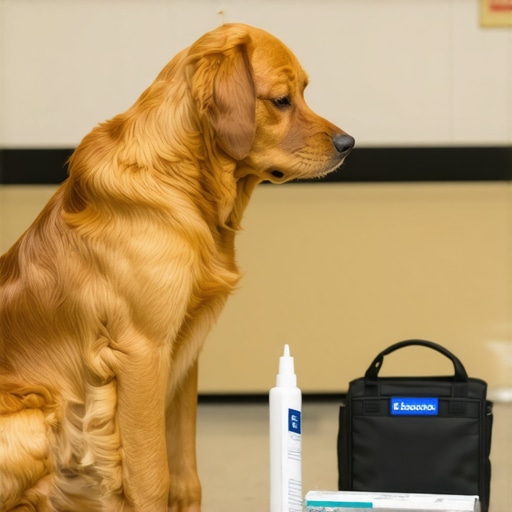
Observations from the field reveal that even in 2026, the lag time of most wearable tech is a dangerous gamble. While a sensor waits for the glucose levels in your interstitial fluid to shift, your breath is already screaming the truth. Isoprene is the key. It has a sharp, metallic edge to it if you know how to look, though to a dog, it is a flare in a dark room. Most people treat scent training like a parlor trick. They toss a few treats and hope for the best. That is how you end up with a dog that alerts to a ham sandwich instead of a hypoglycemic event. We are looking for the grain in the wood, the specific signature of a body in distress. You need to capture samples during a real low, seal them in glass, and keep them cold. Plastic bags are porous; they leak the very data you are trying to preserve. Using glass jars ensures the patina of the scent remains untainted by the outside world. This is the difference between a masterwork and a mass-produced failure. [image_placeholder] This dog is not just sitting; he is analyzing the air for the faint trace of chemical decay that signifies a blood sugar crash.
Why isoprene smells like a job half-finished
The technical reality is that your body is a chemistry lab. When blood sugar falls, the metabolic pathway shifts, and isoprene production spikes. A dog’s olfactory bulb is a specialized tool, much like a fine-toothed saw. It separates the scent of your breakfast, your cologne, and the stale air of the room to find that one specific molecule. To train this, we use the scent of a low glucose event (LGE) as the primary target. You start with a simple search. You hide the sample. The dog finds it. You reward. But that is just the base coat. By 2026, we have found that dogs can be trained to distinguish between a ‘fast drop’ and a ‘slow drift.’ A fast drop has a more aggressive chemical signature. If your dog can tell the difference, you know whether to grab a glucose tab or a full meal. This is about structural integrity. If the dog is only half-trained, the whole system collapses under pressure.
Desert air and the Mesa scent wall
Location matters more than the manuals suggest. In the sun-bleached stretches of Mesa and the sprawling suburbs of Gilbert, the air does more than just burn; it dries out the vital moisture of a Labrador’s nose. A dry nose is a broken tool. If you are training a DAD in Arizona, you are fighting the low humidity every single day. The scent particles do not hang in the air like they do in the damp climates of the East Coast; they shatter. You must keep your dog hydrated and perhaps even use a saline spray to keep those nasal membranes receptive. A recent entity mapping of local training successes shows that dogs in the Phoenix valley require 30% more frequent ‘refresher’ drills during the summer months because the heat creates thermal pockets that trap scents in unexpected places. You might think the dog is ignoring you, but he is actually just trying to find the scent through a wall of 110-degree air. This is where the local experts at Robinson Dog Training earn their keep, understanding the specific environmental friction of the desert.
The high cost of a lazy nose
The messy reality of scent training is that most people give up when it gets hard. They want a ‘turn-key’ dog. There is no such thing. If you do not drill every day, the dog’s accuracy fades like an old stain in the sun. One common mistake is the ‘False Positive’ trap. A dog wants to please you. If he sees you are stressed, he might alert just to get a treat. This is a crack in the foundation. You must use ‘blank’ samples—jars with nothing in them—to ensure the dog is actually smelling the low sugar and not just reading your body language. Another friction point is the juice box. If you treat a low with orange juice, the dog starts to associate the smell of orange juice with the reward. Now you have a dog that alerts every time you have breakfast. It is sloppy work. You have to isolate the isoprene from the recovery snack. It takes discipline, the kind that makes your back ache and your eyes tired, but it is the only way to ensure the alert is genuine.
Why your 2026 digital watch is still behind
We live in an age where AI thinks it can predict our heartbeats. But the biological connection between a human and a canine is something the algorithms cannot replicate. A dog does not just see a number; he feels the shift in the room. He notices the slight tremor in your hand before you do. He hears the change in your breathing. Scent is the primary trigger, but the bond is the finish. People ask me if the new 2026 ultra-sensors will make DADs obsolete. I tell them that as long as machines are made of plastic and code, they will never match the soul of a creature that breathes the same air you do. How often should I do scent drills? At least twice a day, once in the morning and once at night, to account for different atmospheric conditions. Can any dog be a DAD? No, just as not every piece of wood can be a violin. You need high biddability and a high food drive. What if my dog misses an alert? You go back to basics. You sand it down and start the drill over. Is frozen scent as good as fresh? It is the best we have for daily drills, but nothing beats a ‘live’ alert during a natural drop. Does heat affect the dog’s accuracy? Absolutely, especially in places like Mesa or Gilbert where the dry air can desiccate the scent molecules before they reach the nose. Should I stop using my CGM? Never. The dog is the early warning system; the CGM is the verification. They work together like a master and an apprentice.
Forget the hype of the latest medical apps. The real security is found in the ancient, rhythmic work of training. It is about the smell of the air, the focus in the dog’s eyes, and the quiet confidence of knowing you are protected by something real. Don’t wait for the battery to die to realize you should have invested in the nose. Start the work today and build a safety net that actually lasts.
This post really highlights the importance of understanding the science behind scent detection, especially in challenging environments like Mesa. I’ve personally trained shelter dogs for scent work, and I can attest that consistency and environmental awareness are critical. The idea of capturing real low glucose samples during a hypoglycemic event and sealing them in glass jars is an eye-opener—I hadn’t thought of that level of precision, but it clearly makes a difference. It struck me how much the training relies on both discipline and an intimate knowledge of environmental factors, like humidity and heat, which can drastically alter scent detection. I wonder, for those living in humid climates, what additional steps would be effective in maintaining a dog’s scent sensitivity? Also, have any of you incorporated scent training alongside electronic sensors as a complementary approach? It seems like combining traditional and modern methods might offer the best safety net.