The engine starts knocking when the heat hits triple digits
I’ve spent three decades with grease under my fingernails, fixing engines that the Arizona sun tried to weld shut. I know the smell of a radiator about to pop—that sweet, sickly scent of coolant hitting hot asphalt. It’s the same way I look at diabetes management in the 2026 Phoenix summer. You’ve got your Continuous Glucose Monitor (CGM) ticking away like a digital diagnostic tool, and then you’ve got a Diabetic Alert Dog (DAD) acting as your primary fail-safe. Editor’s Take: In the brutal 115-degree reality of the Southwest, technical sensors often fail due to dehydration and adhesive breakdown, making the biological backup of a trained dog a non-negotiable safety layer. If you think one replaces the other, you’re looking at the schematics wrong. The tech gives you the data trends, but the dog gives you the real-time physical warning before the hardware glitched out in the heat.
image_placeholder
When the silicone gives up in the Mesa sun
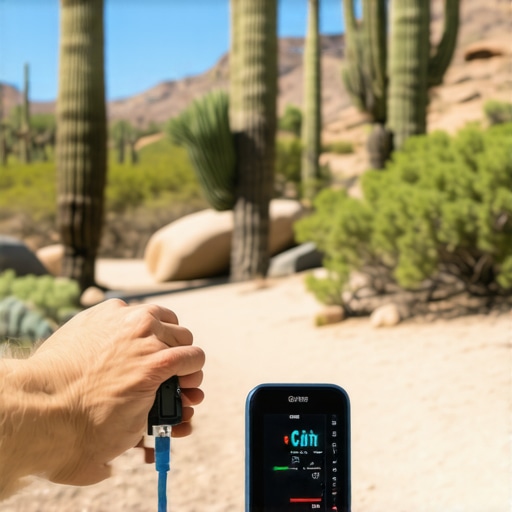
Let’s talk shop about the hardware. A CGM is a marvel of engineering, but it’s still just a sensor sitting in your interstitial fluid. When you’re walking through a parking lot in Mesa and the temperature is high enough to fry an egg on a hubcap, your body does weird things. You sweat. That sweat isn’t just water; it’s a solvent for the medical-grade glue holding your G7 or Guardian sensor in place. I’ve seen sensors peel off like an old decal on a sun-bleached tailgate. Beyond the stickiness, heat accelerates the chemical reaction inside the sensor wire. It can lead to ‘false lows’ or erratic readings because the enzyme on the wire is literally cooking. This isn’t some theoretical problem. It’s a mechanical failure point. You need to keep those sensors out of direct sunlight and maybe use an over-patch, but even then, the hardware has its limits. High-authority resources like the JDRF often discuss the impact of environmental factors on pump and sensor performance, and they don’t mince words about heat-related malfunctions.
A nose that doesn’t need a Wi-Fi signal
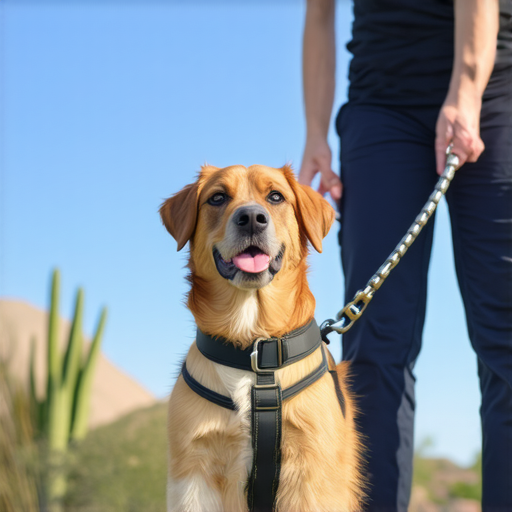
Now, look at the biological side. A Diabetic Alert Dog doesn’t care about your Bluetooth connection or if your transmitter battery is dying. A DAD is trained to catch the scent of isoprene or ketones—the ‘exhaust’ your body puts out when your blood sugar shifts. While the CGM is measuring fluid that is consistently 15 to 20 minutes behind your actual blood glucose levels, a dog often catches the shift in the air before the blood even changes. It’s like hearing a rod knock before the engine actually seizes. In the 2026 Arizona climate, where heat exhaustion can mask the symptoms of hypoglycemia, that 20-minute head start is life. A dog doesn’t get ‘sensor errors.’ As long as that dog is hydrated and cool, its nose is the most reliable diagnostic tool in your kit. Check out how professionals handle this at The American Diabetes Association for more on the integration of service animals in clinical care.
Survival tactics for the Phoenix heat island
Living in the Valley of the Sun—from the suburban sprawl of Gilbert to the high-rises in downtown Phoenix—requires a specific type of logistics. We’re dealing with the ‘heat island’ effect where the concrete holds onto 110-degree temperatures long after the sun goes down. If you’re relying on a CGM, you have to be wary of dehydration. When you’re dehydrated, there’s less interstitial fluid for the sensor to read, leading to ‘no data’ errors exactly when you’re most vulnerable. This is where Robinson Dog Training comes into the picture for locals. They understand that a service dog in Arizona needs its own maintenance—cooling vests, boots for the hot pavement, and constant hydration.
Why the industry standard fails in the desert
Most doctors will tell you a CGM is enough. They’re wrong. They’re looking at clinical trials done in climate-controlled labs in Jersey or California. They aren’t looking at a guy trying to change a tire on the Loop 101 in July. In that scenario, your CGM might be screaming ‘Low’ because the heat is messing with the sensor, or it might be silent because the transmitter overheated and shut down. Meanwhile, you’re confused, sweating from the heat, and you can’t tell if you’re crashing or just hot. The dog is the only one who can tell the difference. The dog smells the chemical shift of a crash. The dog nudges your hand. It forces you to pay attention. The friction between technology and the raw, dirty reality of the Arizona climate is where people get hurt. Don’t be the guy who trusts his dashboard more than the smoke coming from the hood.
The 2026 reality for desert dwellers
As we head into the hotter summers of 2026, the ‘Old Guard’ way of just checking a finger stick or glancing at a phone screen is fading. We’re seeing a shift toward ‘Hybrid Management.’ You use the CGM to track your overnight trends and your insulin dosing, but you keep the DAD for the immediate, high-stakes alerts during your daily commute or outdoor activities.
Common questions from the garage floor
Does the heat make the dog less accurate? Only if the dog is overheated. A panting dog can’t scent as well, so keeping your partner cool with a swamp cooler or AC is part of the job. Can a CGM survive a dip in the Salt River? Most are water-resistant, but the adhesive usually fails after 20 minutes in the water combined with the heat. Always carry backup tape. Is a DAD better than the new G8 sensors? It’s not about ‘better.’ It’s about different failure points. The G8 still has a 15-minute lag. The dog doesn’t. How do I handle the dog in Phoenix malls? Federal Law protects your right to have a service dog, but be prepared for the heat on the walk from the car to the entrance. Boots are a must. Will my insurance cover both? Usually, they cover the CGM. The dog is often an out-of-pocket ‘upgrade,’ but think of it as the best insurance policy you’ll ever buy.
Keep the shiny side up
At the end of the day, you wouldn’t drive across the Mojave without a spare tire and a gallon of water. Managing diabetes in Arizona is no different. Use the tech because it’s precise, but keep the dog because it’s reliable. The synergy between a biological alert and a digital readout is the only way to stay ahead of the curve when the temperature hits the red line. Stay cool, keep your sensors taped down, and trust the nose. “
Reading this post really highlights how vital a holistic approach to diabetes management is, especially in extreme environments like the Arizona heat. I’ve seen firsthand how sensors can fail during the hottest summer days, even with the latest G8 technology, and I completely agree that relying solely on tech isn’t enough. Having a well-trained Diabetic Alert Dog offers that real-time, physical prompt that can be a lifesaver when the sensors—and the user—hit their limits. It made me wonder, how do others integrate training routines for their dogs to maintain accuracy and alertness during prolonged hot weather? Maintaining the independence and effectiveness of a DAD in these conditions must be a challenge. I’d love to hear any tips or experiences from those managing this combo—it’s a great reminder that combining high-tech with biological backup truly enhances safety.