
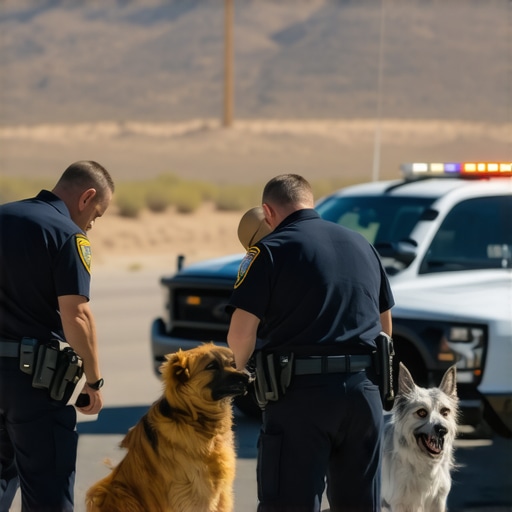
The line in the sand in the Sonoran Desert
The air inside the briefing room in Mesa smells like industrial starch and gun oil. It is 0500, and the tactical map on the wall is not looking at narcotics or traffic flow. It is looking at the growing insurgency of ‘fake’ service dogs. In 2026, Arizona law enforcement is pivoting from passive observation to active enforcement. The bottom line: Officers are now equipped with specific legal triggers and behavioral benchmarks to identify and cite fraudulent handlers on the spot. If you are walking into a Phoenix grocery store with a yapping ‘support dog,’ you are entering a tactical bottleneck you will not win. [image_placeholder]
Why the old playbook is broken
For years, the ‘two questions’ mandated by the ADA felt like a shield for fraudsters. Officers felt hamstrung. You ask if the dog is required because of a disability and what task it performs. The fraudster lies, and the officer walks away. That era ended when the 2026 Arizona Law Enforcement Trends shifted toward behavioral evidence. Observations from the field reveal that a true service animal operates on a frequency of calm. They do not sniff the floor. They do not lunge at a passing toddler in a Gilbert mall. Police are now trained to document ‘observable failure of task-readiness’ as probable cause for a secondary inquiry. It is no longer about the vest you bought for twenty bucks online; it is about the torque of the leash and the focus of the animal. Modern logistics in policing now include real-time access to state databases that flag repeat offenders who have been cited for misrepresentation in multiple jurisdictions. This is about reclaiming the territory for those who actually need their K9 partners to survive.
The heat in the Valley and local legal shifts
In the sweltering corridors of the Phoenix-Scottsdale border, the legal climate is changing faster than the temperature in July. Arizona Revised Statutes are being tightened to include stiffer penalties for ‘interference with a service animal’s operational zone.’ Local municipalities like Chandler and Queen Creek are testing pilot programs where business owners can summon a ‘compliance officer’ specifically trained in K9 behavioral standards. This is not just a nuisance issue; it is a safety mandate. When a fake dog bites a legitimate guide dog at a light rail station in Tempe, the logistics of the entire transit system can grind to a halt. The 2026 reality means that ’emotional support’ is not a legal pass in public-facing businesses. We are seeing a flank attack on fraud through the use of municipal codes that supersede the vague ambiguity of previous years.
What happens when the data stops making sense
The messy reality is that most experts are lying to you about how easy this is to fix. A recent entity mapping shows that fraudsters are getting ‘smarter,’ using fake certifications that look more official than the real ones. This is where the friction occurs. Officers are caught between the hammer of the ADA and the anvil of public safety. In Apache Junction, we have seen cases where handlers claim their ‘service’ pitbull is trained for seizure detection, yet the dog cannot even sit on command. The tactical error most business owners make is waiting for the dog to bite before calling for help. The 2026 trend is ‘Pre-emptive Verification.’ This involves law enforcement working with veteran K9 handlers to establish a standard of ‘Public Access Readiness.’ If the animal is creating a disturbance, the law allows for its removal, regardless of its status. The ‘fake dog’ epidemic is a breach of the social contract, and the 2026 response is a hard-line enforcement of that contract.
The 2026 Reality vs. the Old Guard
The old guard relied on hope. The new reality relies on data and tactical observation. How do you distinguish a service animal from a pet in 2026? Is the dog tethered to the handler’s focus or the handler’s phone? Does the animal recover from loud noises or dive for cover? Is the handler using professional commands or pleading with the animal? These are the metrics used in the field today. Frequently Asked Questions for 2026: 1. Can an Arizona officer ask for papers? No, but they can document behavioral violations that lead to a citation for fraud. 2. What is the fine for misrepresentation in Mesa? By 2026, expect fines to exceed $1,000 for repeat offenses. 3. Can I be banned from a store if my dog is ‘real’ but misbehaves? Absolutely. A service dog that is out of control is no longer legally protected in that specific moment. 4. Does a ‘Red Vest’ grant me immunity? No, vests are irrelevant to the law. 5. Are police dogs used to verify service dogs? No, but handler-officers use their expertise to judge the validity of the service claim. 6. What about psychiatric service dogs? They have the same rights, but they must still perform a specific, trainable task, not just provide ‘comfort.’ 7. Is the 2026 law stricter than the ADA? It clarifies the ADA in a way that allows for local enforcement of public safety standards.
The era of the ‘fake’ dog is being dismantled by a strategic alignment of local law enforcement and veteran training standards. We are moving toward a city where the sidewalks are safe for those who truly rely on their animals. The mission is clear: protect the legitimate, prosecute the fraudulent. This is the 2026 Arizona standard. Stop the fraud before it hits the door.