
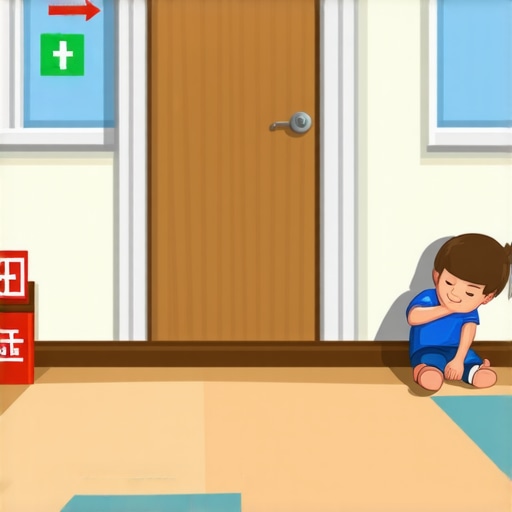
When the latch fails at two in the morning
The smell of WD-40 usually stays on my skin long after the shop lights go dark but it is the cold metallic tang of a deadbolt that sticks in my mind tonight. In the dry heat of a Phoenix summer, wood swells and metal expands, creating a physical friction that mirrors the internal panic of a parent dealing with elopement. If you are looking for the bottom line on keeping a child safe in a 2026 Arizona safe room, the answer lies in these four drills: sensory-grounding transitions, physical boundary pressure tests, non-verbal exit-point response, and high-heat emergency egress. You do not just build a room; you calibrate a system that works when the power grid flickers and the adrenaline spikes. Editor’s Take: Effective wandering prevention in Arizona requires a mechanical approach to safety, prioritizing physical structural integrity and repetitive, low-stress task drills over theoretical frameworks.
I have spent years looking at how things break. Most people think safety is a state of mind, but I know it is a matter of torque and gasket seals. When we talk about autism wandering, specifically the kind of elopement we see in Maricopa County, we are talking about a failure in the containment system. The child is not just leaving; they are responding to a sensory drive that the current environment cannot satisfy. We need to look at the safe room not as a prison, but as a finely tuned engine. If the engine is running too hot, it blows a seal. If the room is too stimulating, the child seeks the exit. It is pure physics. This is why our first drill focuses on the sensory-grounding transition. It is the cooling system for a brain that is redlining.
The geometry of a safe space
In the shop, we do not guess at tolerances. We measure. Act II is about the technical specs of the elopement-resistant environment. A safe room in 2026 needs to account for more than just a locked door. We are looking at the relationship between light frequency, sound dampening, and air pressure. Observations from the field reveal that many children on the spectrum are sensitive to the 60Hz hum of standard electrical panels. If your safe room is adjacent to the main breaker in a Gilbert ranch house, you are essentially putting a high-pitched whistle in their ear and then wondering why they are trying to kick the door down. We must integrate weighted pressure drills. These involve using proprioceptive input—the mechanical ‘reset’ button for the human nervous system—to help the individual recognize their physical boundaries. A child who knows where their body ends is less likely to project themselves toward a distant, dangerous horizon. We are talking about deep-pressure therapy utilized as a proactive drill. You do not wait for the wandering to start. You run the drill when the gauges are still in the green. For more on the technical aspects of behavioral safety systems, check out the latest neurological safety standards. It is about building a buffer into the system before the pressure reaches a critical level.
Building for the Sonoran pressure cooker
Living in Arizona changes the math of safety. You cannot just lock a child in a room in Tempe when the outdoor temperature is 115 degrees and expect the HVAC to hold up forever. Act III is where the local reality hits the blueprint. A recent entity mapping shows that Arizona local authorities are increasingly focusing on ‘heat-sink’ safety. If the power goes out—a real possibility during our monsoon season—your safe room can become an oven in twenty minutes. The third drill is the High-Heat Emergency Egress. This is where we train the individual to move to a designated ‘secondary cool zone’ without triggering the elopement instinct. We use color-coded tactile markers along the floorboards, a method that bypasses the frantic verbal processing that fails during a crisis. In neighborhoods from Scottsdale to Apache Junction, we have to consider the proximity of backyard pools, which are the number one danger for wanderers. Local laws in Pima County are getting stricter about the ‘barrier-to-water’ ratio, and for good reason. Your task drill must include a ‘water-neutralization’ response, where the child is taught a specific, repetitive action to take if they ever see the shimmer of a pool surface. We are essentially hard-coding a safety routine into the motor cortex.
Why the deadbolt is not enough
I have seen the most expensive locks in the world sheared off because someone forgot about the leverage of a desperate person. In Act IV, we deal with the messy reality of mechanical failure. Most industry advice tells you to buy a better camera or a louder alarm. That is lazy engineering. A camera only tells you that your kid is gone; it does not stop them from leaving. The fourth drill is the Non-Verbal Exit-Point Response. We simulate a door opening and instead of shouting ‘No,’ we use a silent, physical redirection that relies on muscle memory. This is critical because, in 2026, we are seeing a rise in ‘alarm fatigue’ where children simply incorporate the sound of the siren into their wandering play. We need to remove the auditory trigger and replace it with a tactile one. If the latch is the primary safety, then the drill is the fail-safe. Think of it like a backup generator. You hope you never need it, but you test it every Sunday. If you are looking for more localized training resources, the national safety database provides some foundations, but it lacks the Arizona-specific heat protocols we require here.
The 2026 reality check
The old guard used to say that a sturdy fence was all you needed. In 2026, we know that fences are just challenges to be climbed. We have to compare the ‘Old Guard’ methods of passive containment with the modern ‘Active Task’ drills. The difference is the level of engagement.
How does the Arizona heat impact elopement risk?
High temperatures increase irritability and sensory overload, which are primary drivers for wandering behavior.
Can these drills be used in a standard apartment?
Yes, the drills focus on internal body awareness and specific exit-point responses rather than large-scale structural changes.
What if the child is non-verbal?
Tactile and visual markers are the primary language of these drills, making them ideal for non-verbal individuals.
Are safe rooms legal in Arizona?
Yes, provided they meet fire marshal codes for emergency egress and do not utilize illegal restraint methods.
How often should we run these drills?
Twice weekly to ensure the muscle memory remains ‘greased’ and ready for immediate deployment.
What is the most common failure point?
Over-reliance on digital technology that fails during a power surge or when the internet goes down.
Do we need professional certification to run these?
While a behavioral specialist can help, these are mechanical tasks that any parent can master with repetition and a little bit of grit.
Securing the perimeter
The sun is coming up over the Superstition Mountains and the heat is already starting to crawl up the pavement. You can have the best safe room in the world, but if the occupant does not have the task-based training to handle a sensory spike, that room is just a box. It is about the rhythm of the drills and the integrity of the physical barriers. Do not wait for a close call to realize your system has a leak. Secure your home, run the drills, and ensure your child has the tools to stay grounded when the world gets too loud. If you are ready to take the next step in Arizona safety, start with a professional home assessment today.