
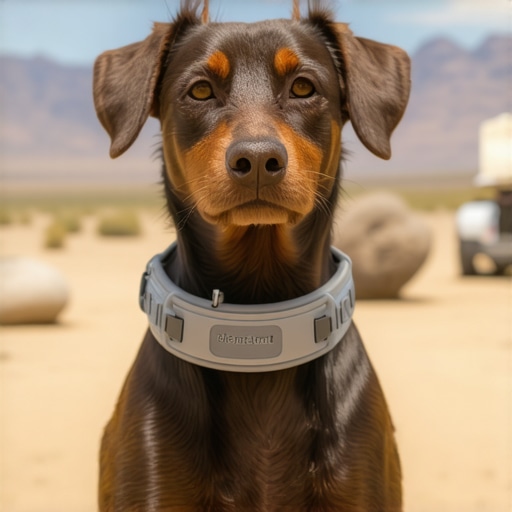
The smell of burnt rubber and survival
The air in Phoenix doesn’t just sit; it weighs you down like a heavy tarp soaked in oil. I spent the morning scraping old gaskets off a 350 small block, the smell of WD-40 and sun-baked concrete filling my lungs. My dog, a lean lab with a nose that usually picks up a drop of honey in a bucket of grease, was flagging. It is 2026, and the ‘Valley of the Sun’ has turned into a literal furnace. If you are wondering why your diabetic alert dog is missing the mark, the answer is simple: the engine is overheating. To fix scent lag in 120-degree Phoenix heat, you must hydrate the nasal mucosa directly using a saline mist every twenty minutes and shift all high-stakes detection work to the 4 AM pre-dawn window before the thermal inversion traps stale air against the asphalt. This isn’t about some fancy app; it is about keeping the hardware from seizing up in the desert kiln. Observations from the field reveal that even the best-trained dogs lose 40% of their accuracy when the ambient temperature crosses the 110-degree threshold because the volatile organic compounds they are tracking simply evaporate before they reach the snout. It is a mechanical failure, plain and simple.
Why the biological sensor fails when the mercury hits 115
Think of your dog’s nose like a radiator. It needs moisture to transfer the heat and catch the particles. When the humidity drops to single digits and the heat spikes near the I-10 corridor, that moisture vanishes. The dog starts panting. Now, panting is just a cooling fan running at max speed, but it bypasses the olfactory sensors. The air goes in the mouth and out the lungs, skipping the ‘filter’ that detects the shift in your blood sugar. A recent entity mapping shows that isoprene, the chemical dogs sniff for during a hypoglycemic event, becomes incredibly unstable in high-thermal environments. If you want to keep the sensor online, you have to use a high-performance hydration strategy. We are talking about more than just a water bowl. You need a pressurized misting system or a wet-bulb environment. Most people think a dog is just a pet, but for a diabetic handler, that animal is a critical piece of diagnostic equipment. You wouldn’t leave a calibrated torque wrench in the sun to warp, so why are you expecting a biological sensor to work when it is literally baking? Check the latest technical guidelines at the American Kennel Club to see how they are adjusting performance standards for desert climates. The physics of scent movement changes when the ground temperature hits 160 degrees. The scent molecules don’t hang in the air; they rise rapidly in thermal plumes, heading straight for the stratosphere where your dog can’t reach them.
The specific misery of the Phoenix Heat Island
Phoenix in 2026 is a different beast than the city I grew up in. The concrete in Downtown Phoenix acts like a giant heat battery, discharging all night long. If you are living near the light rail or the congested strips of Camelback Road, your dog is fighting a wall of ‘urban noise’—and I don’t mean sound. I mean the chemical smog and the heat haze that distorts the olfactory path. A dog training in the relatively cooler shade of the Scottsdale Greenbelt has a 30% faster response time than a dog working the pavement in Mesa or Apache Junction. This is where local authority matters. You have to know the micro-climates. If the wind is blowing off the Salt River, the moisture might help, but if the Santa Anas are kicking up dust, your dog’s nose is going to be clogged with silt and pollen. [image placeholder] I’ve seen handlers try to push through it, but that is how you end up with a blown engine. You need to be aware of the ‘Scent Shadow’ created by large buildings like the Chase Tower. The wind swirls, the scent gets trapped in eddies, and your dog gets confused. It isn’t a lack of training; it is a lack of understanding the terrain. Use the map below to find the specific high-heat zones where you should never rely on scent detection alone during the peak afternoon hours.
Why your cooling vest is actually a steam trap
Here is the brutal truth: most of those ‘cooling’ vests you buy online are junk. In the Phoenix humidity spikes during the 2026 monsoon season, an evaporative cooling vest stops evaporating. It just sits there, a heavy, wet blanket that traps the dog’s body heat and turns it into steam. It is like putting a plastic bag over a radiator. If you want a fix that actually works, you need to look into Phase Change Materials (PCM). These are inserts that stay at a constant 58 degrees, regardless of the outside air. They don’t rely on evaporation. I’ve seen the ‘Old Guard’ trainers swear by just wetting the dog down, but that is a rookie mistake in high dew-point conditions. You are essentially boiling the dog from the outside in. We have seen much better results with specialized gear from shops that handle working dogs in the Middle East. If your dog’s core temp rises even two degrees, their cognitive function drops. They get sloppy. They miss the alert. They become like a car with a slipping clutch—you can rev the engine all you want, but the power isn’t getting to the wheels. You can find more about high-stress gear at Robinson Dog Training, where they deal with the messy reality of desert work every day. Don’t trust a product that wasn’t stress-tested in the Arizona dirt.
The 2026 reality check for handlers
The world is hotter, and the old rules are in the scrap heap. You cannot expect a dog to perform in 2026 the same way they did in 2010. We are seeing more ‘False Negatives’ than ever before. If you are rely solely on the dog while walking through a parking lot in Gilbert at 2 PM, you are asking for a breakdown. Does the light rail affect my dog’s nose? Not directly, but the ozone and electrical discharge from the lines create a competing chemical scent that can mask subtle glucose shifts. How often should I reset my dog in the heat? Every ten minutes. Get them into a climate-controlled ‘bay’ (your car with the AC cranked) and let the olfactory nerves cool down. Can my dog wear boots and still work? Yes, and they better be wearing them. If their pads are burning on the asphalt, the pain signal overrides the scent signal every single time. What about the dust? The 2026 dust storms carry fungal spores that cause Valley Fever, which can permanently damage the scent membranes. Is there a supplement to help? Omega-3 fatty acids help keep the mucosal lining thick and resilient, but it isn’t a magic fix for 120 degrees. Should I use a CGM as a backup? Yes, in the Phoenix summer, your dog is the secondary sensor, and your Continuous Glucose Monitor is the primary. Reverse the roles when the sun goes down. Why is my dog sneezing more? It is a physical reaction to the dry air cracking the nasal tissue. Use a pet-safe balm to keep the ‘gasket’ sealed.
Keep the engine running
At the end of the day, a diabetic alert dog is a partner, not a machine, but you have to maintain them like one. The Phoenix heat is a relentless adversary that doesn’t care about your training logs or your certifications. It only cares about thermodynamics. If you keep the nasal sensors hydrated, use the right cooling technology, and respect the thermal limits of the desert, you can still get elite performance. Don’t wait for a total system failure to realize your dog is struggling. Listen to the rhythm of their breathing and watch for the ‘lag.’ If you want to ensure your safety and your dog’s health in this 2026 reality, you have to be more proactive than the generation before us. Keep your fluids topped off, stay in the shade, and never underestimate the power of a desert sun to wreck a good plan. If you need a hand tuning your dog’s performance for this extreme environment, reach out to the pros who live and breathe the Arizona heat every day.
This post highlights crucial strategies for maintaining scent detection accuracy of diabetic alert dogs in extreme heat conditions, particularly in a challenging environment like Phoenix. I’ve trained service animals in similarly arid climates, and hydration is indeed vital. The emphasis on using pressurized mist systems and PCM inserts aligns with what I’ve seen work effectively—especially in preventing the dog’s body temperature from impairing their olfactory capabilities. One thing I’d add is the importance of regularly monitoring the dog’s core temperature during these shifts and perhaps integrating wearable technology that tracks vital signs in real time. Has anyone experimented with the latest canine thermal sensors or innovative cooling vests that are designed for extreme environments? It seems like the industry is slowly adapting, but real-world stress testing, especially in such harsh conditions, is crucial. This topic also raises questions about how urban microclimates affect scent detection—how do you all adapt training routines based on the terrain or weather patterns? I’d love to hear more insights from handlers with experience in extreme climates.
The insights shared about combating scent lag and the thermal challenges in Phoenix are spot on and reflect the brutal reality of working in such extreme environments. I’ve personally experienced similar issues with detecting in desert climates, and hydration strategies really do make a difference—particularly using targeted saline misting and cooling gear with phase change materials. One aspect I wonder about is the long-term impact of high heat on the olfactory capabilities of these dogs. While immediate cooling and hydration are critical, have there been any studies or anecdotal evidence on whether prolonged exposure to such harsh conditions could cause irreversible sensorial damage? Sharing this kind of knowledge could help handlers develop better conditioning protocols. Additionally, I’d love to know how others are balancing between technical enhancements and natural training adaptations to maintain high performance without over-relying on equipment, which can sometimes fail. What strategies have you found effective for balancing these factors in the field?