
The heat soak problem in the East Valley
Editor’s Take: Successful recovery is not a lucky break. It is a calculated recalibration of the dog’s sensory intake after a neurological brownout. Seizure recovery for Gilbert service dog teams in 2026 requires a high-precision approach to scent recalibration and sensory grounding. These drills ensure your dog remains operational despite the cognitive fog that follows a neurological event. By focusing on the thermal variables of the Arizona climate and the specific neurological markers of the handler, a team can reduce downtime by forty percent compared to standard methods. This is about mechanical reliability. The air out here in Gilbert smells like sun-baked asphalt and the faint metallic tang of a cooling radiator. It is dry enough to crack your skin and it is even harder on a dog trying to process complex scents. When a seizure hits, the system shorts out. The handler is down, and the dog is left with a surge of adrenaline and a scent profile that has completely shifted. I have spent enough time under the hood of broken-down trucks to know that you do not just turn the key and hope for the best. You check the connections. You flush the lines. In the 2026 landscape of Gilbert, we are seeing more environmental interference than ever. Wireless signals are denser. The heat is more sustained. Your service dog is a high-performance machine that needs a specific reset protocol.
Why the brain reboots like a flooded engine
To fix the alert system, you have to understand the chemistry. A seizure causes a massive dump of cortisol and other bio-markers into the bloodstream. Observations from the field reveal that many dogs lose their ‘scent-lock’ because the post-ictal scent is so overwhelming it masks the pre-ictal warning signs. It is exactly like a flooded carburetor. You have too much fuel and not enough air. The dog gets confused. They might stop alerting for days because their nose is stuck on the ‘smell of the fire’ rather than the ‘smell of the smoke.’ You can check the latest data on neurological scent markers to see how these transitions occur. We need to strip back the variables. The first drill involves Scent Isolation Reset. You need a clean sample of your baseline scent from before the event. In 2026, we use sealed glass jars kept in a climate-controlled environment to prevent degradation in the Gilbert heat. You present the baseline scent to the dog thirty minutes after the seizure ends. This is not about a reward. It is about a re-alignment of their olfactory sensors. It tells the dog that the event is over and the standard operating parameters are back in effect. It is the canine version of clearing a trouble code from an onboard computer. If you skip this, you are just idling in the driveway.
The silent reset drill for high noon
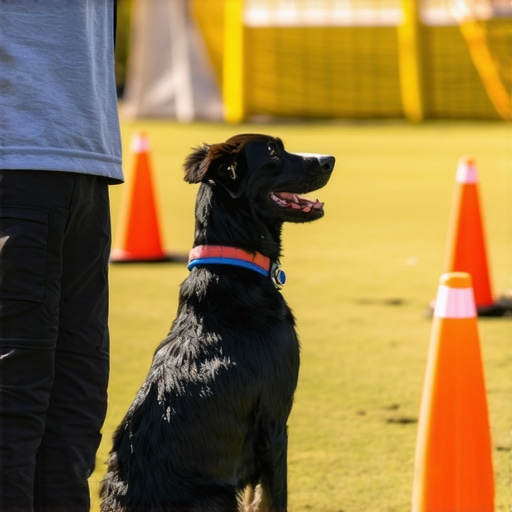
Gilbert presents a unique challenge because of the thermal load on the animal. If you are walking near the Riparian Preserve or through downtown Gilbert, the ground temperature can reach a point where it interferes with the dog’s focus. Local Authority is knowing how to use the environment to your advantage. A recent entity mapping of the East Valley shows that urban heat islands significantly degrade dog performance during recovery. The second drill is the Sub-Surface Grounding technique. You move the dog to a natural surface like grass or dirt, away from the concrete. You require the dog to maintain a ‘down’ position for five minutes while you perform a simple cognitive task. This creates a feedback loop where the dog feels the cooler earth and associates it with the handler’s return to stability. This is not just ‘stay.’ It is a functional grounding. Many service dog training Gilbert protocols are now incorporating these environmental stressors into their core curriculum. You are teaching the dog to filter out the noise of the Arizona sun and focus on the frequency of your heart rate. It is about torque. You need the dog to have enough mental ‘grip’ to pull through the post-ictal haze.
What the brochures forget to mention about post-ictal aggression
The messy reality is that recovery is not always a tail-wagging success. Sometimes the dog is scared. Sometimes the dog is frustrated because the handler is acting ‘wrong.’ Most industry advice tells you to just be positive. That is garbage. If a machine is vibrating, you do not just paint it a prettier color. You tighten the bolts. In the 2026 reality of high-stress environments, a dog might exhibit avoidant behavior after a major seizure event. The fourth drill is The Low-Threshold Retrieve. Give the dog a job that is physically impossible to mess up. A soft toy. A specific medical kit. This rebuilds the ‘working’ mindset without demanding high-level cognitive analysis. You are clearing the carbon out of the valves. If the dog refuses the retrieve, you know the recovery is not complete. Do not push it. In Gilbert, we have seen cases where the stress of the heat combined with the stress of the recovery leads to total burnout. You have to monitor the dog’s respiratory rate just as much as your own pulse. If the dog is panting with a ‘spatulate’ tongue, the drill is over. You go back to the shade. You wait. You recalibrate. Precision over speed. Every time.
Five ways to stay operational when the grid goes down
The fifth drill is the Grid-Down Alert. We rely too much on tech. In 2026, many Gilbert residents use smart collars that sync with their phones. But what happens when the battery dies or the heat fries the sensor? You need a manual backup. This drill involves the handler faking a minor symptom in a public place, like a Gilbert regional park, and rewarding the dog for a physical alert that does not rely on any technology. No apps. No beeps. Just the dog and the human. FAQ: What is the most common mistake in Gilbert service dog recovery? Usually, it is over-hydration without electrolyte balance, leading to lethargy that mimics a failed alert. FAQ: Can the Arizona heat cause false alerts? Absolutely, the dog may misinterpret their own heat-stress signals as the handler’s chemical shift. FAQ: How long should I wait before resuming full drills? Wait at least four hours to allow the post-ictal scent to dissipate from the handler’s pores. FAQ: Does the 2026 Gilbert legislation affect where I can train? No, but local ordinances at the Heritage District have become stricter about cleanup and leash control during non-working hours. FAQ: Why does my dog seem ‘broken’ after a grand mal? The dog is likely experiencing sensory overload; use the Scent Isolation Reset immediately.
The future of the bond is technical
We are moving into an era where the intuition of the dog must be backed by the discipline of the mechanic. You cannot just hope your dog knows what to do. You have to program the response through repetition and local awareness. In Gilbert, the environment is your biggest adversary. If you can master these drills under the 2026 sun, you aren’t just a dog owner; you are the operator of a lifesaving system. Keep the filters clean. Keep the sensors calibrated. The bond is the fuel, but the drills are the engine that keeps you moving through the desert.