
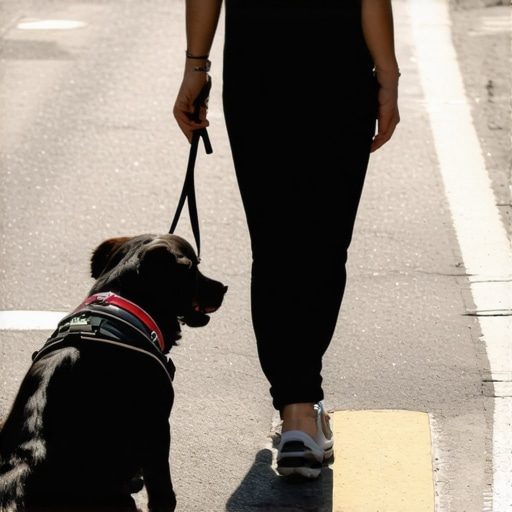
The smell of WD-40 and scorched metal usually defines my mornings in the shop, but out here on the Mesa sidewalks, the scent is different. It is the smell of baked dust and the sharp, ozone-heavy heat that hits your lungs like a physical weight. If you think your service dog can handle the Arizona sun without a strict maintenance schedule, you are looking at a catastrophic system failure. A dog is a high-performance machine, and in 2026, the thermal load on our streets has reached a point where ‘winging it’ leads to permanent damage. This is not about being overprotective. This is about operational integrity in a desert that wants to melt your boots off. The Editor’s Take: Service dogs in the East Valley require a specific thermal protocol to prevent paw pad delamination, focusing on surface-specific thresholds and mandatory gear rotation.
The morning cutoff point
By 11:00 AM in Phoenix or Gilbert, the concrete has already soaked up enough radiation to start a slow cook. We talk about ‘ambient temperature’ in the news, but that is a useless metric for someone standing six inches off the ground. While the air might be 95 degrees, the blacktop is pushing 140. That is the first rule for 2026. You do not trust the thermostat on the wall. You trust the infrared sensor. I have seen guys try to use the ‘five-second rule’ where they put their hand on the ground. That is a joke. Your hand has different callouses and blood flow than a dog’s pad. If you would not leave your bare skin on the asphalt for the duration of a grocery store run, your dog should not be on it either. We are seeing 2026 weather patterns where the heat retention in the valley floor stays high even after the sun drops. The ground is a battery, and it stays charged with heat long into the night. Check the Mesa city heat advisories before you even turn the key in the ignition. We are operating in a environment where the margin for error is razor-thin.
Thermal load and surface material physics
Not all ground is built the same. Concrete reflects a bit of that energy, but asphalt is a heat sponge. It is designed to hold heat. When you walk through a parking lot in Queen Creek, you are walking on a thermal mass that can reach 170 degrees Fahrenheit. At that temperature, the proteins in a dog’s paw pads begin to denature almost instantly. Think of it like a tire blowout. Once the integrity of the pad is compromised, the dog is out of commission for months. Service dog trainers are now mandating Rule Two: Material Mapping. You have to plan your route based on the shade of the buildings and the type of surface. You look for the ‘glitch’ in the heat, the little patches of grass or the lighter-colored pavers that do not hold the sun as much. If you are heading into a high-density area like Downtown Mesa, you stick to the north side of the street where the buildings provide a natural heat shield. This is logistics, pure and simple. You are moving a biological asset through a hostile environment. You do not just walk. You calculate. I keep a bottle of water in the truck just to test the pavement sometimes. If it sizzles, we stay in the cab. No exceptions. This is the reality of the 2026 service dog handler in the Valley of the Sun.
The East Valley survival protocol
In Apache Junction or the edges of Mesa, the transition from pavement to dirt brings its own set of problems. You have the heat, but now you have the friction of the sand. Rule Three for 2026 is the Mandatory Boot Rotation. A lot of handlers buy one pair of boots and think they are set. That is like running a truck on the same set of spark plugs for a decade. The heat inside the boot can actually become a problem if the dog is wearing them for more than thirty minutes in 110-degree weather. Dogs sweat through their pads. If you trap that moisture in a rubber boot on a hot day, you are essentially parboiling their feet. You need breathable, high-ventilation gear that you take off the second you hit a climate-controlled environment. You check for hot spots. You look for redness between the toes. It is the same as checking the oil. You do it every time you stop. Observations from the field reveal that handlers who use cooling vests in conjunction with boots see a much lower rate of thermal stress. The dog’s internal cooling system is already working overtime. Do not make it fight the ground and the air at the same time. We have seen local trainers in the Maricopa County area start to push for indoor-only training during peak summer months because the risk-to-reward ratio is just too skewed.
Why common boot advice fails in practice
The industry likes to sell you these ‘all-weather’ boots. Most of them are trash. They use cheap adhesives that fail when the pavement hits 150 degrees. I have seen boots literally fall apart in the middle of a crosswalk in Gilbert. That is a dangerous situation. Your dog is suddenly standing on a hot plate and you are stuck in traffic. You need military-grade or high-performance gear that uses stitched soles, not just glue. And do not get me started on the ‘socks’ people put on their dogs. If it does not have a hard, heat-resistant sole, it is useless against the Arizona sun. Another messy reality is that boots change how a dog feels the ground. This can lead to balance issues or ‘tripping’ on uneven sidewalks. You have to train for the boots before the heat hits. You do not wait for July to put them on for the first time. That is a recipe for a stressed-out dog and a handler who is distracted by a gear failure. Practical application requires a slow rollout. Start in the house, then move to the garage, then the driveway. If the gear fails in your driveway, it is an annoyance. If it fails in front of a light rail station in Mesa, it is an emergency.
The 2026 reality for handlers
The old guard used to say dogs were tough and could handle anything. Those people did not live through a 2026 Arizona summer. The climate has shifted, and our approach to service dog safety has to shift with it. We are no longer just ‘walking the dog.’ We are managing a complex interaction between biology and extreme thermodynamics.
What temperature is too hot for dog paws?
Anything over 120 degrees on the surface will cause pain, and 140 degrees causes permanent tissue damage in less than a minute. Always use an infrared thermometer.
How do I know if the pavement is too hot?
If you cannot hold the back of your hand to it for ten seconds without flinching, it is too hot. However, 2026 safety rules suggest using a dedicated surface thermometer for accuracy.
Are cooling vests effective in Arizona?
Yes, but they require constant moisture to work via evaporation. In the low humidity of the East Valley, they can dry out in twenty minutes, so keep a spray bottle handy.
Should I walk my dog at night instead?
Even at night, asphalt can remain 20 to 30 degrees hotter than the air. Check the surface even after the sun is down.
What are the signs of burnt paw pads?
Look for limping, licking at feet, pads that look darker than usual, or visible blisters and peeling skin. If you see this, go to a vet immediately.
The ground here is not your friend. It is a hazard that needs to be mitigated with the right gear, the right timing, and a healthy dose of skepticism toward ‘standard’ advice. If you want to keep your partner in the field, you treat the heat like the enemy it is. Stay off the blacktop, keep the boots checked, and watch the clock. Your dog depends on your ability to read the environment better than they can. Take care of the machine, and the machine will take care of you.