
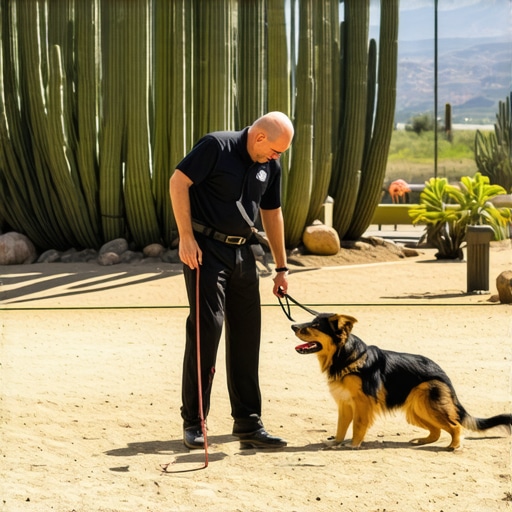
Unlocking the Secrets of Service Dog Training in the Grand Canyon State
Arizona’s diverse landscapes and vibrant communities offer a unique backdrop for service dog training. Whether you’re in Phoenix, Tucson, or the scenic outskirts, understanding effective training techniques is essential for fostering a well-behaved and reliable service dog. This article delves into top strategies for 2024, blending expert insights with practical advice to ensure your service dog training journey is successful and rewarding.
Creating a Solid Foundation: The Role of Early Socialization and Basic Commands
At the heart of effective service dog training lies early socialization. Introducing your dog to various environments, sounds, and people prepares them for real-world situations. According to the American Kennel Club, socialization during puppyhood significantly influences a dog’s adaptability and temperament (source).
Building on this foundation, mastering basic commands like sit, stay, and come is crucial. These commands serve as the building blocks for more advanced training and help establish clear communication between handler and dog. Consistency, positive reinforcement, and patience are key to embedding these behaviors effectively.
Specialized Training Techniques for Arizona’s Unique Environment
Arizona’s climate and terrain present specific challenges and opportunities. Hot summers and rugged outdoor landscapes demand tailored training approaches. For instance, acclimating your service dog to extreme heat involves short, frequent outdoor sessions, and ensuring access to shade and water. Using environmental distractions during training enhances your dog’s focus and reliability in public spaces.
Incorporating local resources, such as professional trainers familiar with Arizona’s terrain, can significantly accelerate progress. For example, training at parks like South Mountain Park or participating in local service dog classes can provide practical exposure.
Ensuring Ongoing Success: Maintenance and Advanced Skills Development
Training doesn’t end once your dog masters basic commands. Continuous reinforcement, socialization, and exposure to new environments are vital for maintaining skills. Advanced commands, such as alerting to specific medical conditions or guiding through complex settings, require consistent practice and refinement.
How Can You Tailor Service Dog Training to Your Personal Needs and Environment?
Effective service dog training in Arizona hinges on customizing techniques to your specific circumstances. Factors like your dog’s breed, temperament, and your lifestyle influence training methods. For example, if you have a dog with a high prey drive, specialized desensitization exercises are essential. Engaging with local trainers and support groups can provide personalized strategies tailored to Arizona’s unique environment.
Remember, patience and persistence are your best allies. Celebrate small victories, stay consistent, and adapt your training as your dog progresses.
If you’re seeking professional guidance, consider visiting trusted training centers like Robinson Dog Training in Mesa, Arizona, which offers expert service dog training programs.
Feel free to share your experiences or ask questions below — your insights can inspire others on their service dog journey!
Deepening Your Service Dog Training: Navigating Arizona’s Diverse Terrain and Climate
Building on foundational training, many handlers find that adapting techniques to Arizona’s distinctive environment is crucial for success. The state’s vast deserts, mountainous regions, and urban settings each demand specific considerations. For example, when training in outdoor settings like South Mountain Park, handlers should expose their dogs gradually to varied terrains, ensuring they can navigate rugged paths without hesitation. This process enhances their confidence and reliability in real-world tasks.
Temperature fluctuations also influence training schedules. During scorching summer days, early morning or late evening sessions are preferable to prevent heat exhaustion. Incorporating training exercises that simulate real-life distractions—like sudden noises or bustling crowds—can reinforce focus and obedience even in unpredictable situations.
Integrating Local Resources and Community Support
Arizona boasts a network of experienced trainers who understand the nuances of outdoor and urban training. Connecting with local support groups or attending workshops can provide invaluable insights. For instance, some trainers specialize in training service dogs for medical alert tasks, which are especially relevant given the hot climate’s tendency to exacerbate certain health conditions.
Furthermore, leveraging trusted facilities like Robinson Dog Training can help ensure your dog receives tailored, professional guidance. These centers often incorporate real-world scenarios into their curricula, preparing your service dog for any environment Arizona may present.
Advanced Skills for Real-World Readiness
As your dog masters basic commands, advancing to specialized skills becomes essential. Techniques such as scent discrimination or environmental alerting—like detecting low blood sugar levels—are invaluable. Training for these advanced tasks often involves consistent reinforcement and sophisticated exercises, which can be integrated into daily routines.
It’s also important to consider the emotional well-being of your dog. Arizona’s expansive outdoor spaces can sometimes lead to overstimulation. Regular mental breaks and positive reinforcement help maintain a balanced, motivated working dog. Remember, expert guidance can be especially beneficial when working on complex behaviors or troubleshooting challenges that arise in diverse environments.
What unique training challenges have you faced due to Arizona’s environment, and how did you overcome them?
Sharing your experiences can inspire and educate fellow handlers. Whether it’s managing heat exhaustion, navigating noisy urban areas, or acclimating to rugged terrains, your insights highlight the real-world realities of service dog training in Arizona. Plus, engaging with local trainers and support networks often unveils innovative solutions tailored to the state’s unique landscape.
If you’re interested in expanding your training knowledge, exploring trusted resources and expert-led programs can make a significant difference. The journey to a well-trained, dependable service dog is ongoing—and your dedication makes all the difference. Feel free to comment below with your stories or questions, and let’s continue building a supportive community of Arizona service dog handlers!
Mastering Complex Environmental Challenges in Service Dog Training Across Arizona
Transitioning from foundational commands to advanced skills requires a nuanced understanding of Arizona’s multifaceted landscape. The state’s vast deserts, urban hubs, and mountainous terrains pose unique challenges that demand tailored training protocols. For instance, desert conditions necessitate specialized heat acclimatization techniques, where handlers should gradually increase outdoor exposure during cooler parts of the day, ensuring their dogs develop resilience without overheating. Incorporating **environmental desensitization exercises**—such as exposure to sand, loose gravel, and uneven surfaces—enhances a service dog’s confidence and agility in rugged terrains.
Moreover, urban environments like Phoenix or Tucson introduce complex distractions such as traffic noise, bustling crowds, and unpredictable stimuli. Here, integrating **distraction training**—gradually increasing the level of environmental stimuli—ensures the dog remains focused and reliable in high-stimulation settings. Techniques such as training in busy markets or during local events can simulate real-world scenarios, preparing your service dog for any unpredictable situation.
Leveraging Behavioral Science and Reinforcement Strategies for Optimal Results
Applying principles from behavioral science can significantly elevate training efficacy. For example, **variable reinforcement schedules**—where rewards are given unpredictably—can strengthen desired behaviors, making them more resistant to extinction. This approach is especially useful for behaviors like alerting to specific medical cues or guiding through complex environments. Additionally, understanding the **dopaminergic pathways** involved in motivation and reward can help trainers craft more effective reinforcement strategies, fostering a motivated and eager partner.
Incorporating **positive behavioral interventions** such as shaping, chaining, and differential reinforcement techniques allows handlers to refine complex tasks. For instance, scent discrimination exercises for medical alert dogs can be advanced by gradually increasing the difficulty level, such as hiding the scent in cluttered environments or varying the scent’s location, which mimics real-world challenges.
Expert Perspectives: Integrating Technology and Data-Driven Training Approaches
Recent developments in technology offer exciting avenues for enhancing service dog training. Wearable devices that monitor a dog’s physiological responses—like heart rate or stress levels—provide real-time feedback, enabling trainers to adjust training intensity and duration accordingly. According to a 2022 study published in the Journal of Veterinary Behavior, such data-driven approaches improve training outcomes by reducing stress and optimizing learning periods.
Furthermore, virtual reality (VR) environments are emerging as innovative tools for simulated training scenarios, especially for urban agility and distraction resilience. These platforms can expose dogs to a wide array of stimuli in a controlled setting, reducing the risk of overstimulation and fostering adaptability.
What are some innovative methods or emerging technologies you’ve integrated into your service dog training regimen?
Sharing your insights can help foster a community of continuous learning and adaptation. Whether it’s utilizing new tech tools, refining traditional methods, or overcoming environmental hurdles, your experiences can inspire others to push the boundaries of effective training. Remember, ongoing education and adaptation are key to developing a truly dependable service dog capable of handling Arizona’s diverse and demanding environments.
If you’re eager to explore cutting-edge techniques, consider consulting with specialists in canine behavior technology or attending specialized workshops. The journey to training a highly skilled service dog is ever-evolving, and staying informed about the latest advancements ensures your success and your dog’s well-being.
Innovative Approaches to Service Dog Training in Arizona’s Multifaceted Terrain
As we delve deeper into the intricacies of service dog training amidst Arizona’s expansive landscapes, it becomes evident that **integrating cutting-edge behavioral science** and **technological advancements** significantly enhances training efficacy. This synergy facilitates the development of highly adaptable, resilient service dogs capable of navigating the state’s unique challenges with confidence and precision.
Harnessing Behavioral Science for Precision Training
Applying principles such as **operant conditioning** and **stimulus control** allows trainers to fine-tune responses to complex environmental stimuli. For example, **differential reinforcement** can be employed to consolidate desirable behaviors amidst distractions like urban noise or outdoor hazards. Moreover, **shaping** and **chaining** techniques are invaluable for incrementally building complex tasks such as scent detection or guiding in crowded settings, ensuring the dog’s skills are robust and reliable.
Embracing Technology for a Competitive Edge
Emerging tools like **wearable biometric sensors** provide real-time feedback on a service dog’s physiological state, enabling trainers to identify stress indicators during high-stimulation scenarios. A comprehensive understanding of these metrics informs adjustments to training protocols, reducing burnout and fostering sustained motivation. Additionally, **virtual reality (VR) simulations** are revolutionizing urban agility training, exposing dogs to hyper-realistic environments while maintaining safety and control. This allows for **precise desensitization** to stimuli such as traffic, crowds, or sudden noises, which are prevalent across Arizona’s cities.
Can Advanced Training Techniques Be Customized for Individual Dogs and Handler Needs?
Absolutely. Personalized training plans considering the dog’s breed, temperament, and the handler’s lifestyle are essential for optimal outcomes. For instance, a dog with a high prey drive may require targeted desensitization exercises, while those with medical alert tasks benefit from **specialized scent training** and **alerting protocols** tailored to their handler’s specific health conditions. Collaborating with **specialized trainers** and utilizing **data-driven insights** ensures that training remains adaptable and responsive to each team’s evolving needs.
To stay at the forefront, handlers should explore resources such as reputable canine training organizations and attend workshops focusing on the latest methodologies and technological integrations.
What Emerging Technologies Are Shaping the Future of Service Dog Training?
Innovations like **AI-powered training platforms** and **smart collars** are paving new avenues for customized, efficient training programs. These tools analyze behavioral patterns, track progress, and suggest tailored exercises, making training more precise and less time-consuming. Additionally, **biofeedback devices** help maintain the emotional well-being of both handler and dog, ensuring stress levels are managed effectively during intensive training phases.
Engaging with these advanced methodologies not only accelerates skill acquisition but also enhances the overall quality of service dogs, ensuring they meet the high standards required to serve in diverse Arizona environments. For those dedicated to mastering the art and science of training, embracing these innovations is essential for staying ahead.
Ready to elevate your service dog training approach? Dive into these expert strategies and technological tools to create a resilient, well-prepared team capable of thriving across Arizona’s diverse landscapes. Your journey to excellence begins now—embrace the future of training today!
Frequently Asked Questions (FAQ)
What are the most effective early socialization techniques for service dogs in Arizona?
Effective early socialization involves exposing puppies to diverse environments, sounds, and people gradually. In Arizona, outdoor exposure should include visits to parks, urban settings, and rugged terrains to build adaptability. Positive reinforcement and controlled exposure to local stimuli like desert landscapes or city noise help develop confident and well-adjusted service dogs.
How can I tailor service dog training to Arizona’s unique climate and terrain?
Training should consider temperature fluctuations by scheduling outdoor sessions during cooler parts of the day and gradually increasing exposure to rugged terrains such as sand, gravel, and uneven surfaces. Acclimatization to heat and environmental distractions ensures your service dog remains reliable and comfortable in Arizona’s diverse landscapes.
What advanced skills are essential for service dogs operating in Arizona’s environment?
Advanced skills include scent detection for medical alerts, guiding in complex urban settings, and environmental alerting. Techniques like scent discrimination exercises, distraction training, and real-world scenario simulations enhance a service dog’s ability to perform reliably across Arizona’s deserts, mountains, and cities.
What innovative technologies are transforming service dog training today?
Emerging tools such as biometric sensors monitor stress and physiological responses, allowing for real-time training adjustments. Virtual reality environments simulate urban and outdoor distractions, helping dogs develop focus and resilience in safe, controlled settings. These advancements optimize training efficiency and effectiveness.
How can I customize training programs for my individual service dog and personal needs?
Personalized training considers the dog’s breed, temperament, and handler’s lifestyle. Techniques like targeted desensitization, specialized scent training, and data-driven feedback ensure the training is responsive and effective. Collaborating with experienced trainers and utilizing technological insights further customizes the approach.
What are the future trends in service dog training technologies?
Future trends include AI-powered training platforms, smart collars providing behavioral data, and biofeedback devices to manage stress. These innovations promise more precise, efficient, and humane training methods, leading to highly capable service dogs adaptable to Arizona’s complex environments.
Trusted External Sources
- American Kennel Club (AKC): Provides comprehensive guidance on puppy socialization, training protocols, and breed-specific behaviors, crucial for foundational training.
- Journal of Veterinary Behavior: Publishes research on behavioral science, stress management, and innovative training techniques supported by biometric data.
- Arizona Animal Welfare League & SPCA: Offers local training resources, community programs, and expert advice tailored to Arizona’s climate and terrain challenges.
- Canine Behavioral Science Institute: Specializes in applying scientific principles and technology to optimize training outcomes.
Conclusion: Final Expert Insights on Service Dog Training in Arizona
Mastering service dog training in Arizona requires an integration of solid foundational skills, tailored techniques for diverse environments, and embracing cutting-edge technological innovations. The state’s unique climate and terrain demand specialized acclimatization, distraction management, and advanced skill development to ensure your service dog remains reliable and effective. By leveraging expert resources, personalized training plans, and emerging tools like biometric sensors and VR simulations, handlers can cultivate resilient, highly capable service dogs ready to serve in any Arizona setting. Staying informed about the latest advancements and continuously refining training approaches are key to fostering a successful partnership. Share your experiences, explore new methods, and contribute to a community committed to excellence in service dog training—your dedication directly impacts the quality of service provided to those in need.