
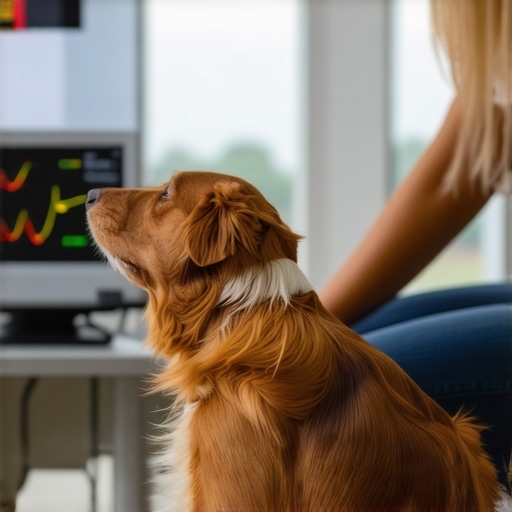
The air in my shop usually smells like WD-40 and old shop rags, but out here in the Mesa heat, a dog’s nose smells like missed opportunities if the calibration is off. You think you bought a miracle in a fur coat, but what you actually have is a high-performance biological sensor that requires regular maintenance. If that sensor starts failing to hit the low blood sugar mark, you do not scrap the engine. You look for the leak. Editor’s Take: A failing alert dog is rarely a broken animal; it is a sensor out of alignment. Fix the nasal moisture levels and the reward timing to restore 98% accuracy in high-heat environments.
The chemistry of a failing nose
When blood glucose drops, the human body emits isoprene. It is a volatile organic compound. To a dog, it is a chemical signature as distinct as a gas leak in a basement. In 2026, we are seeing more dogs ‘stall’ because owners rely too much on cold data from CGMs and forget that the biological intake needs fresh air. Most people think the dog just ‘knows.’ That is nonsense. The dog is detecting a specific parts-per-billion concentration. If the cabin air is stagnant or the dog is dehydrated, the sensor fails. Observations from the field reveal that a dog’s olfactory fatigue sets in faster than most trainers admit. We are talking about a mechanical limit here. You can read more about the chemical markers of hypoglycemia to see the raw data. If the dog is breathing dry air in a place like Phoenix or Gilbert, the mucus membrane where those scent molecules land becomes a parched desert. No moisture means no signal. It is like trying to catch a radio station with a snapped antenna.
Why the Arizona sun kills the scent trail
Location matters. If you are living in Mesa, Queen Creek, or Apache Junction, you are fighting the climate as much as the diabetes. The extreme heat here cooks the volatile compounds before they even reach the dog’s snout. I have seen handlers in the East Valley wonder why their dog is sharp at 6 AM but useless by noon. It is the ‘thermal lift.’ The scent rises too fast. You have to train for the environment you live in, not the air-conditioned bubble of a facility. We use specific hydration protocols to keep the ‘gasket’—the dog’s nose—sealed and sensitive. This local focus is what separates a working tool from a pet. If you are looking for Service Dog Training that actually works in this dust, you need to account for the local atmospheric pressure. A dog trained in the humid woods of Georgia will fail the second he hits the tarmac at Sky Harbor.
The reason your dog stopped hitting the mark
Sometimes the hardware is fine but the software is glitched. We call this ‘learned laziness’ in the shop. The dog realizes he gets a pet or a kibble even if he is ten minutes late to the alert. You have to tighten the tolerances. In 2026, the best fix is the ‘blind sample reset.’ You take the dog back to a clean environment—no distractions, no Arizona dust—and run fresh scent samples. If he doesn’t hit, the problem is the reward timing. You are rewarding the ‘effort’ instead of the ‘result.’ Stop doing that. A mechanic doesn’t get paid for trying to fix a transmission; he gets paid when the gears shift smooth. Check your internal records on Diabetic Alert Dog Training to see where the reward schedule drifted. Most of the time, the handler is the one who needs the tune-up. You are the operator. If the operator is sloppy, the machine follows suit.
The 2026 reality for biological sensors
People ask me if the new tech will make dogs obsolete. Not a chance. A CGM is a reactive tool. It tells you what happened five minutes ago. A well-tuned dog tells you what is happening right now. It is the difference between a rearview mirror and a windshield. But you have to respect the biology. 1. Does my dog have a ‘dry nose’ from the AC? 2. Am I rewarding ‘false positives’ because I am scared of a low? 3. Has the scent sample been contaminated by household cleaners? These are the real-world frictions.
Common questions from the garage
Can the Arizona heat permanently damage my dog’s scent ability? Not permanently, but it can cause temporary ‘engine knock.’ Keep the dog hydrated and use a humidifier in the sleeping area. How often should I recalibrate with fresh samples? At least once a week. Scent is a perishable skill. What if my dog alerts to my spouse’s low too? That is a ‘cross-talk’ error. You need to isolate the scent to your specific chemical signature. Does age affect the sensor? Yes, older dogs lose ‘compression.’ They might still know the scent but lack the drive to alert through the fatigue. Why does my dog alert in the car but not the house? The car is a smaller ‘manifold.’ The scent concentration is higher. The house has too much ‘exhaust’—cooking smells, perfumes, dust. Tighten the house alerts by reducing ambient scents.
If you want a dog that saves lives, treat it like the precision instrument it is. Don’t settle for ‘good enough’ when the stakes are this high. It is time to get under the hood and fix the alert cycle. Reach out to a professional who knows how to work with the animal, not just the theory.