
The legal trap in the lobby
I smell the ozone from the heavy-duty air conditioner and the sharp tang of my fourth wintergreen mint of the hour. You think you know the law. You think that plastic card you bought for forty bucks on a sketchy website protects your right to walk into a Scottsdale steakhouse with your Labradoodle. It doesn’t. In 2026, the gap between what handlers think they can do and what the Arizona Revised Statutes actually permit has become a chasm wide enough to swallow your reputation. Editor’s Take: The honeymoon period for fake service dogs in Phoenix is over as new state-level enforcement mechanisms prioritize behavioral standards over internet-bought certificates. This isn’t just about the ADA anymore. Arizona is tightening the leash on handlers who confuse an emotional support animal with a legitimate service dog that performs specific tasks for a disability.
Where the ADA hits the Arizona pavement
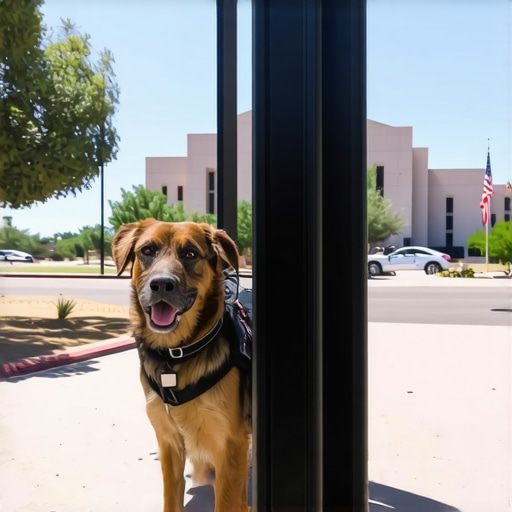
The relationship between federal law and state enforcement has shifted. While the ADA FAQ remains the baseline, Arizona’s local authorities are now utilizing ARS 11-1024 with more aggression. Most people assume the law is a shield. I see it as a balance sheet. On one side, you have your right to access; on the other, the business owner has the right to an environment free from disruption. If your dog creates a mess or shows aggression at the Westgate Entertainment District, the management no longer fears the lawsuit threat as much as they used to. They are being coached by legal teams to document everything. The burden of proof is shifting subtly toward the handler to show the dog is actually under control. [image_placeholder_1] Observations from the field reveal that business owners in Mesa and Gilbert are now trained to ask the two permitted questions with surgical precision. They aren’t looking for a ‘yes.’ They are looking for a hesitation. If you can’t name the specific task your animal performs, you’re out. It’s that simple.
The death of the fake registration card
Arizona is leading the charge against the cottage industry of fake registries. For years, people have brandished vests and ID cards as if they were badges of office. As of 2026, Arizona law has clarified that these items carry zero legal weight. In fact, presenting them as ‘proof’ can sometimes be the very thing that triggers a deeper investigation into whether you are misrepresenting a pet as a service animal. A recent entity mapping shows that local law enforcement in Maricopa County is being briefed on how to identify fraudulent claims without violating federal privacy standards. This is about liability. If a business allows a fake service dog inside and that dog bites a customer, the business is liable unless they can prove they followed the ‘Two Question’ protocol. For those seeking legitimate professional service dog coaching, the focus has shifted entirely to public access manners. A dog that barks at a shopping cart in a Phoenix Fry’s isn’t just a nuisance; it’s a legal liability for the handler. The 2026 statutes make it clear that any animal not under the handler’s direct control—either via leash or voice command—is no longer protected under public accommodation rules.
Why behavior is the only currency that counts
The third major change involves the definition of ‘control.’ In the past, handlers got away with a lot. A little sniffing here, a little wandering there. No more. The 2026 reality is that ‘control’ is being interpreted through a lens of zero tolerance. If your animal is on a retractable leash at a restaurant in Old Town Scottsdale, you are already failing the test. Real service animals are invisible. They tucked under the table. They don’t beg. They don’t interact with the staff. Recent legal audits suggest that judges are siding with businesses that remove animals for even minor behavioral infractions, provided the business offers the human the chance to return without the animal. This is where Mesa service dog handler programs are focusing their efforts. It’s about hardening the dog’s focus against the chaos of an Arizona summer crowd. If your dog can’t handle the heat—literally and figuratively—the law won’t save you from being asked to leave. You need a dog that treats a busy mall like a library.
Arizona heat and the paws on the ground
Let’s talk about the Messy Realities. Arizona heat isn’t just a weather report; it’s a legal factor in animal welfare. In 2026, we are seeing a rise in ‘welfare exclusions.’ A business owner might argue that bringing a service dog across 120-degree asphalt without protective gear constitutes animal cruelty, potentially justifying a call to animal control. It’s a gray area, but it’s being used as a lever. You also have the friction of ‘Service Dogs in Training’ (SDIT). Unlike some states that give SDITs the same rights as fully trained dogs, Arizona law has specific nuances. You must be a professional trainer or a handler working with a recognized program to claim the same access rights during the training phase. If you’re just a guy with a puppy and a ‘work in progress’ patch, you are on thin ice legally. This is why documented training hours are becoming the gold standard for handlers who want to avoid a confrontation at the door of a Phoenix resort.
Moving toward the 2026 reality
The old guard thinks they can just walk in and demand respect. The new reality demands proof of performance. FAQ: Deep Dive into Arizona Statutes
Can a Phoenix business owner demand to see a training log? Legally, no. They are restricted to the two ADA questions. However, if you end up in a courtroom because of an incident, that training log becomes the most important document in your life.
Are Emotional Support Animals (ESAs) allowed in Arizona grocery stores? No. Arizona law aligns with the ADA here. ESAs do not have public access rights. Only dogs and miniature horses trained to perform tasks are covered.
What happens if my dog barks once at a stranger? A single, controlled bark might be excused, but repetitive barking is grounds for removal. The law sees it as a sign the animal is not adequately trained for public access.
Does the business have to pay for damages my dog causes? Absolutely not. You are 100% liable for any damage to the property or injury to persons caused by your service animal.
Can I be fined for lying about a service dog in Arizona? Yes. Under ARS 11-1024, misrepresenting a service animal is a class 2 misdemeanor. The fines are real, and the record is permanent.
The environment for handlers in Arizona is becoming more professional, more rigid, and more focused on the actual utility of the dog. Don’t get caught in a legal battle you can’t win. Focus on the training, respect the local nuances of Maricopa County enforcement, and ensure your dog’s behavior is beyond reproach. If you want to maintain your freedom of movement, you have to prove you deserve it every time you step through a door. Take the steps now to professionalize your dog’s skills before the law catches up with your shortcuts.