
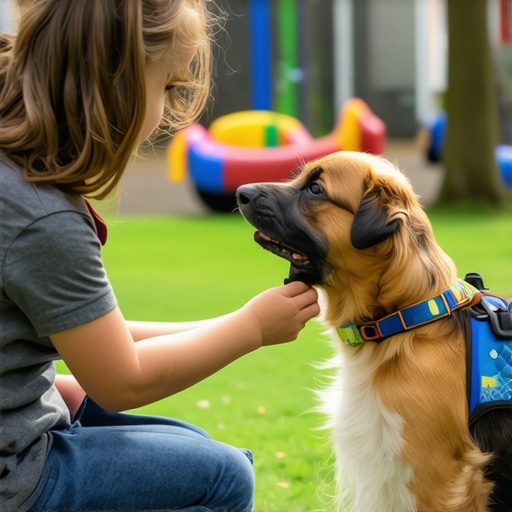
The scent of linseed oil and the sharp tang of fresh varnish usually define my mornings. In my workshop, everything has a grain, a history, and a specific point of failure. If you rush the sanding, the finish will never hold. Training a service dog to handle a sensory meltdown in 2026 is exactly like restoring a 19th-century mahogany desk. You cannot just slap a digital veneer over a broken foundation. The Editor’s Take: Real safety comes from the intersection of canine intuition and biological feedback, not just expensive gadgets. 2026 demands a dog that reads the human, not just the app. Humans are currently vibrating at a frequency higher than ever before. We see it in the data and we feel it in the air. When a child with autism begins to lose their grip on the present moment, the dog becomes the anchor in a storm of static. Most people think a service dog is just a furry alarm. They are wrong. It is a biological dampener designed to absorb the excess electricity of a human crisis.
The weight of a steady hand
In the trade of restoration, we talk about structural integrity. In the world of autism assistance, we talk about Deep Pressure Therapy (DPT). By 2026, the mechanics of this task have evolved beyond a simple ‘lap’ command. We are now seeing dogs trained to identify Heart Rate Variability (HRV) shifts before the human even knows they are spiraling. This is the first critical task. A dog that places its weight across the chest or lap of a handler provides a physical grounding that slows the sympathetic nervous system. It is like placing a heavy paperweight on a map that is trying to blow away in the wind. The dog doesn’t just sit there; it applies a rhythmic, intentional pressure that mimics the feeling of a weighted blanket but with the added warmth of a living pulse. This biological synchrony is something no wearable tech can replicate. Research from organizations like the International Association of Assistance Dog Partners shows that this specific tactile input reduces cortisol levels significantly faster than isolation alone. You can find more about these standards at IAADP.
Tactile grounding in the heat of the Arizona desert
The air in Mesa and Gilbert has a way of magnifying tension. When the thermometer hits 110 degrees, sensory processing issues for children on the spectrum can reach a boiling point. Local families visiting the Riparian Preserve at Water Ranch or the Gilbert Heritage District face unique challenges. This brings us to the second task: Tactile Grounding through ‘Nuzzling’ or ‘Licking.’ While it sounds simple, the 2026 standard involves the dog identifying specific ‘stim’ behaviors. If a child begins to flap their hands or pick at their skin, the dog is trained to wedge its head between the hands or provide a wet lick to the forearm. This sudden change in texture and sensation breaks the sensory loop. It pulls the handler out of the internal chaos and back into the physical world. In the East Valley, where the light is bright and the sounds are sharp, these dogs act as a buffer against the environmental ‘noise’ that often triggers a meltdown.
Why the smart collar trap is a dangerous veneer
Modern society loves a shortcut. There is a growing trend to rely on haptic collars that vibrate when they detect a spike in sweat or heart rate. But here is the friction. A machine has no empathy. A machine does not know the difference between the excitement of a birthday party and the onset of an aggressive meltdown. The third essential task is ‘Blocking’ or ‘Body Buffering.’ This is where the dog physically creates a perimeter around the handler in public spaces. In a crowded mall or a busy street in Phoenix, the dog stands sideways, creating a physical barrier between the handler and the unpredictable movements of strangers. This task requires the dog to ignore the digital pings of its collar and focus entirely on the spatial awareness of the handler. If the dog is too busy waiting for a signal from a cloud-based server, it misses the subtle shift in the handler’s posture. We see this fail in the field all the time. Over-automated training creates a dog that is reactive rather than proactive. Real restoration requires feeling the wood, not just looking at a blueprint. You can see how we handle these high-level behaviors at our behavior modification page.
The reality of sensory intervention in 2026
Looking at the landscape of 2026, the ADA has tightened its view on what constitutes a task versus emotional support. A dog must perform specific actions that mitigate a disability. Does my dog need a specialized harness for DPT? While not legally required by the ADA, a harness with a handle can help the handler guide the dog into position during a crisis. Can a dog detect a meltdown before it happens? Many dogs develop a natural scent-based alert for the chemical changes that precede a meltdown, which is then shaped into a formal task. What is the biggest mistake in training? Rushing the process. Like a fine varnish, these tasks require layers of reinforcement. How do I start the process in Arizona? You look for trainers who understand the specific environmental stressors of the Southwest. Is there a difference between a task and a trick? A task is a functional response to a disability; a trick is for entertainment. The dog must be reliable 99 percent of the time. How long does DPT last? Usually, the dog stays in position until the handler’s heart rate stabilizes and they give a release command.
The future of the biological anchor
We are moving toward a world where the human touch is becoming a luxury. In my workshop, I see the value of things built to last. A service dog is not a piece of cheap plastic furniture you replace every two years. It is a companion that learns the specific jagged rhythms of your life. As we move into 2026, the focus must remain on the bond, the biology, and the bravery of these animals. If you are ready to invest in a solution that has actual soul, it is time to look beyond the apps and back at the end of the leash. Check out our autism service dog programs to see how we build these anchors from the ground up.