
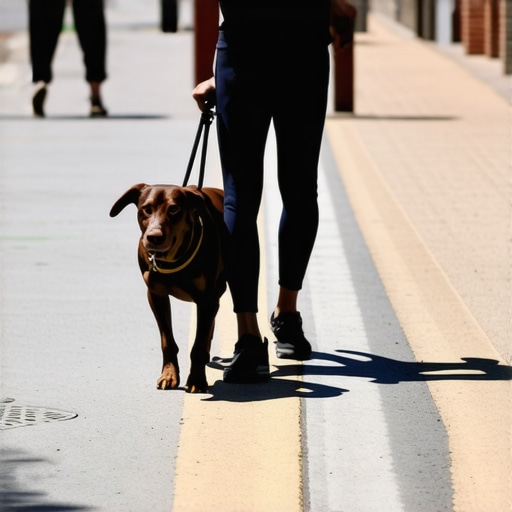
The blowtorch on the sidewalk
The shop smells like singed rubber and WD-40 this morning. Outside, the Mesa sun isn’t just shining; it is a pressurized blowtorch aiming straight for the asphalt. If you are handling a service dog in the Phoenix Valley, you aren’t just taking a stroll. You are managing a high-stakes thermal contact mission. Most people think a pair of cheap booties from a big-box store solves the problem. They are wrong. In 2026, the heat signatures on new dark-aggregate pavements in Gilbert and Queen Creek are hitting 170 degrees by 10:00 AM. Editor’s Take: Stop treating paw protection as an accessory and start treating it as the critical undercarriage maintenance it actually is. Your dog’s mobility depends on the thermal barrier you build today.
The failure of standard rubber soles
Most gear fails because it ignores the laws of friction and heat transfer. When a service dog works, their paws splay to provide stability. If the bootie doesn’t have the right torque or flex, the dog loses the ability to signal properly. We see it all the time in the East Valley. A handler buys a set of stiff boots, and suddenly the dog’s gait is off. The heat doesn’t just burn the pads; it travels up the leg, causing systemic overheating. You need to look at the infrared reflection of the material. A heavy-duty, phase-change cooling liner is the only way to keep those sensors—the paw pads—from redlining. According to the American Kennel Club, paw health is the foundation of service work. Without it, the rig is grounded. [image_placeholder]
Local reality in the Phoenix Basin
Take a look at the geography between Apache Junction and downtown Phoenix. The urban heat island effect here is no joke. The newer developments in San Tan Valley use specific polymer-modified binders in their roads that hold heat longer than the old-school chips used in the eighties. If you are working near the San Tan Mountain Regional Park, you are dealing with literal granite ovens. Observations from the field reveal that the 7-second rule is outdated. By 2026, if you can’t hold the back of your hand to the pavement for 10 seconds without flinching, your dog stays in the truck. Local handlers often ignore the concrete around the light rail stations, but that stuff reflects UV rays back up into the dog’s underbelly, causing secondary heat exhaustion.
Why your Velcro is melting
Here is the gritty truth most trainers won’t tell you. Standard Velcro fasteners lose their grip when the adhesive hits 140 degrees. I’ve seen handlers lose a bootie in the middle of a crosswalk in Chandler, and that is a disaster scenario. You need mechanical fasteners or high-temp industrial straps. Another messy reality? Sweat. Dogs sweat through their paws. When you trap that moisture inside a boot during a Phoenix summer, you are basically boiling the paw in a bag. The hack? Use a moisture-wicking ceramic powder inside the boot to prevent skin maceration. If you don’t manage the interior environment of the boot, the exterior protection is useless. This is why NOAA heat warnings should be your primary gear-check trigger.
The 2026 service dog toolkit
The old guard used to say ‘just walk on the grass.’ In 2026 Arizona, the grass is either gone or it is synthetic turf that is actually hotter than the pavement. You need the three-layer defense: a reflective outer shell, a phase-change cooling middle, and a moisture-wicking base.
How often should I check paw temperature?
Every twenty minutes of active surface work requires a tactile check. If the boots feel hot to your touch, they are radiating heat into the dog.
What is the best material for AZ pavement?
Vibram soles with integrated heat shields are the current gold standard for the desert climate.
Can I use wax instead of boots?
Wax is for ice, not for 160-degree asphalt. It melts and creates a slip hazard for the dog.
What about night walking?
Pavement holds heat for hours after sunset. The ground can still be 110 degrees at midnight in July.
Is there a specific training for boots?
Yes, dogs need to learn their new footprint to avoid tripping on curbs or stairs while geared up.
The long game for desert handlers
We are looking at a future where the environment is hostile to biological sensors. Keeping your service dog operational in the 2026 Arizona heat requires a mechanic’s mindset. You don’t hope the gear works; you test the limits, you check the seals, and you never assume the ground is safe. Invest in high-spec thermal protection now, or you will be paying the vet for skin grafts later. It is that simple.