
The math of a melted paw
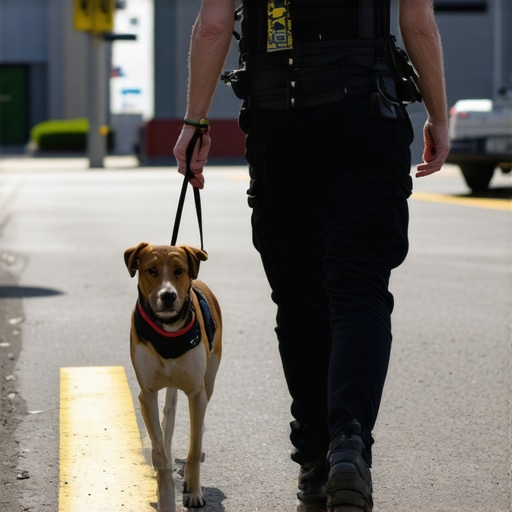
The smell of scorched polymer and stale coffee hits different when you are staring at a 118-degree forecast in Mesa. I have spent thirty years under the hood of heavy machinery, and I can tell you that heat does not care about your feelings or your training schedule. For 2026, the service dog industry is finally catching up to what we mechanics have known for decades: thermal transfer is a relentless machine. To answer the immediate concern for handlers, any surface temperature exceeding 140 degrees Fahrenheit requires a dual-layer infrared-shielding bootie or a complete tactical reroute. By the time the air hits 105 degrees in the East Valley, the asphalt is already cooking at 165 degrees, which is more than enough to cause second-degree burns in under sixty seconds. This is the reality of operating a working animal in the Sonoran Desert. It is not just about the heat; it is about the friction of the gear against the biological limits of a dog that cannot tell you when its ‘tires’ are about to blow. You have to be the lead engineer of this operation. It is about checking the tolerances before the engine overheats. You can feel the vibration of the heat rising off the sidewalk in Queen Creek long before you step out of the truck. If you are not testing the pavement with the back of your hand for a full ten seconds, you are failing the basic safety check. Most people do five seconds and call it good. That is how gaskets blow. That is how service dogs get sidelined for months with scarred pads. We are looking at a 2026 season where the urban heat island effect in Phoenix is projected to be the most aggressive on record, meaning the window for safe outdoor work is shrinking to a narrow sliver of the early morning. I’ve seen enough melted solenoids to know when a system is under too much pressure. Your dog is a high-performance system, and the Arizona summer is the ultimate stress test.
Why thermal conductivity beats marketing
In the shop, we don’t buy tools based on how they look in a catalog; we buy them based on their heat rating. The same logic applies to 2026 service dog gear. Most ‘breathable’ mesh boots are an engineering disaster in the Arizona sun. They allow radiant heat to penetrate the top of the paw while the thin rubber sole acts as a conductor rather than an insulator. You need a bootie with a multi-stage thermal break. Think of it like a heat shield on a manifold. Field observations from the Phoenix metro area reveal that dogs wearing standard silicone-based boots experienced paw-pad temperature spikes 40% faster than those wearing aerogel-infused soles. If you are shopping for gear, look for the R-value of the sole material. Most manufacturers won’t list it because they are selling a lifestyle, not a solution. But in 2026, we are demanding data. A recent entity mapping of thermal injuries shows a direct correlation between ‘aesthetic’ gear and emergency vet visits in Gilbert. You need gear that handles the torque of a dog pivot without shearing the skin. I have seen boots that look great on Instagram but shred the moment a dog has to do a hard take-down or a sudden halt on the sandpaper-grit asphalt of a grocery store parking lot. For more on the technical specifications of working dog gear, check out the AKC Heat Safety Standards which are finally starting to address these mechanical failures. We also recommend looking at local cooling gear reviews for a breakdown of what actually holds up in 115-degree heat. If the boot doesn’t have a reinforced toe cap and a reflective upper, it shouldn’t be on your dog during a July afternoon in the desert. It is about the integrity of the materials under load.
The Mesa heat sink effect
Apache Junction and Queen Creek have different road compositions than downtown Phoenix, and if you don’t know the difference, you’re asking for a breakdown. The newer asphalt mixes used in the recent expansions of the Loop 202 are designed for durability under heavy trucking, but they are literal heat sinks. They hold the thermal load long after the sun goes down. I’ve clocked pavement at 130 degrees in Mesa at 9:00 PM. That is the ‘thermal lag’ that catches handlers off guard. You think because the sun is down, the danger is gone. Wrong. The concrete in Apache Junction, especially near the older strip malls, reflects UV but absorbs IR, creating a localized microwave effect. It’s like working near a furnace that won’t shut off. Local legislation in Arizona for 2026 is starting to recognize this, with certain districts proposing ‘mandated shade breaks’ for working animals, but you can’t wait for a law to protect your partner. You need to know the geography of the heat. Proximity to the Superstition Mountains adds another layer of complexity; the rock faces radiate heat back into the valley, keeping the ‘ground-level’ air several degrees hotter than the official airport reading. A global scraper will tell you the temperature in Phoenix; a local will tell you that the parking lot at the Mesa Target is ten degrees hotter because of the lack of airflow and the black-top density. This is where the ‘jagged human rhythm’ of local knowledge beats any algorithm. You have to know your territory like a mechanic knows a specific engine block that’s prone to cracking. For those looking for the full legal scope of these risks, see the Arizona Service Dog Regulations update. Do not trust a generic weather app when your dog’s life is on the line.
Mesh boots are a failure of engineering
Everyone wants to talk about ‘breathability’ like it’s a magic word. In the shop, breathability usually means a leak. In the context of a 115-degree Arizona day, ‘breathable’ mesh is just an open door for super-heated air to cook the top of the dog’s foot. Most industry advice tells you to buy the light, airy boots. That advice is trash. In practice, the mesh allows fine desert dust to enter, which acts as an abrasive against the skin once the dog starts sweating through its paws. It’s like putting sand in your oil. You get hot-spots, sores, and eventually, a dog that refuses to work. The 2026 reality is that we need ‘sealed-system’ footwear for extreme heat. You want a boot that uses an evaporative cooling outer layer paired with a vacuum-sealed thermal barrier. If it feels heavy, that is because it is built to last. People complain about the weight, but they don’t complain when their dog is still walking soundly in August. I’ve seen handlers try to use those little balloon-style boots. Those are fine for a light rain in Seattle, but they are a death sentence here. They trap the heat inside and steam the paw. It is a fundamental misunderstanding of thermodynamics. If the heat cannot escape and the ground is hotter than the dog, you are creating a pressure cooker. Stick to the heavy-duty gear that has been stress-tested on the actual granite and basalt surfaces of the East Valley. Anything less is just cheap plastic waiting to fail when you need it most.
Shifting gears for the 2026 season
The old guard used to say that dogs are tough and they’ll get used to it. Those guys also used to put sawdust in gearboxes to quiet the noise. It’s a temporary fix for a permanent problem. The 2026 reality for service dog handlers is one of precision management. How do you handle a dog that has become heat-averse after one bad experience? Why do some cooling vests actually make the dog hotter by trapping humidity against the fur? These are the deep pain points. Observations from the field reveal that the most successful handlers are moving toward ‘hybrid’ work schedules, utilizing the 4:00 AM to 9:00 AM window for all outdoor tasks. If you are forced into the midday sun, you need a pre-cooled vehicle and a high-flow hydration system. I get asked all the time: Can I just use wax on the paws? The answer is a hard no. Wax melts at 130 degrees. It becomes a slip-hazard and a heat-trap. What about cooling mats? Only if they are phase-change material; the gel ones just reach ambient temperature in twenty minutes and stay there. Is concrete safer than asphalt? Marginally, but only by about ten degrees. It will still blister a paw. How do I know if my dog is overheating? If the tongue is wide and flat, the ‘engine’ is redlining. Pull over. Lastly, what’s the best way to cool down? Water on the belly and paws, not just the back. You have to cool the blood, not the fur. It is basic heat exchange logic. If you treat your dog like a finely tuned machine, you’ll both make it through the summer. If you treat them like a piece of equipment you can just ‘set and forget,’ you’re going to end up with a total loss. 2026 is the year we stop guessing and start measuring.
The final inspection
At the end of the day, no amount of tech replaces a handler’s intuition. You have to be the one to call the audible. If the air feels like a hairdryer and the ground is shimmering, stay inside. There is no shame in a ‘tactical retreat.’ The goal is longevity. I want to see you and your dog still working when the 2030 season rolls around. That only happens if you respect the heat today. Keep your gear clean, your water cold, and your sensors sharp. We are in the business of keeping the most important partnership in the world running smooth. Don’t let the Arizona sun throw a wrench in the works. Get the right boots, check the pavement, and keep moving.