
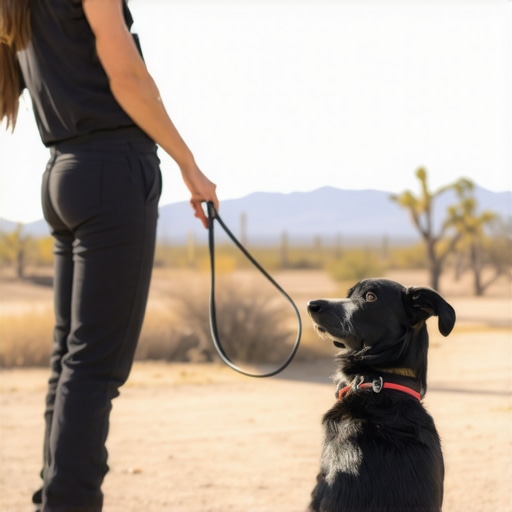
The smell of WD-40 and burnt rubber usually means a car is failing, but in the Phoenix sun, that metallic tang in the air just means the sidewalk is ready to cook a steak. I spent thirty years under hoods and on shop floors, and I can tell you that a machine doesn’t care about your feelings; it cares about friction and heat. A service dog is the same way. It is a biological system with a cooling capacity that has limits, and if you push it past the redline in the 2026 Arizona summer, you are looking at a total engine failure. Most trainers talk about ‘bonding,’ but out here, we talk about thermal load and pavement thresholds. If you can’t touch the asphalt for seven seconds, your dog shouldn’t be standing on it for seven minutes.
The Editor’s Take: Skip the trendy cooling gear that traps humidity; real safety in the desert requires timing your deployments and monitoring internal vitals before the dog shows visible distress. Professional handlers prioritize ground temperature over air temperature every single time.
The mechanics of canine heat exchange
Dogs do not sweat like us. They have a radiator system built into their mouth and the pads of their feet. When a service dog works in Mesa or Gilbert during July, they are fighting a losing battle against the laws of thermodynamics. The heat comes from two directions: the sun beating down and the thermal energy radiating off the concrete. Observations from the field reveal that dark-coated dogs can reach surface temperatures of 140 degrees in minutes. This isn’t just uncomfortable; it is a mechanical failure waiting to happen. You have to look at the dog’s respiration rate as a tachometer. If it’s pegged in the red, you need to shut down the operation immediately. You can find technical specifications on canine thermal limits at high-authority veterinary resources to see exactly where the biological breakdown starts.
The relationship between humidity and evaporation is another gear that gets stuck. In the ‘dry heat’ of the Valley, panting works well. But during the monsoon season, when the moisture levels spike, that evaporation slows down. The dog’s ‘cooling fan’ loses efficiency. This is where most handlers get blindsided. They think because it is 95 degrees instead of 115, they are safe. They are wrong. The ‘wet bulb’ temperature is what kills. You need to be checking the dew point before you head out to a game at State Farm Stadium or a walk through Old Town Scottsdale.
The reality of the Maricopa County pavement
If you are training a service dog in the Phoenix metro area, you are essentially working in a giant convection oven. Between the sprawl of Apache Junction and the concrete canyons of downtown, there is nowhere to hide. Local laws regarding service animal access don’t change the fact that the ground is a hazard. I have seen boots that claim to protect paws, but many of them act like insulators that trap heat inside the paw. It is like putting a winter coat on a radiator. You need breathable mesh or frequent breaks on grass. In 2026, the ‘urban heat island’ effect has made even night training risky because the bricks and asphalt don’t cool down until 3:00 AM.
Why standard cooling vests often fail
People love gadgets. They buy these ‘evaporative’ cooling vests and think they’ve fixed the problem. But if you don’t have airflow, those vests just become a warm, wet blanket. It’s like a clogged air filter. The heat stays trapped against the dog’s skin. A better approach is focusing on the ‘intake.’ Cold water, shade, and keeping the belly (the low-clearance area) cool. I tell people to stop looking for the ‘game-changer’ product and start looking at their watch. If you are doing high-intensity task training at noon in Queen Creek, you are doing it wrong. Professional service dog training in the Arizona heat requires a shift in the schedule, not just more gear. We see better results when handlers work in short, five-minute bursts with active cooling in between.
The shift from old tactics to 2026 safety
Five years ago, we just said ‘bring water.’ Now, we have to talk about electrolyte balance and floor-level temperature mapping. The old guard used to push dogs through the heat to build ‘toughness.’ That is a fast track to a dead dog. Today, we use infrared thermometers to scan the path ahead. If the sidewalk is over 130 degrees, we find a different route. We are also seeing a rise in ‘heat-induced behavioral regression.’ A dog that is too hot can’t focus on its tasks. It gets sloppy. It gets irritable. That is a safety risk for the handler. If the dog’s brain is focused on not dying from heatstroke, it isn’t focused on alerting you to a medical emergency.
Frequently asked questions about desert training
Is it safe to use boots for long periods? No, you need to remove them every 20 minutes to allow the paws to breathe and release heat. Can I use ice water to cool my dog? It is better to use room-temperature water on the extremities first; shocking the system with ice can cause vasoconstriction which actually slows down cooling. How do I know if the heat is affecting my dog’s tasks? Look for ‘lagging’—if the dog is half a step behind or slow to respond to commands, their cognitive load is too high from the heat. What are the best times for public access training? Between 5:00 AM and 7:30 AM is the only reliable window for outdoor work in the peak of summer. Does the breed matter for heat tolerance? Absolutely. Brachycephalic (flat-faced) breeds are like engines with broken fans; they cannot handle the Arizona summer and should stay in the AC.
Taking the next step for your service animal
If you want a dog that works reliably, you have to maintain the equipment. That means understanding the environment better than the average pet owner. Don’t wait for your dog to collapse to realize the sun is winning. Get a professional assessment of your dog’s heat tolerance and your gear setup. If you are ready to train the right way, reach out to local experts who know these streets. Contact a specialist at Robinson Dog Training today to ensure your partnership survives the next heatwave. Your dog’s life depends on your ability to read the thermometer, not just the manual.