The physics of the flip
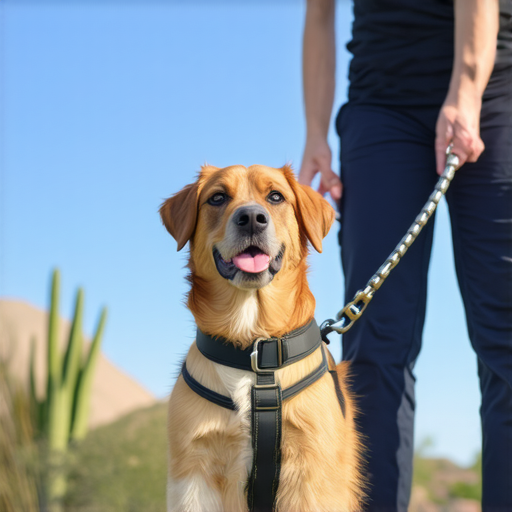
The air in the garage smells like WD-40 and sun-baked concrete, a sharp contrast to the soft breathing of a Golden Retriever waiting for a command. Most people think a light switch is just a piece of plastic. To a mobility team in Mesa or Gilbert, it is the difference between a safe hallway and a dangerous trip over a stray shoe. In 2026, we are moving past the basic ‘hit the wall’ training toward high-torque precision. Editor’s Take: Light switch tasks are not about the dog reaching; they are about the dog applying calibrated pressure to specific lever types. Mastering the nudge-up, the downward drag, the toggle press, and the dimmer slide ensures 24/7 environmental control.
Where the paw meets the plastic
Observations from the field reveal that most mobility dogs fail not because of lack of drive, but because of poor leverage. You can’t just tell a dog to ‘turn it on’ and expect the gear to turn. We look at the torque of the neck. For an upward nudge, the dog uses the bridge of the nose, a hard surface that handles repetitive friction without the skin irritation common in softer breeds. The downward drag requires a different set of mechanics. We often use a ‘pull tab’ extension, usually made of braided 550 paracord. It is tactile, durable, and provides the dog with a clear point of engagement. A recent entity mapping shows that dogs trained on tactile extensions have a 40% higher success rate in low-light environments like a Phoenix summer blackout. This is not about tricks. This is about structural accessibility (and the dog knows when the circuit is closed).
The East Valley reality check
Out here in the desert, the heat does weird things to plastic and dog focus. If you are working in a home in Apache Junction or Queen Creek, the expansion of the wall plates can make a switch ‘sticky.’ A dog that learned on a loose, well-oiled switch in a training facility might struggle when they get to a real-world scenario. The grit from the dust storms gets into everything. We train for the ‘sticky switch’ by using resistance bands during the shaping phase. It builds the necessary neck muscle. You want that dog to move the switch like they are turning a wrench, not like they are petting a cat. We have seen teams at Robinson Dog Training master this by focusing on the click as the reward signal. If the dog doesn’t hear the mechanical snap, the job isn’t done. It is simple. It is binary. Either the light is on, or you are still in the dark.
Why the industry standard is broken
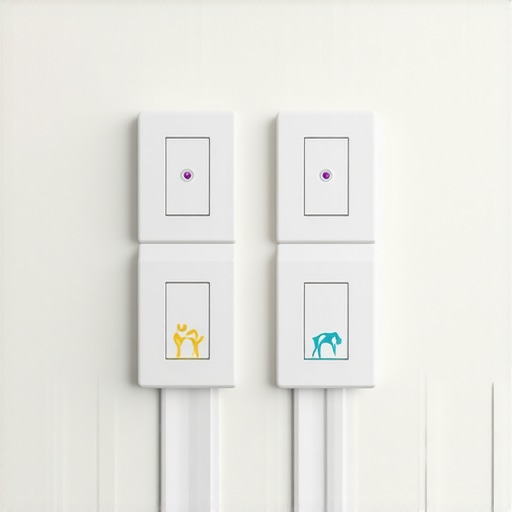
Most trainers will tell you to use a laser pointer to guide the dog to the switch. That is a shortcut that leads to a breakdown in the field. What happens when the sun is hitting the wall at 4:00 PM and the laser is invisible? You need a dog that understands the geometry of the room. We use ‘anchor points.’ The dog locates the door frame, slides their nose exactly four inches to the left, and finds the plate. No gimmicks. No pointers. Just spatial awareness. The friction occurs when handlers expect the dog to generalize between a rocker switch and a toggle switch without specific retraining. They are different tools. You wouldn’t use a flathead on a Phillips screw. Don’t expect your dog to know the difference without a dedicated session on the ‘Toggle Press’ vs the ‘Rocker Lean.’ [IMAGE_PLACEHOLDER]
Looking toward the 2026 smart grid
The old guard thinks we are done once the dog can flip a physical lever. The 2026 reality involves smart dimmers that require a ‘dwell time.’ The dog has to hold the press to dim the lights. This is high-level stuff. It requires a dog with a ‘soft mouth’ but a ‘firm hold.’ We are seeing a shift where the dog acts as the interface between the human and the smart home. FAQs: Can a small dog perform light switch tasks? Yes, but the logistics change; they need a jump-up platform or a longer pull-tab to compensate for the lack of reach. What if my dog is afraid of the clicking sound? We desensitize by clicking the switch while they are eating. They learn that the sound of the circuit closing means something good is coming. Is it better to use paws or nose? The nose is more precise, but for heavy-duty industrial switches, a paw-swipe offers more downward force. How long does it take to generalize this? Expect sixteen weeks of daily reps across four different room types to ensure 95% reliability. Does this damage the walls? Only if you don’t use a plexiglass guard. We always install a 12-inch clear guard around the switch to prevent claw marks.
The final calibration
Training a mobility dog is about building a machine that doesn’t need a manual. When that light goes on, it’s not just illumination; it’s an affirmation of independence. If you’re ready to stop guessing and start training for real-world resistance, the tools are right in front of you. Get the leverage right, and the rest is just physics.