
Navigating Panic in the Desert: Why Specific Task Training Matters
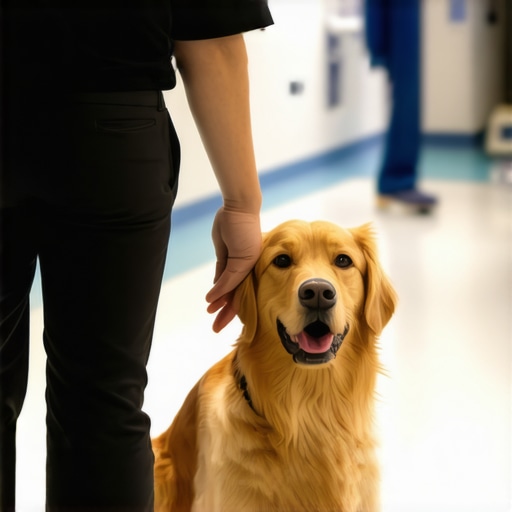
Living with a panic disorder in Arizona presents unique challenges. Whether you are navigating a crowded mall in Scottsdale or managing stress during a commute in Phoenix, the onset of a panic attack feels like a sudden wall of heat. For many, a psychiatric service dog (PSD) is the most effective tool to tear down that wall. [image_placeholder] But a dog isn’t a service dog just because it offers comfort. In Arizona, legal protections and functional success depend on the animal’s ability to perform specific, trained tasks that directly mitigate the handler’s disability.
The Arizona Reality for Service Dog Handlers
The environment in cities like Mesa and Gilbert demands high-level focus from a working dog. Heat exhaustion is a real threat to the animal, and the stress of the handler can transfer down the leash easily. Local training must account for these environmental pressures while cementing the bond between dog and owner. Training a canine to recognize the subtle physiological shifts that precede a panic episode is not a simple feat of obedience. It requires a deep understanding of canine psychology and sensory triggers. In the blistering summer months, a dog must maintain its focus even when the pavement is hot and the air is dry.
What Exactly is a Panic-Response Task?
Panic-response tasks are active behaviors. They differ from emotional support, which is passive and lacks specific training. A task is a literal job. If your heart rate spikes or your breathing patterns change, the dog must act immediately. This might involve physical contact to ground you or finding an exit when you feel trapped in a crowd. In the world of psychiatric service dog training, we look for reliability above all else. The dog must perform whether you are at home in a quiet room or standing in the middle of a noisy festival in Tempe. These skills are the foundation of independence for those struggling with anxiety disorders.
How do service dogs detect a panic attack before it starts?
Most people assume the dog just reacts when the person starts shaking or hyperventilating. That is only half the story. High-tier training teaches dogs to pick up on chemical changes in human sweat and breath. They notice the scent of cortisol rising long before you feel the first flutter in your chest. By alerting you three to five minutes before the physical symptoms peak, the dog gives you time to find a safe space or take medication. This proactive alert system is what separates a highly trained PSD from a well-behaved pet. It turns an unpredictable medical event into a manageable situation. It is about regaining control of your life.
The Science of Deep Pressure Therapy (DPT)
Beyond detection, the physical response of the dog is what bridges the gap between a panic attack and recovery. One of the most effective tools in a psychiatric service dog’s arsenal is Deep Pressure Therapy (DPT). This isn’t just cuddling; it is a clinical intervention. When a handler begins to spiral, the dog is trained to apply its body weight to specific pressure points—usually the chest or lap. This physical grounding stimulates the parasympathetic nervous system, effectively slowing the heart rate and lowering blood pressure. In a clinical sense, it mimics the effect of a weighted blanket but offers the dynamic response of a living partner that can adjust to your specific needs in real-time.
Tactile Interruption: Breaking the Anxiety Loop
For many in the Phoenix valley, panic doesn’t always look like hyperventilation; sometimes it manifests as repetitive, self-soothing behaviors that actually escalate the internal crisis. Leg bouncing, skin picking, or even a dissociative ‘thousand-yard stare’ are common indicators. A dog trained for tactile interruption uses its nose or paw to physically break that cycle. By nudging your hand or jumping lightly into your lap, the dog forces a cognitive shift. You are pulled out of your head and back into the physical world. This redirection is essential for preventing a minor anxiety spike from cascading into a full-blown emergency while you’re out at a Mesa grocery store or a Gilbert park.
Crowd Control: Creating a Buffer in Public Spaces
Arizona’s crowded urban centers can be overwhelming. A psychiatric service dog can be trained to perform specific spatial tasks like ‘block’ and ‘cover’ to mitigate this stress. In a ‘block,’ the dog stands perpendicular to the handler, creating a physical barrier between them and the public. [image_placeholder] This small but certain distance provides a psychological safety net, allowing the handler to focus on their grounding techniques rather than the proximity of strangers. Whether you are navigating the busy terminals of Sky Harbor or standing in a long line at a Scottsdale event, these tasks provide a tangible sense of security.
Generalization: Training for the Arizona Environment
Training these behaviors in a quiet living room is the foundation, but the true test is generalization. A service dog must perform reliably regardless of the environment. In the Southwest, this means proofing behaviors against high heat and intense sensory input. Heat affects a dog’s cognitive load; a dog that is struggling to stay cool is a dog whose focus is split. Professional training involves working through these stressors to ensure that when the pavement is hot and the monsoons are rolling in, the dog’s primary focus remains on the handler’s physiological state. We simulate high-stress scenarios—like the noise of a light rail or the frantic energy of a local festival—to ensure the tasks remain reflexive.
Selecting the Right Breed for Desert Work
While the Americans with Disabilities Act (ADA) does not restrict service dogs by breed, the environmental realities of Arizona cannot be ignored. A dog’s ability to work long hours in the dry heat is a practical consideration. Short-coated, athletic breeds with high biddability often have an advantage. Labradors and Golden Retrievers are frequent choices due to their resilience and high emotional intelligence. However, the individual dog’s temperament—specifically its ‘work drive’ versus its ‘off-switch’—is the ultimate deciding factor. A successful psychiatric service dog needs to be stoic enough to handle a crowded Phoenix commute but sensitive enough to catch a change in scent before the handler even realizes they are in trouble.
Beyond the Vest: Debunking the Service Dog Registration Myth
In the digital age, a major hurdle for Arizona handlers is the misinformation surrounding ‘official’ registration. Many individuals believe that purchasing a certificate or a badge from an online database grants their dog legal status. This is a dangerous misconception. The Americans with Disabilities Act (ADA) and Arizona Revised Statutes do not recognize any centralized registry or certification. [image_placeholder] A service dog’s legitimacy is defined by two criteria: the handler’s disability and the specific tasks the dog has been trained to perform. Carrying a fake ‘ID card’ into a Scottsdale retail space provides no legal protection if the dog lacks the rigorous behavioral training required to navigate a public environment safely.
The Risk of Fraudulent Gear
Using illegitimate registration services not only undermines the credibility of legitimate handlers but can also lead to legal complications. In Arizona, misrepresenting a pet as a service animal is a class 3 misdemeanor. The focus must always remain on the quality of training rather than the accessories the dog wears. A truly trained PSD is identified by its impeccable behavior and its focused response to its handler’s needs, not by a patch purchased online.
The Multi-Phase Roadmap to a Reliable PSD
Training a psychiatric service dog is a long-term commitment that typically spans 18 to 24 months. It is a progressive journey that moves from basic biological needs to complex physiological alerts. For those training in the East Valley, this process generally follows a structured hierarchy:
- Phase 1: Advanced Obedience and Neutrality. The dog must learn to ignore environmental stimuli, including other dogs, food on the ground, and sudden loud noises typical of a Phoenix construction site.
- Phase 2: Task Acquisition. This is where the dog learns the specific panic-mitigation skills, such as DPT, tactile interruption, or cortisol detection, as discussed previously.
- Phase 3: Public Access Proofing. The dog is introduced to increasingly complex environments—from quiet libraries to the chaotic terminals of Sky Harbor International Airport—to ensure task reliability remains at 100%.
- Phase 4: Generalization and Maintenance. Skills are practiced in varying conditions, such as different temperatures and lighting, to ensure the dog doesn’t ‘context-load’ its training.
Addressing Task Perishability
A common mistake is assuming that once a dog is trained, the work is over. Dog training is a perishable skill. Without regular ‘tune-ups,’ a service dog’s response time to a panic alert can lag. This is especially true for scent-based alerts. Handlers in high-stress urban environments like downtown Phoenix should engage in weekly training sessions to keep the dog’s senses sharp. This ensures that when a real crisis occurs, the dog’s reaction is an ingrained reflex rather than a delayed decision.
Navigating Public Interaction and ‘Gatekeeping’
The transition from a person with a hidden disability to a handler with a visible service dog changes how you interact with the world. You will inevitably face the ‘public filter’—people who want to pet the dog, ask personal medical questions, or deny entry. Understanding your rights is as important as the dog’s training. In Arizona, business owners are legally permitted to ask only two questions: Is the dog a service animal required because of a disability? and What work or task has the dog been trained to perform?
Handling the ‘Can I Pet Your Dog?’ Question
For someone with a panic disorder, being approached by strangers can be a trigger itself. It is vital to set firm boundaries. A service dog at work must never be petted, as it breaks the ‘focus loop’ between the dog and the handler. [image_placeholder] Many handlers use specialized patches that say ‘Do Not Pet’ or ‘In Training,’ but verbalizing these boundaries is a skill that must be practiced. Your dog is a piece of medical equipment, and maintaining its focus is a matter of safety, not a lack of friendliness.
Biometric Integration: The Next Frontier of PSD Training
The landscape of psychiatric service dog training in Arizona is evolving rapidly, moving toward a future where biology and technology work in tandem. In high-tech hubs like Scottsdale and downtown Phoenix, we are seeing the emergence of biometric integration. Handlers are increasingly utilizing wearable devices that track heart rate variability (HRV) and skin conductance. When these devices detect a spike in stress markers, they can provide a haptic nudge to the handler while simultaneously signaling the dog to initiate an alert. This synergy creates a double-layered safety net, ensuring that even if a handler is too dissociated to notice their watch, the service dog will sense the chemical shift and physical cue to intervene. [image_placeholder] This objective data allows trainers to benchmark a dog’s accuracy with precision never before seen in the field.
Why does extreme heat impact a dog’s ability to detect a panic attack?
A common question among East Valley residents is why their dog’s alerts might seem less sharp during the peak of an Arizona summer. The answer lies in canine physiology. Dogs primarily regulate their temperature through panting, which involves a rapid movement of air over the moist tissues of the tongue and lungs. This intense thermoregulation can physically interfere with their olfactory processing. When a dog is panting heavily to stay cool in 110-degree weather, it is more difficult for them to pull in the subtle scent of cortisol or adrenaline needed for a proactive alert. This is why heat-mitigation training—learning to work in short bursts and utilizing cooling vests—is a critical sub-topic for any service dog team operating in the Southwest.
The Rise of Handler Advocacy and ‘Invisible’ Disability Awareness
As more individuals in the Phoenix metro area turn to service dogs for panic and anxiety disorders, the social dynamic of public access is shifting. We are moving toward a trend of ‘active advocacy.’ Being a handler is no longer just about the dog; it is about navigating the psychological weight of being a visible representative for an invisible disability. Training programs are now incorporating handler-specific coaching to manage the ‘public filter.’ This involves role-playing scenarios where businesses in Mesa or Gilbert might overstep legal boundaries. The goal is to ensure the handler can maintain their own emotional regulation while asserting their ADA rights, preventing the interaction itself from becoming the trigger for a panic event.
Community-Led Training and Peer Support Networks
The future of psychiatric service dog success in Arizona is also becoming more communal. We are seeing a surge in peer-led support groups in cities like Tempe and Chandler. These groups provide a space for handlers to practice ‘neutrality training’ in a controlled environment with others who understand the nuances of a panic disorder. Instead of training in isolation, handlers are coming together to proof their dogs against the chaos of local parks and outdoor malls. This communal approach not only strengthens the dog’s skills but also reduces the isolation often felt by those struggling with mental health challenges. It turns the training process into a shared journey of recovery and empowerment.
Advanced Scent Discrimination in Urban Environments
Beyond simple cortisol detection, advanced training is now focusing on ‘scent discrimination’ within high-sensory urban environments. A dog must be able to distinguish the handler’s unique ‘panic scent’ from the myriad of other smells found in a crowded Phoenix light rail station or a busy Scottsdale restaurant. This requires sophisticated proofing where the dog is rewarded for ignoring irrelevant environmental odors and focusing exclusively on the handler’s physiological state. This level of specialization ensures that the dog remains a reliable medical tool even when the world around them is loud, smelly, and distracting. The focus is shifting from basic response to high-level environmental resilience.
Frequently Asked Questions
Do I need to register my service dog on an official Arizona database?
No. There is no legally recognized “official” registry for service dogs in Arizona or the United States. Legitimacy is based solely on the handler’s disability and the specific tasks the dog is trained to perform to mitigate that disability.
Can any breed become a psychiatric service dog for panic attacks?
While any breed can technically be a service dog, certain breeds like Labradors and Golden Retrievers are often preferred in Arizona for their heat tolerance and temperament. The dog’s individual work drive and ability to stay calm in Phoenix’s urban environments are the most critical factors.
Is owner-training a PSD legal in Arizona?
Yes, the ADA allows handlers to train their own service dogs. However, due to the complexity of scent-based alerts and public access proofing in high-traffic areas like Scottsdale or Tempe, many owners choose to work with professional trainers to ensure 100% reliability.
What should I do if a business in Mesa or Gilbert questions my service dog?
Under the ADA, they may only ask if the dog is a service animal required for a disability and what tasks it performs. You are not required to disclose your medical history or provide a demonstration of the task on the spot.
The Bottom Line: A Partnership Built on Precision
Securing a psychiatric service dog is not about finding a companion; it is about engineering a life-saving partnership. In the demanding climate of the Arizona desert, the difference between a successful outing and a medical crisis often rests on the split-second response of a well-trained canine. [image_placeholder] By focusing on specific task acquisition—from Deep Pressure Therapy to cortisol detection—handlers can navigate the Phoenix valley with a level of independence that once seemed out of reach. Professional guidance ensures that these skills are not just learned, but mastered and maintained against the stressors of urban life.
Are you ready to transform your life with a dedicated psychiatric service dog? Reach out to local Arizona experts today to discuss how specialized task training can provide the relief and security you deserve.
This post offers a thorough overview of the vital role that specific task training plays in helping individuals with panic disorder in Arizona. I appreciate the focus on environmental factors such as heat and urban sensory input, since these are often overlooked in basic training discussions. I’ve seen firsthand how crucial it is for a service dog to maintain their focus through such stressors, especially during Arizona’s hot summers.
One aspect that stood out to me is the emphasis on scent detection prior to manifesting physical symptoms. Training dogs to recognize cortisol and adrenaline levels proactively is such an innovative approach that can truly shift how we manage panic episodes. Maintaining dog focus in high-pressure situations like crowded festivals or busy transit hubs is another challenge — Hybrid training, incorporating public access proofing and variable environmental conditions, seems essential.
Has anyone explored combining biometric devices with training to enhance a dog’s responsiveness further? It seems like an exciting step toward even greater reliability. I would love to hear how others in the community are integrating tech into their training routines.
I really appreciate how this post emphasizes the importance of specific task training tailored for Arizona’s unique environment. Having trained service dogs myself, I can attest that heat and urban sensory overload are huge hurdles. It’s inspiring to see that high-tier training now incorporates advanced scent detection, especially recognizing cortisol and adrenaline before symptoms fully develop. It makes all the difference in giving handlers those precious extra minutes to react.
One thing I’ve noticed working with dogs in Phoenix is how critical periodic retraining is due to environmental changes — like the summer heat or monsoon season altering scent profiles and stimuli. Do you know if any programs here incorporate more frequent scent reinforcement or even use wearable tech to monitor a dog’s focus and stress levels during daily routines? It seems like combining tech and training could offer even more reliability, especially for handlers balancing busy city life.
How have others maintained consistent performance in such a challenging climate? I’d love to learn about different techniques or innovations from fellow trainers and handlers.
Reading this post really deepened my understanding of how critical specialized training is for service dogs in Arizona’s unique environment. I have a dog that works as a PSD, and I’ve noticed that during the summer, heat and dry air definitely impact his alertness and response times. We’ve started using cooling vests and short training sessions outdoors to help him stay focused, which seems to make a difference. The discussion on scent detection before physical symptoms present is fascinating—my dog is still being professionally trained for that, and I believe it’s a game-changer for proactive intervention.
I’m curious, have others here experimented with biometric technology or environmental cues to enhance a dog’s reliability further? I think combining these tech tools with hands-on training could take responsiveness to the next level. Also, what strategies do you recommend for handlers to maintain consistent performance as seasons change and environmental conditions fluctuate? Would love to hear experiences and tips from fellow trainers and handlers.