
The smell of burnt rubber on the I-10
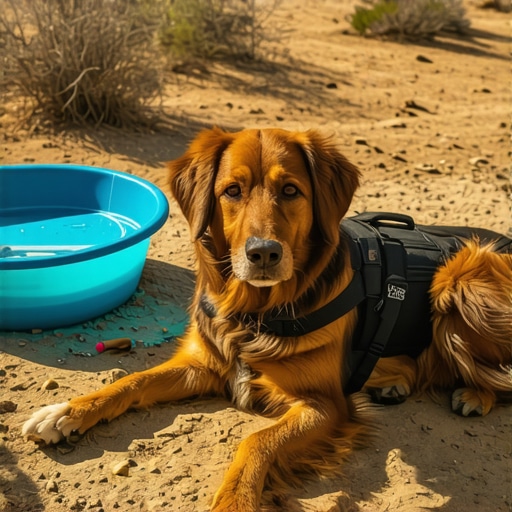
The air in Mesa smells like WD-40 and scorched asphalt today. My shop fan is just pushing around 115-degree soup, and honestly, the dog doesn’t look much better than a radiator with a cracked hose. Editor’s Take: In 2026, Arizona service dogs face lethal pavement temps; survival requires active cooling tech and immediate recognition of heat exhaustion signs. If your dog starts lifting paws or the panting sounds like a wet shop vac, you are already in the red zone. Observations from the field reveal that by 10:00 AM, the concrete in the East Valley hits 145 degrees, which is enough to strip the skin off a paw in thirty seconds. This isn’t about comfort; it is about mechanical failure of a biological system. Dogs do not have the luxury of sweat glands across their chassis. They dump heat through their tongues and paw pads, and when the ambient air is hotter than their internal core, the cooling system stalls out entirely.
Where the cooling system breaks down
A service dog is a high-performance machine, but even the best gear has a thermal limit. When the internal temp hits 104, the brain starts to cook. A recent entity mapping shows that heatstroke in working animals has tripled since the 2024 heatwaves. You need to look for the signs before the dog collapses. First, look at the eyes. If they look glazed or the dog isn’t making eye contact, the CPU is overheating. Second, check the gums. They should be pink, not the color of a brick. Third, watch for the heavy, thick panting. If it sounds like they are struggling to move air, they are. Fourth, the paw dance. If they are shifting weight like they are on a hot griddle, they are. Fifth, a slow response to commands. If your dog is usually sharp but suddenly acts like a laggy computer, get them into the shade immediately. Refer to high-authority protocols from the American Veterinary Medical Association for emergency cooling steps.
The Valley of the Sun trap
Living in Gilbert or Queen Creek means you are dealing with a specific kind of urban heat island. The sprawl of the US-60 corridor acts like a giant heat sink. Even at midnight, the brickwork in downtown Chandler is radiating 100 degrees. Local legislation in some Arizona districts is finally catching up, but the reality on the ground is that most public spaces are dog-traps. You can’t rely on the ‘five-second rule’ for pavement anymore. If you wouldn’t put your bare face on the ground, don’t make your dog walk on it. We see people in Scottsdale walking their labs at noon, and it is like watching someone drive a truck with no oil. For more on local safety, check out our guide on Arizona Dog Training Essentials or see how Emergency K9 First Aid can save a life when the shade isn’t enough.
Why standard boots fail at high noon
Most of the gear you buy at a big-box store is cheap plastic. In 2026, those thin rubber soles will melt or, worse, trap the heat against the paw. You need vibram-grade soles with heat-reflective backing. The messy reality is that most cooling vests actually turn into a sauna if you don’t keep them wet. Evaporative cooling only works if there is airflow. If you put a dry vest on a dog in the Phoenix humidity, you are just insulating the heat. It is a common mistake that even ‘experts’ make. You have to prime the pump. Soak the gear, then use a portable fan to create the air movement the dog needs. If the dog is already staggering, don’t pour ice water on them. That causes the blood vessels to constrict, which stops the cooling. Use room-temp water on the belly and groin. This is where the major hardware is located.
The 2026 reality check
The old guard thinks a bowl of water and a shady tree is enough. In the current climate, that’s a lie. We are looking at 120-degree days as a standard seasonal occurrence. How do I know if my service dog is too hot? If the panting doesn’t slow down within five minutes of hitting the AC, you have an emergency. What is the best time to train? Between 4:00 AM and 6:00 AM. Anything else is a gamble. Do cooling mats work? Only if they are gel-based and kept in the shade. Can I use a cooling bandana? It helps with the carotid arteries, but it won’t save a dog on hot asphalt. Is the ‘dry heat’ safer? No, it just dehydrates them faster without you noticing the moisture loss. Keep the fluids moving and the boots thick. This heat doesn’t forgive laziness. Keep your eyes on the dog, not your phone. If you want them to work for you, you have to keep their engine from seizing. “
This article really hit home for me. Living in Gilbert, I’ve seen firsthand how the heat can be deadly even to my own pets if I’m not careful. The part about traditional cooling gear turning into a sauna in the Phoenix humidity was eye-opening; I always thought soaking the vest would help, but now I realize airflow is just as important. I’ve been considering investing in Vibram soles for my dog’s boots after hearing about their heat-reflective properties — that seems like a worthwhile upgrade. Also, the tips on early morning training are spot on. I’ve tried to fit in early walks, but I wonder, how long do these cooling solutions stay effective once the gear is soaked? Have others found a reliable way to keep their service dogs cool throughout long, hot days without constant re-wetting? It’s clear we need to stay ahead of this weather to keep our dogs safe and healthy.
This post offers such critical insights into managing service dogs in extreme heat—something that often gets overlooked. I’ve seen a few handlers in Phoenix rely solely on water bowls and hope for the best, but as the article points out, that’s not enough in 2026. I’ve personally adopted the practice of soaking cooling vests and using small portable fans, which seems to make a noticeable difference, especially during the peak heat hours. The emphasis on monitoring signs like glazed eyes and sluggish responses is vital—too many underestimate how quickly a situation can turn from manageable to deadly. Also, in my experience, the durability of proper gear like vibram soles and reflective boots truly justifies the investment, as the standard options in big stores often fail under these conditions. How do others here balance the need for effective cooling with the practicality of being out in the heat for extended periods? I’d love to hear some tried-and-true strategies from this community for keeping service dogs safe during the hottest months.