
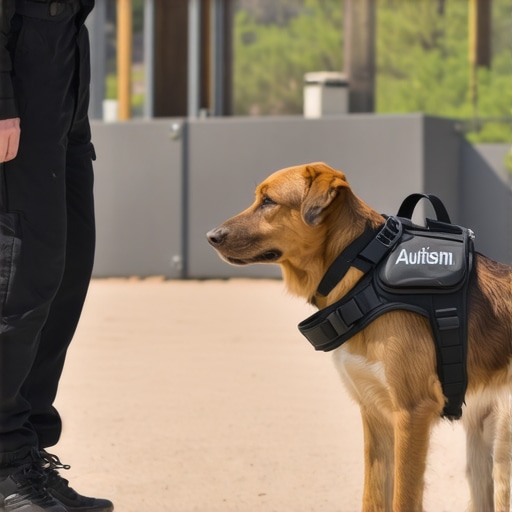
5 Autism Service Dogs Arizona Bolting Drills for 2026 Safety
The heat rising off the Scottsdale asphalt isn’t just a temperature; it’s a sensory trigger. A child hears the distant whine of a siren, and suddenly, they are gone. It’s a blur of neon sneakers against the beige desert gravel. This is the moment every parent of a child with elopement tendencies fears. I’ve stood on those sidewalks, heart hammering, watching a Service Dog in training press its weight against a small frame. It is silent. It is effective. It is life. Editor’s Take: Safety in 2026 relies on proactive physical anchoring and sensory-grounding drills that go beyond basic obedience, specifically tailored for the unique environmental stressors of the Southwest.
The Red Light Runners
Bolting isn’t a choice; it is a neurological reflex. When a brain becomes flooded with sensory input—the smell of creosote after a rain, the glare of the Valley sun, the hum of the Loop 101—the primitive ‘flight’ response takes over. We see this often in Phoenix. The vast open spaces of our parks feel like an invitation to run. A dog trained for autism assistance doesn’t just follow. They anticipate. They feel the shift in the child’s tension before the first step is even taken. This deep connection is why Arizona autism support groups emphasize the need for early intervention. The dog becomes a living anchor, a tether to reality when the world becomes too loud. It’s not about control. It’s about creating a buffer of time.
Heat Waves and High Stakes
Training a service animal in the desert requires a different playbook. We deal with ‘hot-floor’ scenarios where a child might bolt to avoid the pain of hot pavement, only to run into traffic. The first drill we focus on is the ‘Threshold Freeze.’ This involves the dog planting its paws at every transition—sidewalk to street, carpet to tile. The dog waits, and the child, eventually, also. It sounds simple. It is exhausting. You do it a hundred times until it becomes muscle memory for both species. According to research on sensory processing shared by the CDC, these immediate physical boundaries are the most effective way to manage elopement. If you are looking for professional service dog training in Mesa, you’ll find that local experts prioritize these environmental ‘stops’ above all else. Then there is the ‘Scent Trace’ drill. If a child does manage to slip away, the dog must be able to find them in the dry Arizona air, where scents dissipate quickly. We practice this in the brush of the Usery Mountain Regional Park, where the wind complicates everything. A cold nose against a sweaty palm is often the only thing that brings a child back to the present moment.
Beyond the Leash
Old-school methods relied heavily on physical tethers—literally tying the child to the dog. It worked, but it was clunky. Modern training for 2026 focuses on ‘Cognitive Anchoring.’ The dog is taught to recognize the physiological signs of a ‘pre-bolt’—the rapid breathing, the hand-flapping, the fixed gaze. When the dog senses this, it initiates a ‘Deep Pressure’ command without being asked. It leans its body weight against the child’s legs. This physical sensation can often short-circuit the flight response entirely. It’s a beautiful thing to witness. The child wants, and the dog provides, a sense of safety. However, this isn’t a magic fix. There are days when the dog is tired, or the child is particularly overwhelmed. We call these ‘High-Distraction’ days. To prepare, we take the teams to the busiest parts of Old Town Scottsdale during peak tourist season. If they can maintain a ‘Static Stay’ there, they can do it anywhere. Enrolling in specialized canine obedience programs ensures that these high-stress scenarios are practiced in a controlled way before they happen in the real world.
What Every Arizona Parent Asks
Will a service dog stop my child from ever running again? No. A dog is a tool, not a cage. They provide a vital layer of protection and a few extra seconds for a parent to react. How do they handle the Arizona summer? Training sessions are moved to early mornings or indoor malls. Protective boots are a must. Are these dogs protected in public spaces? Yes, according to the Department of Justice ADA guidelines, service animals have the right to accompany their handlers in all public areas, including those in Arizona. What if my child is afraid of dogs? Many are at first. The bond usually forms through ‘parallel play’ where the dog simply exists in the same space until the child initiates contact. How long does training take? Typically 18 to 24 months for a fully reliable bolting-prevention dog. This journey is long, but for a family living in fear of the next ‘flight,’ it is a path worth walking. Each drill, each training session in the dust and the sun, is a step toward a world where a child can explore safely. The desert is wide, but with a four-legged anchor, it feels just a little bit smaller.