
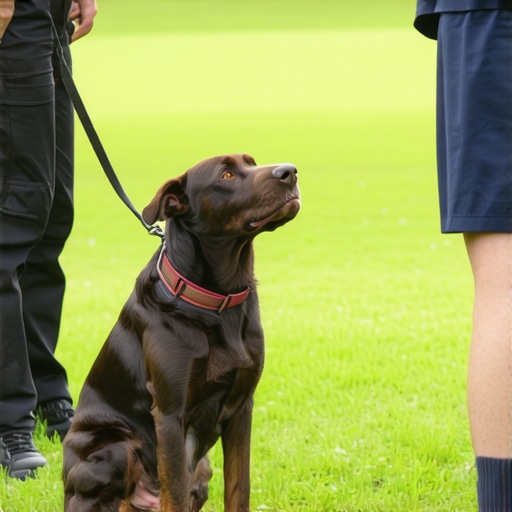
The Rise of Stealth Support in Arizona’s 2026 Service Dog Community
Living with a psychiatric condition in the sweltering heat of a Phoenix summer requires more than just a vest on your dog; it requires a silent, unbreakable bond. By 2026, the local training community has shifted away from flashy obedience toward what experts call stealth support. This approach ensures that a handler can manage symptoms like anxiety or panic without drawing unwanted attention in public spaces. It is about blending into the background of a busy Scottsdale mall while receiving the specific support you need to stay grounded. Arizona handlers are ditching the megaphone approach. The gold standard for psychiatric service dog (PSD) training in cities like Mesa and Phoenix now focuses on a non-verbal dialogue that saves energy and preserves dignity.
Silence is a tool, not a restriction. When a dog reads your body language before you even realize you are spiraling, that is when the training truly shines. Most handlers in the Valley now prioritize these low-impact, high-reward drills to maintain their privacy while navigating dense urban centers. It is effective. It is private. It works.
Moving Beyond Verbal Commands for Discreet PSD Support
Traditional training often relies on loud, repetitive verbal cues. While effective in a backyard, these commands can feel intrusive during a quiet movie in Gilbert or a university lecture in Tempe. Quiet drills focus on micro-signals. These include hand gestures, subtle leg movements, or even changes in breathing patterns that your dog learns to mirror. This level of communication builds a deep, intuitive connection that functions even when you find yourself unable to speak during a medical episode. You do not need to add to the noise of the world. By implementing visual cues, like a specific hand placement on your hip, you tell your dog to perform a block or cover maneuver. This keeps your personal space safe without alerting everyone nearby to your internal struggle.
Why Subtle Signaling Is the Future of Handler Privacy
Privacy is a right, not a luxury. Many handlers feel a sense of exposure when they have to loudly direct their service animal. Using quiet drills helps reclaim that sense of normalcy. In 2026, the focus has moved to environmental awareness where the dog identifies triggers before the handler does. We use tactile grounding where the dog applies pressure or nudges without a single word being exchanged. It is about building a language that only the two of you speak, ensuring your medical needs remain your business and no one else’s. In the bustling tech hubs of Chandler or the historic streets of Prescott, this level of discretion is the new benchmark for excellence in service work.
[IMAGE_PLACEHOLDER]
How do quiet drills improve public access success in Phoenix?
The answer lies in the reduction of environmental friction. Loud commands often startle bystanders or can even escalate a dog’s own arousal level in high-traffic areas like Sky Harbor Airport. By keeping communication internal to the handler-dog pair, you lower the overall stress of any interaction. Dogs trained through these quiet methods tend to stay in a work mode that is calmer and more sustained than those waiting for a verbal trigger. This calm state is vital for navigating the intense sensory input of Arizona’s metropolitan areas. It allows the dog to focus entirely on the handler rather than the distractions of a crowded street.
The Bio-Feedback Loop: Training for Physiological Syncing
In the landscape of 2026, the most sophisticated training involves the development of a bio-feedback loop between the handler and the service animal. This isn’t just about the dog watching for a hand signal; it’s about the dog sensing the handler’s physiological shifts before a panic attack or dissociative episode even begins. Psychiatric service dog training in Phoenix has evolved to include scent work and heart-rate monitoring without the need for wearable tech. When your dog detects the scent of cortisol or a spike in your pulse during a crowded event at the Phoenix Convention Center, their response—a gentle nose nudge or a lean against your leg—is the first line of defense. This silent intervention allows the handler to employ grounding techniques or relocate to a quieter space before the situation escalates. It is a proactive, rather than reactive, approach that defines the modern Arizona service dog team.
High-Traffic Resilience: Quiet Drills for the Valley’s Busiest Hubs
Navigating the light rail in Mesa or the First Friday crowds in Downtown Phoenix requires a dog that can operate on autopilot. One specific quiet drill that has gained popularity is the “Silent Pivot.” In this exercise, the handler uses a subtle shift in weight or a slight rotation of the shoulders to cue the dog to move into a blocking position. This is particularly effective in elevators or narrow corridors where space is at a premium. By avoiding verbal commands like “block” or “front,” the handler maintains their privacy and avoids the inquisitive stares of strangers. Another essential drill is the “Anchored Pause,” where a slight tension on the leash, or a specific finger-snap at the thigh, signals the dog to stay put while the handler processes environmental stimuli. These micro-communications ensure that the team remains a cohesive unit, even when the sensory input of the city becomes overwhelming.
[IMAGE_PLACEHOLDER]
Energy Conservation and the Heat Factor
Arizona’s climate poses a unique challenge for PSD teams. High temperatures increase the physical toll on both the animal and the human, making efficient communication a necessity. Verbal commands require breath and energy that are better spent on maintaining physical health during a 110-degree afternoon. Quiet drills are inherently less taxing. By reducing the amount of vocal output, handlers can keep their heart rates lower and maintain better emotional regulation. Trainers in cities like Queen Creek and Apache Junction are emphasizing “Low-Arousal Tasking,” where the goal is for the dog to perform its duties with the least amount of movement and noise possible. This might involve the dog simply resting its head on the handler’s lap during a stressful meeting, a task that provides immense grounding without alerting a single colleague to the handler’s distress. This focus on efficiency is not just a training preference; in the Arizona desert, it is a survival strategy for the working team.
Implementing Tactile Anchoring in Public Spaces
Tactile anchoring is the practice of using the dog’s physical presence as a constant point of reference for the handler. In a busy Tempe grocery store, the dog may be trained to keep its shoulder in constant, light contact with the handler’s leg. If that contact is broken, it serves as an immediate signal to the handler to re-engage with their surroundings. This is a form of passive tasking that requires no verbal interaction. The dog learns to maintain this contact regardless of the distractions around them—be it a dropped glass jar or a barking pet in a nearby car. This level of reliability is built through hundreds of repetitions in controlled, then increasingly chaotic, environments. The goal is for the dog to become an extension of the handler’s own sensory system, providing a layer of security that is felt rather than heard. When the dog feels the handler’s muscles tense, they might automatically initiate deep pressure therapy (DPT) if the handler sits down, all without a single word being exchanged.
Debunking the Registration Myth: Why Tasking Trumps Documentation
A common misconception among new handlers in the Valley is the belief that a digital certificate or a flashy vest constitutes a legal service animal. In the eyes of the ADA and Arizona state law, the defining characteristic of a psychiatric service dog is its ability to perform specific tasks that mitigate the handler’s disability. By 2026, business owners in areas like Old Town Scottsdale and the Biltmore are better educated on these distinctions. Carrying a “registration” card often signals a lack of professional training rather than legitimacy. True stealth support is proven through behavior and tasking, not paperwork. If your dog cannot perform a specific, trained action—such as tactile grounding or medical alert—it does not meet the legal standard, regardless of the gear it wears.
The Hierarchy of Dispositions for Arizona Urban Centers
- Active Neutrality: The dog ignores environmental stressors like food on the floor or barking pets while maintaining a “soft” focus on the handler.
- Passive Tasking: Tasks that require no command, such as blocking behind the handler in a checkout line at a Fry’s in Chandler.
- Dynamic Alerting: The dog identifies a physiological spike and initiates a physical response to interrupt the cycle.
Mastering the Neutrality Protocol in High-Stimulus Environments
Training for the “Bubble of Privacy” is an advanced skill that separates elite teams from beginners. In high-traffic spots like the Tempe Mill Avenue district, the goal is total environmental indifference. We use the “Neutrality Protocol,” which trains the dog to treat humans and other animals as part of the scenery. Misconceptions often lead handlers to allow “just one pet,” but in the world of psychiatric support, this breaks the dog’s focus and ruins the stealth aspect. A service animal that seeks affection from strangers cannot effectively monitor its handler’s cortisol levels. Advanced handlers practice “The Pivot and Block” to physically shield their dog from unwanted reach-ins without ever saying a word to the intruder. This maintains the professional boundary required for high-level psychiatric work.
Step-by-Step: The Silent Redirect for Public Access Success
- Identify the Trigger: Before the dog reacts to a distraction, the handler uses a micro-movement (a finger snap or a weight shift) to regain engagement.
- The Counter-Task: Immediately cue a task that requires physical contact, such as a “nudge” or “lean,” to ground the handler while the distraction passes.
- The Release: Once the environment stabilizes, a subtle hand signal releases the dog back into a standard “heel” or “follow” position.
[IMAGE_PLACEHOLDER]
Managing Public Interaction without Conflict
In 2026, the etiquette of service dog ownership in Phoenix has shifted. Handlers are no longer expected to educate every curious bystander. Advanced training includes “The Dismissive Glance,” a technique where the handler maintains eye contact with their destination, signaling to the dog that the environment is irrelevant. This prevents the dog from looking to the handler for permission to interact with others. If a bystander persists, the handler uses a pre-rehearsed, short phrase—or simply points to the “Do Not Pet” patch—while continuing to move. This keeps the team’s momentum and prevents the handler’s anxiety from spiking due to social confrontation. Efficiency in communication extends to how you handle the public, not just how you handle the dog.
The Digital Horizon: Wearable Integration and Haptic Feedback
In the tech-forward corridors of Scottsdale and Chandler, the future of stealth support is rapidly evolving into a marriage between biological sensitivity and haptic technology. By late 2026, many Arizona handlers are supplementing their dog’s natural alerts with integrated wearable tech. This ‘Silent Alert 2.0’ ensures that even in the high-decibel environment of a Diamondbacks game at Chase Field, the handler receives a discreet vibration on their wrist the moment the dog initiates a physiological alert. This secondary layer of communication doesn’t replace the dog’s intuition but rather amplifies it, allowing for even more subtle signaling. Psychiatric service dog training in Phoenix now often includes ‘Haptic Syncing,’ where the dog is trained to trigger a sensor on their harness with a nose-bump, sending an immediate notification to the handler’s phone. This allows for a completely invisible dialogue, making it possible to manage complex symptoms during a high-stakes corporate meeting or a crowded flight out of Sky Harbor without a single onlooker noticing the intervention.
Selecting for Success: The Arizona Heat-Resilient Temperament
As we look toward 2027, the criteria for selecting the ideal PSD candidate in the Southwest have shifted toward ‘Thermal Resilience.’ Trainers in Gilbert and Surprise are prioritizing breeds and temperaments that can maintain a low-arousal baseline even when the ambient temperature climbs. A dog that remains calm and focused while navigating the sun-drenched plazas of Westgate in Glendale is a rare asset. Selection now focuses on ‘Active Recovery,’ where the dog’s ability to transition from a high-heat outdoor walk to a cool, air-conditioned indoor task is tested. This resilience is vital for maintaining the stealth aspect of support; a dog that is panting heavily or showing signs of heat stress cannot effectively monitor its handler’s subtle cues. Local breeding programs are now emphasizing high biddability paired with a ‘Soft Focus’—a dog that is always aware of the handler but never appears hyper-vigilant to the public.
How do Arizona state laws protect psychiatric service dog handlers in 2026?
This is a common question for those navigating public spaces in the Valley. Under the Americans with Disabilities Act (ADA) and Arizona Revised Statutes (A.R.S. § 11-1024), handlers have the right to be accompanied by their service dog in all areas where the public is allowed. Business owners in cities like Peoria and Scottsdale are legally permitted to ask only two questions: ‘Is the dog a service animal required because of a disability?’ and ‘What work or task has the dog been trained to perform?’ They cannot ask about the nature of the disability, require medical documentation, or demand a demonstration of the task. In 2026, the shift toward stealth support has actually made public access smoother, as a dog performing quiet drills is less likely to be challenged by staff who may be unfamiliar with the nuances of psychiatric service work.
[IMAGE_PLACEHOLDER]
The Valley’s PSD Network: Building Sustainable Handler Communities
The isolation often associated with psychiatric conditions is being actively countered by the rise of handler-led peer networks across Queen Creek and Apache Junction. These communities are not just for social support; they serve as critical training grounds for ‘Proofing in Peace.’ These meetups allow teams to practice their quiet drills and tactile anchoring in the presence of other working dogs, which is the ultimate test of neutrality. In 2026, these networks have become a staple of the Arizona training landscape, offering a safe space to troubleshoot the unique challenges of desert life, from bootie-training for hot pavement to managing social anxiety during busy local festivals. This collaborative approach ensures that the bond between handler and dog remains unbreakable, fostered by a community that understands the silent language of service work. By training together, handlers in the Valley are setting a new global standard for what it means to live and thrive with a psychiatric service dog.
Frequently Asked Questions
What are the primary benefits of quiet drills for handlers in the Phoenix area?
Quiet drills minimize social friction and conserve energy during Arizona’s extreme heat. By using micro-signals instead of loud verbal commands, handlers can manage symptoms in crowded spaces like Sky Harbor or Scottsdale Fashion Square without attracting unwanted attention, preserving their privacy and dignity.
Is professional certification required for a PSD to have public access in Arizona?
No. Under the ADA and Arizona law, there is no requirement for professional certification or registration. The legal standing of a psychiatric service dog is based on whether the dog is trained to perform specific tasks that mitigate the handler’s disability. However, high-level training is essential for successful public access in the Valley.
How does the Arizona climate affect psychiatric service dog training in 2026?
Heat is a major factor. Training in cities like Gilbert and Mesa now focuses on low-arousal tasks and efficient communication to prevent both the dog and handler from overexerting themselves. Heat-resilient temperaments and Active Recovery skills are now standard in local training protocols to ensure safety during the long summer months.
Can I train my own dog for stealth support, or do I need a specialist?
While owner-training is permitted under the ADA, reaching the level of stealth support required for complex urban environments like Downtown Phoenix often requires guidance from trainers specializing in psychiatric tasks. Local peer networks in the Valley provide excellent resources for proofing these advanced, non-verbal skills.
The Bottom Line: A New Era of Intuitive Partnership
The landscape of psychiatric service dog support in Arizona has transformed into a sophisticated, silent dialogue. By prioritizing quiet drills, physiological syncing, and environmental neutrality, handlers are reclaiming their independence in the Valley’s most challenging environments. This evolution toward stealth support is not just a trend; it is a commitment to a higher standard of living where the bond between human and canine is as invisible as it is unbreakable. As technology and training techniques continue to merge, the future for PSD teams in Phoenix and beyond is one of increased privacy, greater public success, and a community of support that truly understands the power of silence.Ready to elevate your partnership? Whether you are just beginning your journey or looking to refine your team’s quiet communication, the Arizona service dog community is here to support you. Reach out to local training experts today to start mastering the art of stealth support.