
The grit in the gears of owner-training
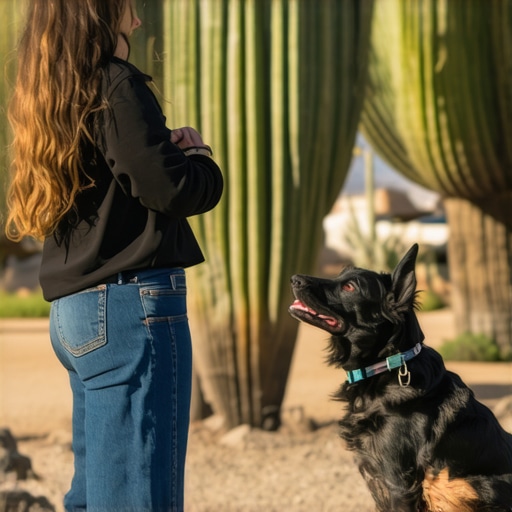
I smell WD-40 and the faint, metallic tang of an Arizona summer baking the pavement outside my shop. My knuckles are barked from turning a stubborn bolt on a ’72 Chevy, but that’s nothing compared to the mess I see when folks try to ‘tune’ their own service dog without a manual. People think a service animal is a plug-and-play accessory they can just bolt onto their life. It isn’t. In the heat of Mesa or the crowded aisles of a Phoenix Costco, a DIY job that hasn’t been torqued to spec will fall apart faster than a cheap head gasket. Editor’s Take: DIY training in 2026 requires more than just YouTube videos; it demands a rigorous understanding of task-specific mechanics and local legal stressors. Don’t let a minor oversight lead to a full public access breakdown.
Why your garage-built logic fails in the grocery store
Most folks start their DIY journey by focusing on ‘sit’ and ‘stay’ like they’re just polishing the chrome. They ignore the internal combustion of the dog’s temperament. A service dog needs to perform tasks that mitigate a disability, not just look pretty in a vest. I’ve seen owners in Scottsdale trying to train a dog to ‘block’ in a crowded cafe, but the dog is vibrating with anxiety because the foundation wasn’t set. The mechanics of a task—whether it’s blood sugar signaling or deep pressure therapy—require a specific ‘timing’ that most amateurs miss. If the timing is off by two seconds, the dog isn’t working; it’s just guessing. This lack of precision is the first major leak in the system. You can’t just slap a ‘Service Dog’ patch on a dog and expect it to handle the sensory overload of a 110-degree day in a bustling terminal. It takes thousands of repetitions in varied environments to ensure the gears mesh when the pressure is on.
Heat, highways, and the Arizona legal gauntlet
In Arizona, we play by a different set of rules because the environment is trying to kill your progress. The second big mistake is ignoring the ‘Operating Temperature.’ If you are training your dog in an air-conditioned living room in Gilbert but expect them to work while walking across a parking lot that’s 150 degrees, you’re asking for a total engine failure. Owners often forget that ARS § 11-1024 provides protections, but those protections don’t cover a dog that is out of control or barking at the local Fry’s. I’ve heard rumors in the shop about handlers being kicked out because they didn’t know the difference between ‘Public Access’ and ‘Public Nuisance.’ The law in the Grand Canyon State is clear: the dog must be under the handler’s control at all times. If you haven’t proofed your dog against the specific distractions of an Arizona monsoon or the chaos of a spring training game, you are setting yourself up for a legal and social wreck. You need to be an expert on the ADA, but you also need to know how local businesses in Tempe or Chandler react to service animals.
The expensive sound of a blown engine
The third mistake is the ‘Sunk Cost’ fallacy. I see it all the time with project cars. A guy buys a frame that’s rusted through and spends ten grand trying to make it a racer. In the dog world, this is trying to force a ‘washout’ to become a service dog. Not every dog has the drive or the nerves for this work. If the dog is reactive, fearful, or just plain lazy, no amount of DIY ‘tuning’ will fix the underlying structural flaws. Realities are messy. You might spend two years and five thousand dollars on gear and treats only to realize your dog hates the job. Professional handlers know when to pull the plug. Amateurs keep pushing until there is a biting incident or a public meltdown. That’s a high price to pay for stubbornness. You have to be objective. Is the dog helping your disability, or are you spending all your energy managing the dog? If it’s the latter, the machine is broken.
Fixing the leaks before the inspection
The ‘Old Guard’ used to say any dog could be trained with enough force. In 2026, we know better. We use high-value reinforcement and cognitive evaluation. Here are some deep-dive questions I get asked at the shop. Can I train my dog to detect seizures at home? You can start the scent work, but without professional validation, you’re betting your life on a DIY sensor that hasn’t been calibrated. What if a business asks for my certification? In Arizona, they can’t legally demand a ‘certificate’—those are mostly scams anyway—but they can ask two specific questions about the dog’s tasks. If you stumble on the answer, you look like a fraud. How do I handle the AZ heat? Boots are mandatory, not optional. If you wouldn’t walk barefoot on the asphalt, your dog shouldn’t either. Is owner-training faster? No, it’s usually slower and carries a 70% higher risk of failure compared to working with a pro. Can I train an older dog? You can, but you’re working with a limited mileage range before they hit retirement age. It’s better to start with a fresh ‘chassis’—a puppy with a clear history.
You wouldn’t rebuild a transmission with a butter knife and a prayer. Don’t try to build a life-saving service dog without the right tools. If your DIY project is stalling out, it might be time to bring it to a pro who knows how to get under the hood and fix the timing. Your independence depends on a dog that works every time you turn the key. Check out the pros at Robinson Dog Training to get your training back on track before the wheels fall off.