
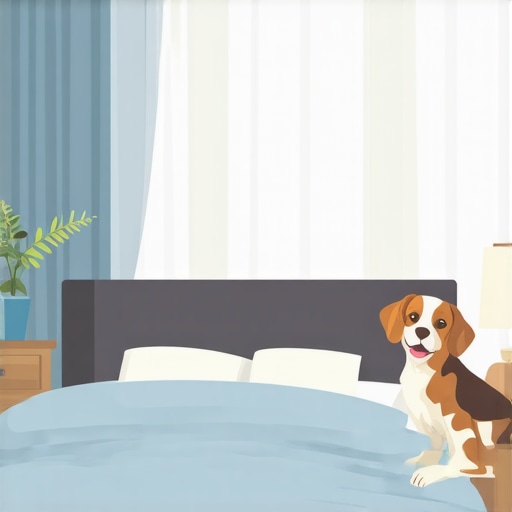
The smell of WD-40 on my hands doesn’t quite mask the scent of raw leather and the dry Arizona dust. I spent the morning tightening the gate latches at our facility in Mesa, making sure the hardware holds. It is the same philosophy I apply to service dog training. If the mechanics are loose, the whole system fails when the pressure is on. For families dealing with autism-related sleep disturbances, a dog is not a pet; it is a precision-engineered safety component designed to handle the 2 AM crisis without a hiccup. Editor’s Take: Sleep safety dogs in 2026 rely on active sensory interruption and physical grounding rather than just proximity. This guide identifies the three non-negotiable tasks that prevent wandering and mitigate night terrors. In the upcoming year, the standard for a sleep safety dog revolves around three specific mechanical outputs: calibrated deep pressure, perimeter anchoring, and sensory-triggered alerting. These tasks provide a structural barrier between a restless child and the dangers of the night, ensuring the kid stays in bed and the parents get enough sleep to function.
The heavy weight of a reliable anchor
Training a dog to apply pressure is not just about having a warm body on the bed. It is about torque and distribution. In the 2026 safety protocols, we focus on Deep Pressure Therapy (DPT) as a corrective mechanism for nocturnal arousal. When a child’s nervous system starts to redline into a meltdown or a wandering episode, the dog is trained to recognize the specific shift in breathing or the rhythmic kicking of the legs. The dog then applies its mass across specific muscle groups to down-regulate the child’s sympathetic nervous system. It works like a weighted blanket that thinks for itself. We are seeing a shift away from passive lying down toward active positioning where the dog adjusts its weight based on the child’s movement. (Most trainers skip this detail, and that is why their dogs get kicked off the bed.) This task is about maintaining the seal between the child and the mattress, preventing the initial impulse to bolt.
Where biological sensors meet raw behavior
The mechanics of wandering prevention have evolved. We used to talk about tethering, but in 2026, the focus is on ‘disruption and blocking.’ If the child attempts to leave the bed, the dog is trained to move into a bracing position. This is not an aggressive move; it is a structural block. The dog uses its body to create a physical hurdle that requires the child to engage with the animal before they can reach the floor. During this interaction, the dog is also hitting an environmental trigger—perhaps a smart-home button or a floor sensor—that alerts the parents. We look at the dog as the first line of defense in a multi-layered security system. You can see how this works in practice by looking at professional setups like Psychiatric Service Dog Partners, who emphasize the necessity of task-oriented training over emotional support. The dog acts as a living latch, holding the door shut on a potential wandering incident before the child even realizes they are awake.
[image_placeholder]
Desert nights and the Arizona safety standard
Working here in the East Valley, from the heat of Gilbert to the open spaces of Queen Creek, we have specific environmental stressors. A sleep safety dog in Phoenix has to manage the sensory load of high-power AC units humming and the dry air that can make a dog restless. Local families often face the unique challenge of ‘pool-rich’ environments. In Apache Junction or Mesa, a child wandering out of bed is not just a ‘getting lost’ risk; it is a drowning risk. That is why our local training protocols at Robinson Dog Training emphasize high-stakes reliability. We aren’t just training for a quiet suburban house in the Midwest; we are training for the reality of Arizona living where the stakes are baked into the ground. Observations from the field reveal that dogs trained with regional heat-acclimation and specific indoor-tracking tasks perform significantly better during the grueling summer months when tempers and energy levels are frayed.
Why your generic trainer is failing you
I see it all the time. Someone hires a trainer who teaches ‘sit’ and ‘stay’ and calls it a service dog. That is like trying to fix a transmission with a hammer. It is the wrong tool for the job. The messy reality is that a sleep safety dog will get tired. It will get bored. It will get stepped on in the dark. If the dog hasn’t been stress-tested for these specific frictions, it will fail. Common industry advice says to keep the dog in a crate next to the bed. I disagree. For a 2026 sleep safety dog to be effective, it needs to be integrated into the sleeping surface. The friction comes when the dog’s natural instinct to move away from a flailing child conflicts with its task to stay and provide pressure. We train for that specific conflict. If the dog isn’t leaning into the struggle, it isn’t doing its job. We also have to account for the ‘equipment’—the dog’s vest, the bed height, and even the type of flooring. A dog slipping on hardwood while trying to block a child is a mechanical failure. We fix those gaps before the dog ever enters your home.
The shift from passive pets to active safety gear
We are moving past the era where a service dog was just a comforting presence. By 2026, the technology of the dog is catching up to the technology of the home. How do I know if my dog is actually performing a task or just sleeping? A task is a trained response to a specific trigger; if the dog doesn’t move when the child sits up, it isn’t tasking. Can any breed handle sleep safety? No. You need structural integrity—dogs with enough mass and low enough arousal to handle nocturnal stress. What if my child has night terrors? The dog is trained to provide ‘tactile grounding,’ using its cold nose or a firm lean to pull the child back to reality. Is this better than a bed alarm? A dog doesn’t have a false alarm rate like a cheap motion sensor, and it can physically intervene, which a buzzer cannot. How long does the training take? Typically, we look at 18 to 24 months to ensure the ‘gears’ are fully meshed. The old guard of training relied on hope; the 2026 reality relies on verified behavior. Look at the research from Assistance Dogs International for the benchmarks on these standards. We don’t build these dogs for the easy nights; we build them for the nights when everything else breaks down. If you want a dog that can handle the night shift in the Arizona heat, you need to look at the build quality, not just the breed. Get the mechanics right, and the safety follows.