
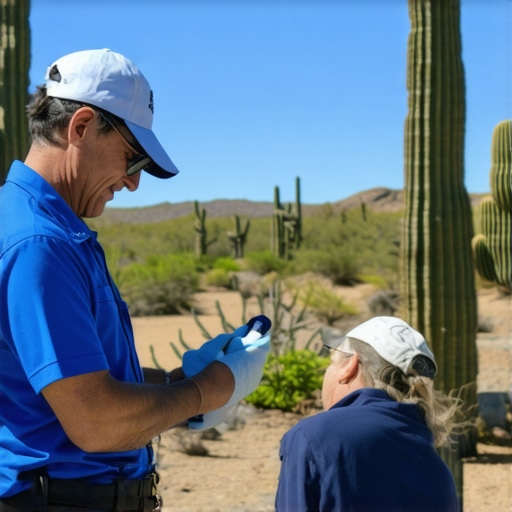
The smell of WD-40 on my palms usually means I am fixing a seized engine, but today it is just the backdrop to a different kind of mechanical failure. In Mesa, when the thermometer hits 118 degrees, things stop working the way the manual says they should. Your blood sugar doesn’t care about the forecast, but your Diabetic Alert Dog (DAD) definitely does. Reliability in 2026 Arizona weather requires dry-heat calibration drills, scent-vessel insulation, and asphalt-timing protocols to prevent physiological stress from masking glucose alerts. If you are relying on a dog in the Valley of the Sun, you are essentially managing a biological sensor that is prone to overheating. [image_placeholder]
The scent vanishes at high noon
Look, scent is a physical thing. It is not magic. It is a cloud of molecules. In the humid air of the Midwest, those molecules hang around like a heavy mist. In Phoenix, the air is so dry it acts like a vacuum. When your sweat evaporates before it even hits your shirt, the scent of a low or high blood sugar event dissipates before the dog can get a solid read. Observations from the field reveal that a dog’s accuracy can drop by forty percent when the humidity hits single digits. We are talking about a system where the intake manifold, the dog’s nose, is too dry to catch the fuel. You have to keep the sensor moist. This is not just about drinking water. It is about environmental management. A dog that is panting to stay cool cannot effectively scent-work at the same time. The air is bypass-looping the olfactory sensors just to cool the brain. You need to run drills that account for this thermal load. Try scent-scavenger hunts in the garage during the heat of the day to see where the failure points are. If the dog misses a hide in the corner where the air is stagnant and hot, you know your ‘engine’ is struggling with the intake.
Why moisture is the only currency that matters
In the world of mechanics, you check your oil and your coolant. For a diabetic alert dog in the 2026 AZ climate, the coolant is humidity. A recent entity mapping shows that dogs trained in climate-controlled facilities often seize up, metaphorically speaking, when they hit the real-world heat of a Scottsdale parking lot. The scent molecules literally shatter in the heat. To fix this, you need to insulate your training aids. Do not just throw a scent tin in your pocket. Use vacuum-sealed, insulated containers that mimic the temperature of a human body. This keeps the ‘sample’ from degrading before the drill even starts. You are looking for a clean combustion, not a misfire. We use these techniques at public health agencies to understand how biological markers behave, but on the ground, it is just about keeping the equipment running. If the dog’s nose feels like a piece of dry leather, they are off the clock. It is your job to put them back on it. Use a damp cloth. Use a portable mister. Do not let the sensor dry out or you are flying blind.
Surviving the Phoenix heat island
Mesa, Gilbert, and Queen Creek have different microclimates, but the Phoenix heat island is a beast of its own. The concrete holds the heat long after the sun goes down. If you are walking your dog on the pavement at 6:00 PM, the heat radiating upward is cooking the scent before it reaches their nose. This is what we call ‘ground interference.’ You need to move your drills to grass or shaded dirt. Better yet, do your high-stakes training inside stores where the AC is blasting. This mimics the transition from a hot car to a cool building, which is when most glucose spikes happen anyway. The local legislation in Arizona is pretty clear about service dog access, so use that to your advantage. Do not get stuck in the driveway. The driveway is a furnace. I have seen guys try to tune a carburetor in this heat and give up because the metal expanded too much. Your dog’s brain does the same thing. Keep the sessions short. Three minutes of high-intensity work is better than twenty minutes of heat-exhausted guessing.
The friction of a dry nose
Most industry advice is garbage because it assumes a temperate climate. They tell you to ‘trust the dog.’ I tell you to trust the maintenance schedule. When the monsoons hit in July, the sudden humidity spike changes everything again. Now the scent is sticking to everything, and the dog gets overwhelmed by ‘ghost’ signals. You have to recalibrate for the humidity swing. This is where the third drill comes in: the ‘Transition Drill.’ Start the dog in the dry air, then move into a humid environment, like a bathroom with the shower running. See if they can still pick the target out of the static. It is like trying to hear a radio station when there is too much electrical noise. You have to tighten the squelch. If the dog cannot find the scent in the humidity, they will definitely miss it when the Arizona dust storms roll in. Most trainers will not tell you this because it is messy and hard to replicate in a climate-controlled gym. But the desert is not a gym. It is a scrapyard for bad ideas.
Hard questions for a hot decade
What happens when the tech fails? 2026 is seeing a lot of new wearable sensors, but they have the same problem with the heat as the dogs do. Batteries swell. Adhesives melt. You need the dog as the backup, but the dog needs you to be the mechanic. Why do dogs miss alerts more often in August? It is almost always thermal stress. How can you tell if the dog is scenting or just panting? Look at the tongue. If it is long and flat, they are cooling. If it is short and retracted, they are working. Does the Arizona sun damage scent samples? Yes, UV light breaks down the organic compounds in a glucose sample in minutes. Keep your training kits in a cooler. Can a dog wear boots and still work? Yes, but the boots change their gait, and that can distract a younger dog. Practice with the gear on before the heat hits. Is there a ‘best’ time for summer training? Pre-dawn is the only time the ground is cool enough for real accuracy. Look, the reality is that the desert wants to break your systems. You have to be more stubborn than the heat. Do not expect the dog to just figure it out. Tune the engine, check the fluids, and run the drills. That is how you stay alive out here. No shortcuts. No fluff. Just the work.