
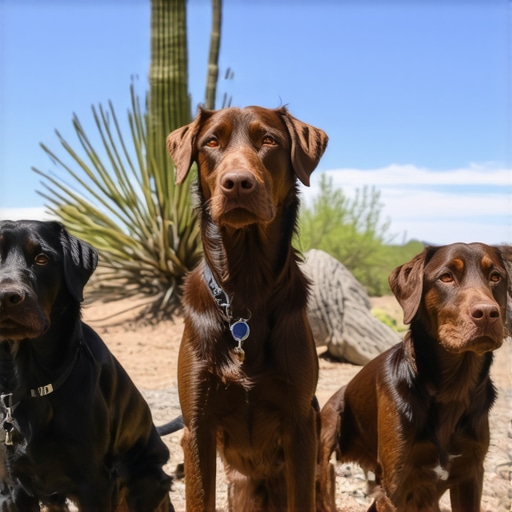
The sun over the Superstition Mountains doesn’t just shine; it hammers. Inside a quiet living room in Gilbert, the air conditioner hums a low, desperate tune against the 112-degree afternoon. You are sitting on the sofa, feeling that familiar, hollowing sensation in your chest—the slow-motion slide of a blood sugar crash. Your dog, a black lab named Echo, is already on her feet. She doesn’t bark. She nudges your knee with the force of a soft hammer, her tail thumping once against the rug. This is the moment where training meets biological reality. Editor’s Take: Maintaining a Diabetic Alert Dog (DAD) in the harsh Arizona climate demands more than standard obedience; it requires specialized scent drills that account for rapid evaporation and heat-induced sensory fatigue. Without these 2026-ready refresh protocols, the biological link between handler and canine can fray under the desert sun.
3 Diabetic Alert Dogs Arizona Scent Refresh Drills for 2026
Working with a DAD in the Southwest presents a physical puzzle. Scent is a physical thing. It is a collection of Volatile Organic Compounds (VOCs), specifically isoprene, that your body sheds like invisible skin. In the high-altitude dryness of Flagstaff or the kiln-like heat of Phoenix, these molecules behave erratically. They don’t linger. They vanish. The dog’s nose, while incredibly sensitive, relies on a thin layer of mucus to trap these molecules. If the dog is dehydrated or the air is too thin, the alert fails. This is not a failure of the animal. It is a failure of the environment. Training in 2026 focuses on building ‘scent stamina’—the ability of the dog to filter through the noise of dust, dry air, and urban heat islands to find that one specific chemical signature that means danger. It is a partnership of biology and focus. Every alert is a quiet conversation between two species, whispered in the language of chemistry. It is deep work. It is exhausting work.
When we talk about scent work, we are talking about the dog’s ability to discriminate. In the Arizona summer, every scent is amplified and then quickly destroyed. The first drill we prioritize is the Thermal Transition Seek. This involves moving the dog from a climate-controlled 72-degree room directly into a 100-degree patio environment while hidden scent samples are present. The sudden shift in temperature and humidity changes how the dog’s olfactory system processes information. You want the dog to find the ‘low’ sample within sixty seconds of the transition. This mimics the real-world scenario of getting out of a car at a grocery store or walking from your house to the mailbox. The goal is to ensure the dog doesn’t ‘shut down’ its nose during the physiological shock of the heat. It is about consistency. It is about the grind. If you are looking for local experts to help with these environmental stressors, Arizona service dog specialists can provide the controlled environments needed for these high-stakes repetitions. Training in the desert is a different beast entirely.
The Monsoon Vapor Shift
The second drill addresses the chaotic humidity of the monsoon season. High moisture content in the air actually helps scent travel further, but it also carries ‘junk’ scents—damp earth, ozone, and wet pavement. We call this the Vapor Interference Drill. We use a humidifier in a small room to spike the moisture levels, then introduce the target scent among several ‘distraction’ scents like wet leather or sagebrush. The dog must ignore the overwhelming environmental smells to pin the glucose shift. It is difficult. The dog’s nose is bombarded. A study in the Journal of Breath Research notes that VOC detection can be influenced by ambient humidity, making this specific drill a requirement for any handler living between Tucson and Kingman. Success here builds a dog that is unshakable, even when the sky is falling and the air is thick enough to drink. It builds trust. Trust is the currency of the DAD relationship. You rely on them to see the invisible, and they rely on you to provide the structure.
The Urban Heat Island Persistence
The third drill is the Surface Heat Saturation. Asphalt in Mesa can reach 160 degrees. While your dog should always be wearing boots on such surfaces, the heat radiating off the ground creates ‘scent thermals’—updrafts that carry the smell away from the dog’s snout. We practice alerts while walking over varied surfaces—cool grass to hot pavement—forcing the dog to adjust its head carriage to find where the scent has drifted. This is advanced work. It requires the handler to be in tune with the dog’s body language. Is the tail set changing? Are the nostrils flared more than usual? According to research from the American Kennel Club, environmental conditioning is what separates a pet from a life-saving tool. This drill ensures that even in the middle of a parking lot, your dog is your lifeline. It is about the bond. It is about the life you live together.
Why the Old Ways Are Fading
Back in the early 2010s, DAD training was largely done in static, indoor environments. It was clinical. It was sterile. But life in Arizona is anything but sterile. The modern approach for 2026 recognizes that a dog who can alert on a couch might fail in a bustling Tempe coffee shop. We are moving toward ‘stress-testing’ the alert. This doesn’t mean hurting the dog; it means introducing cognitive load. Can the dog alert while a siren is passing? Can the dog alert while children are running nearby? Old school trainers focused on the nose; modern architects of canine behavior focus on the brain. We want a dog that can think through the heat. We want a dog that chooses to work because the partnership is so deeply ingrained. You are the coach, and they are the elite athlete. For more on the technical side of this work, check out our guide on advanced scent detection mechanics or explore Type 1 diabetes canine support for localized resources.
Common Questions About Desert DAD Training
Does the heat damage my dog’s ability to smell? Yes and no. Temporary heat exhaustion or dry nasal passages will drastically reduce accuracy, which is why hydration is a training requirement, not just a health one. How often should I refresh? In Arizona, we recommend these three drills at least twice a week during the summer months. Does breed matter? While labs and goldens are popular, any high-drive dog with a healthy snout can excel if the handler is committed. The desert is a hard teacher, but it produces the most resilient service animals in the world. They are forged in the heat. They are sharpened by the dust. They are your best defense against the invisible lows that haunt the nights.
The sun sets over the valley, painting the sky in bruises of purple and gold. Your dog sighs, resting her chin on your foot. You check your monitor. You are stable. You are safe. This peace isn’t an accident. It is the result of every drill, every repetition, and every moment of shared focus in the heat. Training never truly ends; it just evolves. If you are ready to take the next step in your canine partnership, look into professional scent work certifications to ensure your team is ready for whatever 2026 throws your way. Stay hydrated, stay vigilant, and keep the nose working.