
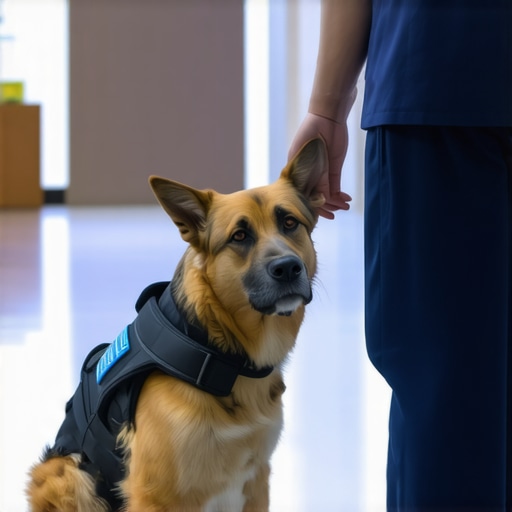
Why Seizure Response Dogs Arizona Beat 2026 Smart Sensors
The afternoon sun in the Sonoran Desert doesn’t just shine; it weighs on you. You’re sitting at a shaded table in Old Town Scottsdale, the condensation on your iced tea creating a tiny, fleeting map of the world on the glass. Everything feels steady. But then, a cold nose presses hard against your palm. It’s not a request for a treat. It’s a warning. Your Seizure Response Dog has detected the chemical shift, the invisible storm gathering in your brain, minutes before you feel the first tremor. Editor’s Take: While the 2026 wave of smart sensors promises a digital safety net, the biological precision and immediate physical intervention of a trained canine remain the superior choice for Arizonans living with epilepsy. Technology lags; biology leads.
The chemistry of a seizure is a quiet predator. For years, researchers have tried to bottle the scent of a pre-ictal state, that specific metabolic change that precedes a neurological event. Dogs don’t need a lab. Their olfactory systems, housing hundreds of millions of scent receptors, catch the spike in Isoprene or the shift in sweat VOCs that human-made sensors often miss amid the noise of a crowded Phoenix street. We talk about data points, but a dog lives in a world of data streams. They aren’t looking for a threshold to be crossed; they are sensing the very beginning of the curve. This isn’t just about detection. It’s about the psychology of the partnership. A sensor on your wrist might beep, but it won’t move your body into a recovery position or block you from wandering into traffic on Camelback Road. The dog is an active participant in your survival, a living bridge between the onset of a medical crisis and the safety of the aftermath.
Life with a service animal in the heat of the Valley is far from a curated social media feed. It’s messy. It’s the constant management of paw pad temperatures on blistering asphalt. It’s the struggle of public access when a business owner in Mesa doesn’t understand the Americans with Disabilities Act. You will face days where the training feels like it’s slipping, where the dog is distracted by a stray crumb in a restaurant. This is the reality check. Yet, when the system works, it’s a symphony. Troubleshooting the bond requires patience and often the help of professional dog training in Phoenix to ensure the alert stays sharp. Unlike a software update that might crash, a dog’s skills are honed through thousands of repetitions and a deep, visceral connection to their handler’s specific scent profile. When the battery in a 2026 smart sensor dies or the cloud connection drops in a rural part of Pinal County, the dog remains vigilant. They don’t need a Wi-Fi signal to save a life.
The Fragility of a Battery Powered Promise
Compare the upcoming 2026 tech with the ancient, proven efficacy of the canine. Silicon Valley loves to talk about latency. They want to reduce the time between detection and notification. But even the fastest processor faces the hurdle of skin-to-sensor contact, sweat interference, and the simple fact that a watch can’t grab your sleeve. The Arizona climate is a graveyard for electronics. Heat kills batteries. Dust clogs ports. In contrast, a well-conditioned Seizure Response Dog is built for this environment, provided they have a handler who respects the limits of the desert. The old-school approach—relying on a living creature—actually offers a more modern result: immediate, physical, and empathetic intervention. Humans are not machines. Our medical needs aren’t binary. A dog understands the nuance of a panic attack versus a focal seizure, adjusting its response from a deep pressure therapy move to a fetch-the-phone command. That’s an intuition no algorithm can simulate without a staggering number of false positives. For those seeking reliable support, looking into veteran K9 handlers in the East Valley can provide the expertise needed to navigate this complex choice.
The Reality of the Alert
How early can they actually tell? Some studies suggest up to 45 minutes of lead time, though 10 to 15 is more common. What happens if the dog misses an alert? It happens. No system is perfect. But the failure of a dog is usually a failure of the team’s communication, something that can be repaired through consistent work. How do you handle the Phoenix heat? Booties and hydration are non-negotiable. Is a seizure dog right for everyone? No. It requires a commitment to a living being that a wearable device does not. But for those who choose this path, the reward is a level of freedom that tech just hasn’t mastered yet. If you are ready to move beyond the beep of a sensor, the trainers at Robinson Dog Training are equipped to help you build that life-saving bond. The future isn’t just digital; it’s biological.