
Why Diabetic Alert Dogs Arizona Beat 2026 CGM Failures
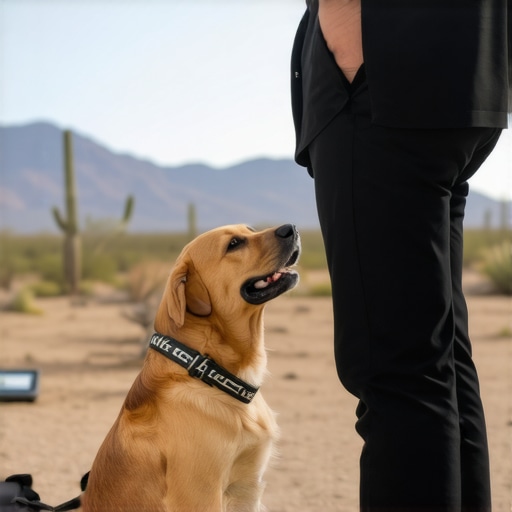
The air in Scottsdale at 2 AM feels heavy, a stagnant warmth that clings to the skin even with the AC humming. It is in this quiet, thick darkness that the limits of modern medicine reveal themselves. Sarah, a Type 1 diabetic for twenty years, lies asleep while her Continuous Glucose Monitor (CGM) rests on her nightstand, displaying a steady, reassuring 110 mg/dL. The machine is confident. It is also wrong. The sensor, state-of-the-art and marketed as the peak of 2026 bio-tech, is measuring interstitial fluid, a liquid that trails the actual blood sugar levels by a stubborn fifteen minutes. By the time the alarm sounds, Sarah might already be too disoriented to reach the glucose tabs. But Jasper, a two-year-old Labrador, isn’t looking at a screen. He is smelling the chemical shift—the rising tide of isoprene on Sarah’s breath—long before the silicon catches up. He nudges her hand. He persists. He saves a life that the tech hadn’t realized was in danger yet.
Editor’s Take: Biological detection remains the gold standard for early warning. While 2026 sensors have improved, the inherent biological lag of interstitial measurements means a trained service dog in Arizona provides a literal life-saving lead time that hardware alone cannot match.
The Phantom Fifteen Minutes
We often talk about technology as if it has conquered biology. We see the sleek pods and the smartphone integrations and assume the problem of the ‘low’ is solved. It isn’t. The 2026 CGM models, despite their hype, still face the fundamental wall of human physiology. These devices sit under the skin, swimming in the fluid between cells. Blood sugar changes there happen much later than they do in the actual bloodstream. It is a ghost, a delayed echo. When your sugar is crashing fast, that fifteen-minute gap is the difference between a quick correction and a 911 call. This is where specialized diabetic dog training steps in to bridge the gap. The dog isn’t waiting for the sugar to reach the skin. The dog is catching the scent of the body’s metabolic response as it happens. It is real-time data in a world of delayed signals. In the dry heat of the Sonoran Desert, where dehydration can mask or accelerate these shifts, the biological precision of a dog’s nose becomes even more vital.
Beyond the Silicon Ceiling
The tech industry promised that by 2026, failures would be a thing of the past. They spoke of better adhesives and faster enzymes. Yet, hardware breaks. Batteries die. Transmitters lose connection in the middle of a Phoenix monsoon. A dog doesn’t need a firmware update. A dog doesn’t lose signal because you rolled over on your arm during a nap. The training involved in creating a Diabetic Alert Dog (DAD) focuses on this very reliability. We are talking about thousands of hours of scent discrimination. The dog is taught to ignore the scent of a sandwich or a sweaty gym bag and focus entirely on the specific chemical signature of a hypoglycemic event. This isn’t just a pet; it is a living, breathing laboratory. Many families find that integrating service dog requirements into their daily life creates a layer of safety that no app can replicate. The emotional bond is secondary to the utility, though the comfort of a cold nose during a midnight low shouldn’t be dismissed.
Heat Waves and Wet Noses
Living in Arizona presents a unique set of challenges for the diabetic. High temperatures can cause insulin to degrade and can interfere with the way sensors stick to the skin. Sweat is the enemy of the medical adhesive. In July, a CGM can simply slide off during a walk to the mailbox. A dog, however, thrives in the routine. While we must be careful of their paws on the pavement, their ability to detect scent is unaffected by the soaring Phoenix temperatures. Actually, some trainers argue that the increased perspiration in heat might even make the dog’s job slightly easier, providing more ‘scent samples’ in the air. This reliability is why many are looking toward intensive dog training programs as a permanent solution rather than a temporary fix. It is about building a system that doesn’t fail when the power goes out or the Wi-Fi drops. Research published in journals like PLOS ONE has shown that some dogs reach sensitivity levels that rival laboratory equipment, particularly in catching the rapid drops that sensors often miss.
The 2026 Tech Wall
Why are we seeing more people in Mesa and Chandler opt for DADs as 2026 approaches? It’s the fatigue. Technology fatigue is real. The constant beeping, the ‘sensor error’ messages at 4 AM, the skin irritation from medical plastics—it wears a person down. A dog offers a different kind of interaction. Instead of a jarring electronic shriek, you get a paw on the knee. Instead of a data graph that requires interpretation, you get a clear, trained behavior. The dog doesn’t care about ‘optimal range’ in a clinical sense; the dog cares that you smell wrong. This primitive, ancient connection is more robust than any circuit board. When looking at the expertise of veteran k9 handlers, one sees the depth of this commitment. These dogs are trained to find you in other rooms, to fetch glucose kits, and even to bark for help if you become unresponsive. A sensor can only alert you; a dog can intervene.
A High Stakes Partnership
It isn’t all easy. Owning a Diabetic Alert Dog in the valley is a massive commitment. You aren’t just buying a tool; you are entering a partnership. The dog needs exercise, veterinary care, and constant reinforcement of its training. There are days when the dog is off, or days when the Arizona sun makes a long training session impossible. This is the reality. It’s messy. It’s hard work. But for those who have experienced a ‘dead-in-bed’ scare or a seizure because their tech failed to alert them, the work is a small price to pay. The 2026 failures aren’t just about the machines breaking; they are about the machines not being human enough to understand the urgency of a crashing blood sugar level. The dog understands the urgency. The dog feels the tension in the room. This synergy between species is something the tech world hasn’t figured out how to code yet.
Common Questions from the T1D Community
Can any dog be a diabetic alert dog? Not exactly. While many breeds have the nose for it, the temperament required to work in public places like the Phoenix Zoo or a crowded airport requires a very specific personality. How long does the training take? Usually, it takes about 18 to 24 months of consistent work to get a dog to a reliable level. Does insurance cover a DAD? Unfortunately, most private insurance companies still view these as a luxury, though some non-profits and specialized programs in Arizona offer assistance. Do they work as well for ‘highs’ as they do for ‘lows’? Most dogs find ‘lows’ easier to detect because the chemical change is more distinct, but they can certainly be trained to alert for high blood sugar too.
The sun rises over the Superstition Mountains, and Sarah is awake, eating a bowl of fruit and checking her levels. Her CGM finally caught up, showing the dip she experienced two hours ago. She looks at Jasper, who is already waiting by the door for his morning walk. The tech gave her a graph, but the dog gave her the time she needed to act. As we move deeper into 2026, the lesson remains clear: trust the nose. The silicon is just a backup. If you are ready to add this layer of biological security to your life, seeking out professional guidance is the first step toward a safer, more confident future.