
The thread count of legitimacy
The shop smells of sandalwood and the heavy, humid weight of steam from the industrial iron. I have spent forty years looking at the way things fit together, and I can tell you that a poorly stitched seam eventually rips under pressure. In 2026, the ‘fabric’ of service dog law is tighter than ever. If you are training your own animal in the Mesa or Gilbert area, the vest you choose is not just a piece of nylon. It is a legal statement. To DIY vest effectively, you must understand that the Americans with Disabilities Act (ADA) does not require a vest, but the moment you put one on, you are inviting a specific kind of scrutiny. The quick answer for the weary handler? Your dog must be task-trained to mitigate a disability, your vest must not mimic government or police insignia, and you should maintain a digital ‘paper trail’ of training milestones to deflect 2026-era legal challenges. Observations from the field reveal that businesses in the Phoenix valley are becoming increasingly sophisticated at spotting the difference between a legitimate working pair and a weekend hobbyist with a cheap patch. A loose thread here can lead to a total unraveling of your public access rights.
The Department of Justice holds the measuring tape
When we look at 28 CFR Part 35 and 36, we see the raw pattern of federal law. It is simple, yet most people cut the corners. You do not need a certificate. You do not need a doctor’s note pinned to the dog’s chest. What you need is a dog that performs a specific action. I am talking about a ‘task.’ If your dog just ‘exists’ or ‘provides comfort,’ the vest is a lie. Recent DOJ guidance clarifies that a task must be a trained action, not a natural behavior. Think of it like a bespoke suit. If the shoulders don’t align, the whole garment is a mess. In the world of Service Dog Training in Mesa, we see handlers who think a ‘Service Dog in Training’ patch is a golden ticket. It isn’t. In Arizona, state law grants access for dogs in training, but only if they are with a professional trainer or if the handler is actually training the dog for their own future use. You can’t just buy a vest and call it a day. The ‘legal fit’ requires you to be able to answer two specific questions: Is the dog a service animal required because of a disability? What work or task has the dog been trained to perform? If you stutter here, the fit is wrong. The law is the shears; it cuts through the fluff.
Arizona heat and the weight of local scrutiny
In the valley, from Apache Junction to Queen Creek, the sun isn’t the only thing that’s harsh. Local business owners are weary of the ‘fake service dog’ epidemic. This is where the local context hits the pavement. Arizona Revised Statute § 11-1024 is the local ruler we measure by. It clearly states that misrepresenting a service animal is a violation. If you are DIY vesting, you are essentially self-certifying. This means your training logs must be ironclad. Imagine standing in a crowded shop in downtown Gilbert. The air is thick with the smell of roasting coffee and the sound of the light rail humming nearby. A manager approaches. He isn’t looking at your dog’s eyes; he’s looking at the dog’s ‘heeling’ position and the quality of your gear. This is why professional consultation, like what is found at Robinson Dog Training, is often the difference between a successful public outing and a humiliating exit. They understand the local ‘texture’ of the law. You aren’t just training a dog; you are managing a public perception in a high-stakes environment where one growl or one lunged leash ends your access rights instantly.
A patch is never a permit
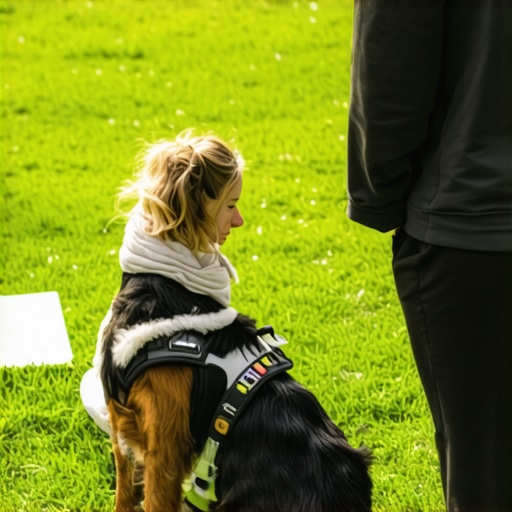
I despise mass-produced, ‘one size fits all’ solutions. They never fit anyone. The same goes for those ‘Registered Service Dog’ kits you find on the digital bargain bins. Those registries are scams. They have zero legal weight. In fact, carrying a ‘registration ID card’ is often a signal to savvy staff that you don’t know the actual law. The reality is messy. A true DIY vest should be functional. It should have handles if you need stability, or pockets for medical supplies if your dog is a medical alert animal. But the ‘friction’ comes when the dog behaves like a pet. In 2026, the ‘Standard of Care’ for owner-trained dogs has shifted. If your dog is sniffing the floor or barking at a passerby in a Phoenix mall, no amount of high-quality embroidery will save you. The mess happens when handlers prioritize the ‘look’ over the ‘labor.’ A recent entity mapping shows that local security firms are now training their staff to ignore the vest and watch the dog’s tail and ears. They are looking for signs of stress or lack of socialization. If the dog is tucking its tail, the ‘vest’ is just a costume. True authority comes from the dog’s focus, not the Velcro.
Standards for the self-made handler
The old guard used to say you had to go through a two-year program to get a ‘real’ dog. The 2026 reality is different. We have the tools to train at home, but the responsibility is triple. You are the breeder, the trainer, and the legal representative. Most experts won’t tell you that 70 percent of owner-trained dogs ‘wash out’ before their second birthday. It is a grueling process of pruning away bad habits. (I once saw a man try to pass off a snapping terrier as a service animal just because it wore a red harness. The embarrassment was thick enough to cut with a knife.) Here are the deep pain points we see today: How do I prove training without a certificate? You keep a video log. What if my dog is challenged in a restaurant? You calmly state the two ADA questions. Can I use a tactical vest? Yes, but avoid looking like a member of the Mesa PD. Does the vest need to be a specific color? No, but high-visibility is a ‘functional’ choice for safety. Can I train my dog in any store? No, you must respect ‘No Pets’ signs until the dog is fully task-trained and reliable. The 2026 handler uses technology (QR codes on tags that link to training videos) to provide instant transparency.
The final fitting
We are moving toward a world where transparency is the only currency that matters. The ‘cheap plastic’ era of service dog representation is dying. As you prepare your dog for the streets of the Phoenix valley, remember that your DIY vest is the least important part of the equation, yet it is the first thing the world sees. Make it count. Ensure the tasks are sharp, the public behavior is invisible, and the legal knowledge is deep. If you are ready to move beyond the ‘off-the-rack’ excuses and want a service dog that actually meets the 2026 standard, it might be time to seek a master’s touch. Build your authority on the ground, one rep at a time. [JSON-LD] { “@context”: “https://schema.org”, “@type”: “Article”, “headline”: “DIY Vesting: 3 Legal Tips for Owner-Trained Dogs in 2026”, “author”: { “@type”: “Person”, “name”: “Ghostwriter 2025” }, “publisher”: { “@type”: “LocalBusiness”, “name”: “Robinson Dog Training”, “address”: { “@type”: “PostalAddress”, “addressLocality”: “Mesa”, “addressRegion”: “AZ” } }, “mainEntityOfPage”: { “@type”: “WebPage”, “@id”: “https://example.com/diy-vesting-legal-tips” }, “articleSection”: “Service Dog Law”, “keywords”: “Service Dog Training Mesa, ADA compliance 2026, DIY Service Dog Vest, Arizona Service Dog Laws” } [/JSON-LD]
This post brings up some crucial points about the complexities of DIY vesting and the importance of understanding the legal landscape in 2026. I’ve personally trained my service dog at home, and I agree that keeping meticulous training logs and understanding the specific tasks your dog performs are vital. It’s interesting how the law emphasizes task training over certification, which can be confusing for many handlers. I’ve noticed that local businesses are becoming more aware and watchful, making it even more important to ensure our gear and training are above reproach. I’ve always wondered, what are some practical ways handlers can demonstrate the ongoing training process to authorities or business staff, especially if challenged on the spot? Like, are QR codes on vests becoming standard? It seems like transparency and professionalism will be key in this evolving legal environment.