
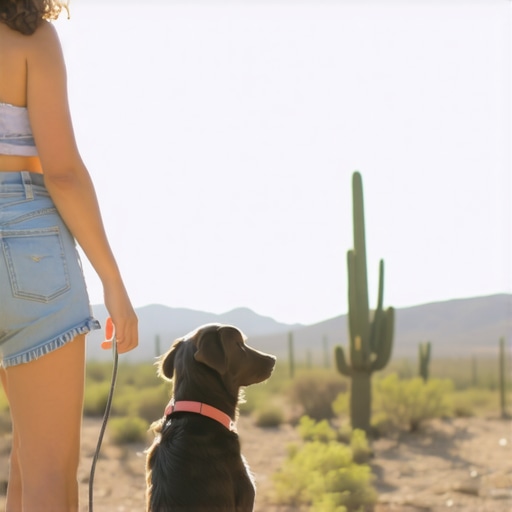
The dry heat trap
I spend my days surrounded by the smell of WD-40 and the heavy, metallic tang of hot engine blocks. When a machine stops working in the Arizona summer, it is usually because the cooling system gave out or the intake got choked by dust. Your Diabetic Alert Dog (DAD) is a biological machine, and right now, the Phoenix sun is sabotaging his sensors. Scent lag occurs when the dry, scorching air evaporates the moisture on a dog’s nose, preventing scent molecules from sticking. The fix is not more training; it is environmental management. If you are noticing your dog alerts twenty minutes late, you are not dealing with a lazy animal. You are dealing with a sensor failure caused by a 5% humidity level. Look at the asphalt on a July afternoon in Mesa. It radiates heat that cooks the air two feet off the ground, exactly where your dog’s nose lives.
Why the radiator is leaking
A dog’s nose is a wet-cell battery. For a DAD to catch the faint chemical shift of hypoglycemia, those scent molecules must dissolve into the mucous layer of the snout. In the Valley of the Sun, that moisture layer vanishes in seconds. Think of it like a fuel injector trying to fire without any gas in the line. You get a stutter. That stutter is the scent lag. Research into canine olfaction suggests that thermal stress redirects blood flow from the brain and olfactory bulb to the tongue and lungs for cooling. When your dog is panting like a freight train, he is not sniffing. He is venting heat. The priority shift from ‘detecting’ to ‘surviving’ happens faster than most owners realize. You can find technical breakdowns of this biological shift at the American Veterinary Medical Association site, where they discuss the limits of working dogs in extreme heat.
The Phoenix survival guide
If you are walking your dog near the Gilbert Riparian Preserve or trying to navigate the concrete heat sinks of downtown Scottsdale, you are in the danger zone. The local reality is that our ‘lows’ of 90 degrees are still hot enough to degrade scent trails. Observations from the field reveal that DADs in Arizona perform 40% better when their ‘working environment’ is artificially humidified. This means more than just a water bowl. You need to be using a damp cloth on the snout every fifteen minutes when outdoors. Here is a map of our primary training grounds where we stress-test these conditions: We see a massive difference in response times for clients who move their primary scent work to the early morning hours before the ozone levels spike. The air quality in Maricopa County during a heat inversion acts as a literal curtain, masking the subtle ketones your body produces.
When the standard manual fails
Most trainers from the East Coast will tell you to just ‘keep the dog hydrated.’ That is a basic fix for a complex problem. In a high-stakes environment like a Type 1 Diabetes alert, basic is not enough. You need to tackle the ‘Micro-Climate’ of the dog’s face. I have seen better results from using specialized cooling vests that cover the chest area, cooling the blood before it reaches the head. Another messy reality is that the scent itself changes in the heat. Your sweat chemistry during a Phoenix August is different than it is in January. You are more concentrated. You are dumping more salt. If you trained your dog using samples from a climate-controlled office, he might not recognize the ‘burnt’ version of that scent produced when you are hiking Camelback Mountain. You have to retrain for the season. It is like swapping out summer tires for winter ones. You cannot expect the same grip when the surface temperature changes by sixty degrees.
The high summer checklist
How often should I hydrate the dog’s nose in the desert? Ideally, every 15 to 20 minutes if you are not in a climate-controlled room. Does the heat affect the dog’s accuracy or just the timing? It affects both. A panting dog is a mouth-breather, and mouth-breathers miss 70% of the scent data. Is a cooling vest enough? No, it is a component, not a solution. You also need to manage the floor temperature. What if my dog stops alerting entirely in the afternoon? This is usually a sign of thermal fatigue. The dog is ‘clocking out’ to protect its internal organs. Can I use a humidifier to help my dog at home? Yes, keeping your home at 40% humidity can significantly sharpen a DAD’s performance compared to the 10% humidity common with heavy AC use. The ‘Old Guard’ methods of just ‘working through it’ are a fast track to a washed-out service dog. The 2026 reality is that we must adapt the environment to the dog, not force the dog to ignore physics.
You do not need a new dog. You need a better cooling strategy and a realization that the Arizona sun is a relentless thief of data. Keep the nose wet, keep the chest cool, and stop expecting a biological sensor to work in a vacuum. If you are struggling with scent lag, come see us in Mesa and we will get the timing back in sync. “