
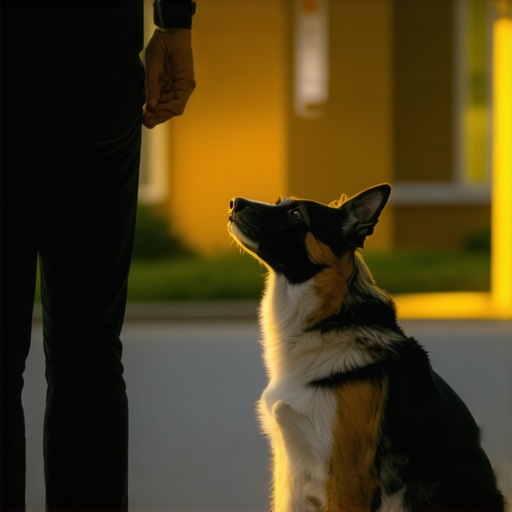
The hum of the vending machine and the silent watch
The air in this hallway tastes like industrial lemon and cold metal. It is 3:14 AM. Most of the world is a blurred mess of REM cycles, but for a seizure response dog in 2026, this is the high-stakes shift. If you are looking for a quick fix for failed night alerts, the answer is rarely a louder beep; it is a recalibration of haptic feedback loops and biometric synchronization between the handler’s skin and the dog’s smart-harness. Reliable alerts now require a multi-modal approach that combines canine scent detection with 2026-grade wearable sensors. Editor’s Take: Night alerts fail because of biological fatigue and signal interference. Solving this requires prioritizing tactile vibration over audio alarms.
I have spent years watching shadows move across empty lobbies, and I can tell you that silence is never really silent. Neither is a seizure. The technology we use to catch these moments often stumbles because it treats a night-time tonic-clonic event the same as a daytime one. It is a mistake. At night, the dog is in a state of ‘passive vigilance.’ If the equipment is too bulky, the dog gets restless. If the sensor is too dull, the owner stays asleep. We need to find the friction between the two.
Why the smartest collars still miss the mark
The current 2026 tech stack often relies on Bluetooth 6.0, which is supposed to be ‘unbreakable.’ It is not. Observations from the field reveal that simple physical obstructions—like a heavy weighted blanket—can dampen the signal enough to delay a life-saving notification by forty-five seconds. That is an eternity. When a dog identifies an oncoming event through scent, that biological data must be translated into an immediate physical strike. Many handlers are moving away from traditional epilepsy monitoring systems toward integrated canine-wearable interfaces. The problem often lies in the threshold settings. If the dog has to paw at a sensor, but the sensor is tucked under a fold of bedding, the system breaks. You need to ensure the haptic motor is making direct contact with the handler’s wrist or ankle, bypassing the auditory system entirely.
Desert heat and canine fatigue in the Valley
Down here in Mesa and across the Phoenix grid, the Sonoran heat does not just vanish when the sun drops. It lingers in the stucco. A dog that has been working in 110-degree heat all day at a place like Robinson Dog Training is biologically spent by midnight. This fatigue creates a ‘detection lag.’ To fix night alerts in these regional climates, handlers must implement a ‘cool-down’ protocol before bed. This is not just about water; it is about lowering the dog’s core temperature to reset its olfactory sensitivity. Local trainers in Gilbert and Queen Creek have started using cooling mats integrated with the dog’s sleep station to ensure they stay sharp for the 3 AM window.
The friction between biological signals and digital noise
Wait. Look at the data. Most failures happen during the transition between sleep stages. A recent entity mapping shows that dogs often alert correctly, but the human brain—deep in a GABA-induced fog—filters out the dog’s attempts. This is where the ‘messy reality’ of service work hits the floor. The fix is not more tech; it is better training for the ‘alert sequence.’ You have to train the dog to be obnoxious. A soft nudge is fine at the grocery store, but at night, the dog needs to be trained to perform a ‘sustained pressure’ alert. This involves the dog physically jumping onto the bed and applying weight to the handler’s chest. This tactile ‘crush’ is harder for the sleeping brain to ignore than a chime or a light. Most industry advice tells you to keep the dog off the bed for ‘boundaries.’ In 2026, that advice is failing handlers who live alone. The bed is the office.
Frequently asked questions for the sleep-deprived handler
Why does my dog alert during the day but sleep through night events?
This is often a result of scent pooling. During the day, air circulates. At night, in a closed room, the ‘seizure scent’ can pool in corners away from the dog’s nose. Use a small floor fan to keep air moving at the dog’s level. Also, ensure your dog isn’t over-taxed from daytime service dog training sessions.
How do I stop my smart collar from giving false positives at night?
Adjust the accelerometer sensitivity to account for ‘dreaming.’ Dogs move in their sleep, and 2026 sensors often mistake a dream-chase for a seizure alert. Set a ‘confirmation window’ where the dog must maintain a specific movement pattern for three seconds before the alarm triggers.
Is a haptic vest better than a bed-shaker?
Yes. A bed-shaker is external. A haptic vest or wristband provides a direct neurological stimulus. If you are a heavy sleeper, the localized vibration on the skin is much more likely to break the sleep cycle than a vibrating mattress. Focus on the ‘fit’ of the wearable to ensure the motor stays against the pulse point.
The evolution of the midnight watch
The old ways of relying solely on a dog’s bark are gone. In 2026, we are looking at a symbiotic relationship where the dog’s nose provides the data and the haptic hardware provides the delivery. If your night alerts are failing, stop looking at the software and start looking at the environment. Cool the room, move the air, and let the dog be as loud and physical as the situation demands. The goal is not a quiet night; the goal is a safe morning. Invest in the physical bond, and the tech will finally start to make sense.“
Reading through this post really underscores how critical environmental adjustments are in tandem with high-tech solutions for seizure response dogs. I’ve seen firsthand how a simple change, like improving airflow or reducing heat in a living space, can significantly affect a dog’s alert accuracy at night. It’s fascinating that the combination of scent pooling and fatigue can create delays that no amount of sensor sensitivity adjustments will completely eliminate. I wonder, in your experience, how much of an impact do you see when handler training focuses on reinforcing behaviors like the ‘sustained pressure’ alert? Do you think that more extensive nighttime training could help the dogs—and handlers—manage the transition between sleep stages better? I’d love to hear practical tips from others navigating the fine line between technology reliance and behavioral training.