The fifteen minute delay that silicon cannot fix
The whiteboard markers smell like a chemical leak in this small office, and the hum of the server rack sounds like a warning I am not quite ready to heed. My data says the 2026 Continuous Glucose Monitor, or CGM, is a marvel of miniaturization, yet the black Labrador sitting near my desk just nudged my hand three minutes before the first alert pinged my phone. This is the biological reality that my spreadsheets refuse to acknowledge. Editor’s Take: While 2026 CGM technology offers incredible precision, the biological latency of scent dogs remains superior for early detection of rapid glucose shifts. For those living in the East Valley, this isn’t just theory; it is a matter of surviving a morning run in the Mesa sun. Scent dogs detect blood sugar changes through volatile organic compounds on the breath and skin, hitting the alert trigger up to twenty minutes faster than a sensor that relies on interstitial fluid. That gap is the difference between a minor correction and a medical emergency.
Biology versus the silicon standard
We have spent billions trying to make sensors that live under the skin, but we are still measuring the wrong fluid if speed is the metric. A CGM reads the sugar levels in the fluid surrounding your cells, not the blood itself. There is a physiological lag there, a slow crawl of data that happens while your actual blood chemistry is already plummeting. Dogs, specifically those trained by elite teams like Robinson Dog Training, are not looking at sugar. They are sniffing out Isoprene. This chemical spikes in the human breath during a hypoglycemic event, and it happens almost instantly. The dog is a live bio-sensor that processes chemical data at parts-per-trillion levels that 2026 hardware still struggles to isolate without significant noise. When you are looking at the technical data provided by organizations like Nature Research, you see that the canine olfactory bulb is effectively a organic processor that bypasses the lag of dermal diffusion. It is not just about the alert; it is about the head start.
When the Mesa sun melts your sensor
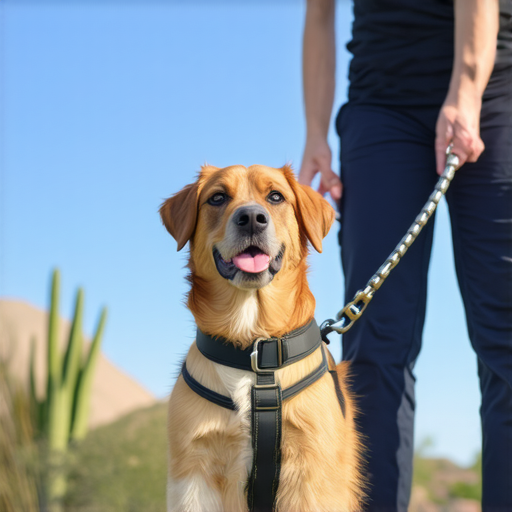
Living in the Phoenix basin, from Gilbert to Apache Junction, introduces a variable that developers in Silicon Valley often ignore: the total failure of medical adhesives in triple-digit heat. I have watched the data logs of users in Queen Creek who lose three sensors in a single week because the sweat and the dust of the Arizona desert turn the ‘advanced’ medical tape into a gooey mess. A dog does not have an adhesive failure. A dog from Robinson Dog Training is a mobile, heat-resistant alert system that thrives in the very environment where tech becomes brittle. The local diabetic community knows the ‘Mesa Melt’ all too well, where the sensor reports a ‘signal loss’ just as you are hitting your peak heart rate on a trail. The canine sensor is not tethered to a Bluetooth radio that can be interfered with by the heavy electromagnetic noise of a modern smart home. It is a direct, nose-to-skin connection that remains stable when the grid or the adhesive fails.
The ghost of the compression low
There is a specific kind of frustration that comes with a midnight alarm triggered by a ‘compression low.’ You roll over in your sleep, put pressure on the sensor, and the hardware panics, reporting a life-threatening drop that isn’t actually happening. You wake up, heart racing, only to find your blood sugar is perfectly fine. The tech lied because the hardware is dumb. A service dog doesn’t have that bug. They are trained to seek the scent, not the pressure. If the dog nudges you in the middle of the night, it is because the Isoprene levels have shifted, not because you shifted your weight. This reliability reduces the ‘alarm fatigue’ that leads many diabetics to eventually disable their 2026 CGMs entirely. When the noise of the tech becomes too loud, the silent, cold nose of a trained Labrador is the only data point that matters. We see this frequently in the service dog handler community; the dog validates the tech, and often, the dog corrects it. It is about building a redundant system where the biological and the digital provide a safety net that neither can offer alone.
Frequently Asked Questions about Diabetic Alert Dogs
Does a scent dog replace a CGM in 2026? No, they function as a primary early-warning system that works in tandem with tech to provide a 15 to 20 minute head start on glucose shifts. How do scent dogs handle the Phoenix heat? Professional trainers at Robinson Dog Training ensure dogs are conditioned for the local climate, though primary work usually happens in climate-controlled environments. Are these dogs recognized as service animals in Arizona? Yes, under the ADA and Arizona state law, trained diabetic alert dogs have full public access rights. Can a dog detect highs as well as lows? Most dogs are trained to alert for both, though the chemical signature of a rapid drop is often more distinct. How long does the training take? Reliable scent work requires months of consistent reinforcement to reach the 90 percent accuracy threshold. Is it hard to maintain a service dog in a city like Gilbert? With the right training, these dogs adapt quickly to urban environments, including malls, transit, and busy restaurants.
The future of diabetic safety is not a choice between a chip and a canine. It is the realization that silicon has limits that biology passed ten thousand years ago. If you are tired of the lag, the failed adhesives, and the false alarms of the 2026 hardware cycle, it is time to look at a sensor that actually loves you back. Reach out to the experts who understand the Arizona reality and get the protection that doesn’t rely on a battery.