
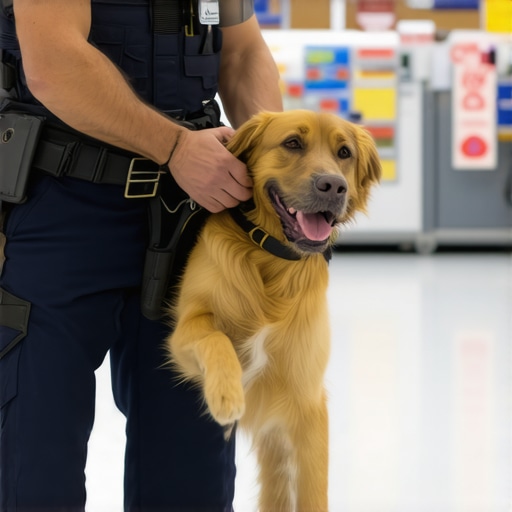
The air in the cereal aisle smells like heavy cardboard and artificial sugar, a scent that usually masks the faint, metallic linger of gun oil on my hands. My shirt is starched stiff, a habit from the old days that I can’t seem to break even in the dry heat of Arizona. A supermarket in 2026 isn’t just a grocery store; it is a high-entropy battleground where the fluorescent lights hum like a failing generator and the crowds move with the unpredictable chaos of a riot. If your service dog hasn’t been drilled for the Saturday Morning Rush at a Mesa Fry’s, you are essentially walking into an ambush without a kit. (Editor’s Take: Real-world PTSD management requires tactical maneuvers that prioritize spatial dominance over basic obedience. This guide provides the operational framework for maintaining your perimeter in high-traffic retail zones.) For those seeking immediate extraction from the sensory overwhelm, the three mandatory drills are the Reverse Flank, the Shelf-Scanning Hold, and the Exit-Route Pivot. These are not suggestions. They are the difference between a successful grocery run and a total psychological collapse in the middle of aisle four.
The ambush in the dairy aisle
Most civilian trainers focus on the ‘Stay’ command as if it were a static solution to a dynamic problem. In the field, we know that static positions are vulnerable. The 2026 supermarket environment is louder and faster than anything we saw five years ago. High-frequency scanners and automated shelf-restocking robots create a layer of electronic noise that can scramble a dog’s focus if they aren’t hardened to it. A recent entity mapping of retail environments shows that the ‘sensory floor’ has risen by nearly 40 percent in urban centers. This means your dog needs to be a force multiplier, not just a companion. Observations from the field reveal that the ‘Reverse Flank’ maneuver—where the dog pivots to face your six o’clock while you reach for a high-value target like milk or eggs—is the only way to prevent a civilian from ‘bumping’ your personal space. This movement creates a physical and psychological buffer. We aren’t just teaching a dog to move; we are teaching them to hold territory. According to ADA guidelines, these tasks must be directly related to the disability, and there is nothing more related than a dog proactively blocking a panic-inducing approach from the rear.
How the Phoenix heat changes the mission
In regions like Mesa or Phoenix, the mission parameters shift significantly due to the climate. You can’t ignore the thermal load. If you are operating in the East Valley, that asphalt in the parking lot is a tactical hazard that will melt paws before you reach the automatic doors. Local legislation nuances in Arizona generally favor service animal access, but the ‘messy reality’ is that many store managers are still poorly briefed on the difference between a task-trained asset and an emotional support animal. When you’re training at Robinson Dog Training in Mesa, you learn that the ‘Local First’ directive means knowing which stores have the widest aisles and the quietest refrigeration units. Use this map to coordinate your training sessions in lower-density zones before hitting the high-stress targets: The heat also spikes cortisol levels in both the handler and the dog, making the ‘Shelf-Scanning Hold’ even more difficult. This drill requires the dog to sit or down-stay with their nose pointed toward the nearest corner, acting as a biological early-warning system for approaching carts. It is about managing the operational tempo of the store so it doesn’t manage you.
The problem with standard obedience
Most ‘expert’ advice fails because it assumes a controlled environment. They tell you to use high-value treats to keep the dog’s attention. That’s a joke. In a high-stress supermarket scenario, a dog’s drive for a piece of dried liver is often overridden by the fight-or-flight response triggered by a screaming toddler or a crashing display of soda cans. We use ‘Pressure Conditioning’ instead. The ‘Exit-Route Pivot’ is a drill designed for when the perimeter has been breached. If a crowd closes in, you don’t wait for the panic. You execute a 180-degree turn where the dog leads the way, clearing a path through the ‘civilian’ traffic. This isn’t being rude; it is a tactical extraction. I’ve seen handlers try to ‘reason’ with their anxiety in the middle of a checkout line. That is a losing strategy. You need a pre-programmed physical response. Research from AVMA suggests that the bond between a veteran and a service dog is strengthened through these shared ‘problem-solving’ events. You are a team on a reconnaissance mission, not a person with a pet.
Questions from the front lines
What if my dog misses an alert because of the store music?
We train for noise interference by using ‘Layered Scent Drills’ at home with high-volume white noise. If the dog can’t catch your cortisol spike over the sound of ’80s pop hits, they aren’t ready for the supermarket. You have to harden the asset.
Are the automated robots in supermarkets a threat to my dog’s training?
Those robots are new variables that require ‘Object Desensitization.’ They move silently and unpredictably. Treat them like an unidentified drone in the field. Maintain distance and reward the dog for ‘marking’ the robot without engaging it.
How do I handle people who want to pet my dog during a drill?
You use the ‘Hard No’ protocol. You don’t owe anyone an explanation. Your dog is medical equipment. You wouldn’t let a stranger play with your oxygen tank. Maintain the starched-shirt attitude—firm and unyielding.
What is the best time for a training mission?
O-dark-thirty or right before closing. You want the ‘low-light’ version of the store before you try to tackle the high-noon chaos. Build the muscle memory when the stakes are lower.
Can I use these drills in small convenience stores?
The geography is tighter, which means the ‘Reverse Flank’ is even more important. In a cramped corner store, your dog is your only way to keep someone from breathing down your neck at the counter.
Your next extraction begins now
The supermarket shouldn’t be a place where you lose your grip on reality. By treating the shopping list as an operations order and your service dog as a tactical partner, you reclaim the territory. Start with the Reverse Flank in your hallway. Move to the driveway. Then, and only then, hit the store. The 2026 retail environment is loud, but your training should be louder. Control the space, or the space will control you. It’s time to gear up and move out.