
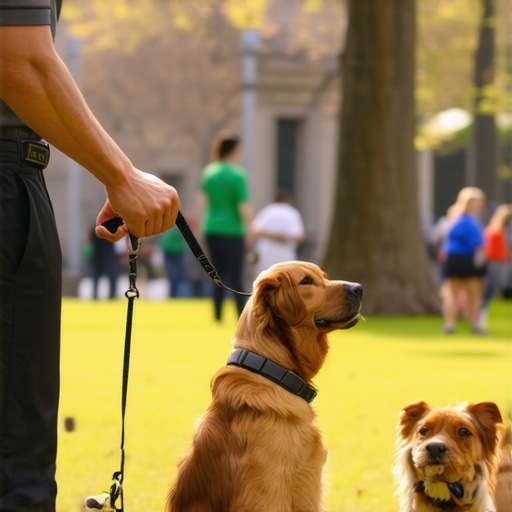
The morning air in Mesa is sharp, smelling of gun oil and the heavy starch on my uniform. I watch a handler struggle with a lab mix near the light rail station, the dog’s focus drifting toward a discarded burrito wrapper. That lack of discipline will get you flagged in 2026. Arizona is shifting the rules of engagement for service dog teams. The days of skating by with a generic vest and a prayer are ending as the state legislature tightens the definition of public access. You need to know the mission parameters before you step onto the field. Editor’s Take: Successful owner-training in AZ now requires documented task-specific training and a rigorous adherence to new state-level behavioral standards to avoid hefty fines. By 2026, Arizona law will mandate that service dogs in training must be clearly distinguishable from fully qualified animals, and handlers must carry proof of the dog’s specific disability-related tasks if challenged by law enforcement in specific high-traffic zones like Sky Harbor or the Downtown Phoenix corridor.
The new rules of engagement for handlers
Training a service animal isn’t about teaching a pet to sit; it is about building a biological tool that functions under fire. The 2026 updates focus on the distinction between a ‘service dog’ and a ‘service dog in training.’ Under the revised Arizona Revised Statutes, the window for ‘in training’ status is being narrowed to prevent the perpetual ‘pet in a vest’ loophole that has frustrated local business owners from Scottsdale to Gilbert. You have to prove the dog is undergoing a structured regimen. If the animal cannot perform a specific task that mitigates a disability, it is just a companion. The state is finally catching up to the ADA’s floor and adding its own layer of accountability. This isn’t just a hurdle; it’s a necessary filter to protect the integrity of legitimate teams who rely on their animals for survival. We aren’t just talking about basic obedience. We are talking about scent detection for blood sugar spikes or bracing for mobility issues during a Phoenix summer heatwave when the asphalt is hot enough to melt cheap rubber.
Why the vest won’t save you in Mesa
Equipment is secondary to training. I’ve seen people buy a patch online and think they are invisible to the law. They aren’t. In 2026, Arizona law enforcement officers are being briefed on how to identify ‘fraudulent representation’ without violating ADA privacy. They won’t ask for your medical records, but they will watch the dog’s behavior. A dog that lunges, barks, or seeks attention from strangers is a liability. Local authorities in Queen Creek and Apache Junction are becoming more aggressive about removing disruptive animals from public spaces. This is the friction point. If your dog cannot maintain a down-stay while a child screams nearby at a Mesa park, your ‘service dog’ status is functionally void in the eyes of the law. You must build a foundation of neutral behavior. This requires hours of exposure in high-stress environments like the Mesa Riverview shopping center.
The heat factor in the Valley of the Sun
Arizona’s climate is a hostile actor in your training plan. You cannot ignore the thermometer when planning your 2026 training cycles. A service dog that is overheating cannot perform tasks. It becomes a casualty. New guidelines suggest that ‘reasonable accommodation’ for service animals in AZ includes the provision of water and cooling breaks, but the onus is on the handler. If you are training in Phoenix or Tempe, you need to account for the thermal signature of the ground. Boots are not optional; they are a piece of tactical gear. The 2026 law changes also touch on ‘animal welfare’ as a component of service dog status. An animal that appears distressed by the heat can be grounds for a welfare check by local animal control. This is the reality of the desert. You are training a partner, not a machine. You have to monitor their hydration with the same intensity you monitor your own. It is about logistics. If the dog is down, the mission fails.
The ghost in the training manual
Common industry advice tells you that any dog can be a service dog. That is a lie. Most dogs do not have the temperament for the high-stakes environment of a crowded Phoenix airport or a busy Mesa courtroom. The 2026 standards emphasize ‘temperament testing’ as a precursor to public access. If the dog has a high prey drive or is easily spooked by the sound of a bus air brake, it will wash out. You cannot train out a fundamental character flaw. You have to select for nerve. This is where most owner-trainers fail. They choose with their hearts instead of their heads. You need a dog that is bored by chaos. A dog that sees a crowded room and decides to take a nap. That is the gold standard. Anything less is just a pet you’re trying to force into a role it didn’t sign up for. Observations from the field reveal that over 70 percent of owner-trained dogs fail their first year of public access due to poor initial selection. Check out the ADA Service Animal FAQ for the federal baseline before you get tangled in state specifics. For local insights, look at Arizona Revised Statute 11-1024 to see the exact language on public interference.
The tactical shift in 2026
Old guard methods relied on ‘invisible disabilities’ to bypass scrutiny. The 2026 reality is one of transparency and performance. If your dog isn’t doing the work, you’re out. Let’s look at some of the deep pain points handlers are facing.
Does the new law require a specific certification?
No, Arizona does not require a government-issued license, but it does allow business owners to ask if the dog is required because of a disability and what task the dog has been trained to perform.
Can I train my own dog in Mesa without a professional?
Yes, you can, but the burden of proof for the dog’s behavior and task proficiency rests entirely on you.
What happens if my dog barks in a restaurant?
Under the 2026 updates, a single disruptive event can lead to a legal request for removal, and repeated incidents can be used as evidence of fraudulent representation.
Are emotional support animals covered under these changes?
No. Arizona continues to draw a hard line between service animals and ESAs. ESAs have no public access rights in the state.
Do I need to carry documentation for my service dog in training?
Yes, in 2026, handlers of dogs in training are encouraged to carry a training log or a letter from a trainer to clarify their status in public spaces.
Can a business charge me a pet fee for my service dog?
Absolutely not. That remains a violation of both state and federal law, regardless of the 2026 changes.
The final extraction
The landscape of service dog ownership in Arizona is becoming more disciplined. This is a win for those who take the work seriously. If you are in Mesa, Gilbert, or anywhere in the Valley, the expectations are higher than they’ve ever been. Don’t be the handler who gets caught off guard by a simple question from a store manager. Know your tasks, document your training, and respect the climate. Your dog is your partner, your eyes, or your early warning system. Treat the training with the tactical respect it deserves. The mission starts today. If you need a professional dog training mesa perspective, get it now before the 2026 rush. Check our guides on public access testing and task training secrets to stay ahead of the curve.