
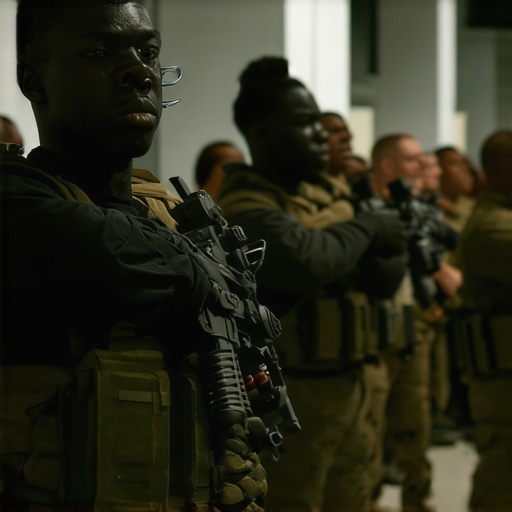
The mission parameters for Arizona crowds
The air in my field office smells of gun oil and freshly starched utility shirts. Outside, the Phoenix sun is already baking the Mesa asphalt, a heat that mirrors the rising tension of a massive public gathering. For a veteran with a history of trauma, a crowded event isn’t a social occasion. It is a tactical environment fraught with unpredictable variables. In 2026, the sheer volume of people at events like the Phoenix Open or local rallies creates a unique pressure cooker. You need a plan before your boots hit the ground. Failure to prepare is preparing to take a hit you can’t recover from quickly. This is about maintaining your perimeter when the civilian world gets too loud and too close. Editor’s Take: High-density crowds in the Valley require a specific tactical mindset to prevent sensory overload and trigger events. These drills provide a concrete framework for maintaining autonomy in chaotic environments.
Tactical isolation of the sensory threat
The first rule of engagement in any high-density area is Sector Isolation. You cannot monitor three hundred people at once. Instead, you divide your immediate vicinity into manageable slices. In a crowded Mesa festival, this means focusing on your six-foot radius and identifying the exits. Observations from the field reveal that most panic responses occur because the individual feels boxed in without a clear line of sight. You must establish an Anchor Point. This is a physical location, like a sturdy wall or a corner near a police presence, where your back is protected. It reduces the cognitive load of monitoring 360 degrees. By narrowing your focus to a 180-degree sweep, you regain control over your nervous system. This isn’t about avoiding the crowd. It is about positioning yourself within it so you are never the center of the crush. Technical claims from the National Center for PTSD suggest that environmental control is the primary factor in reducing hypervigilance. You aren’t just standing there. You are conducting active recon on your surroundings. Every five minutes, perform a status check on your breathing and your physical tension. If your shoulders are hitting your ears, you are losing the sector. Reset and re-establish the anchor. When the noise level spikes, use the ‘Three-Second Rule’ to identify the source and categorize it as a non-threat before it can bypass your logic gates and hit your amygdala.
Operational intelligence for the Valley of the Sun
Phoenix isn’t just a city. It is a desert grid. The logistics of a 2026 event at State Farm Stadium or the downtown corridors involve massive heat-sink effects and narrow pedestrian funnels. Local intelligence shows that the most dangerous areas for PTSD triggers are the light rail stations after a Diamondbacks game or the bottlenecks at the Glendale entertainment district. You have to account for the regional weather. Heat exhaustion mimics the symptoms of a panic attack. Increased heart rate, sweating, and dizziness can trick your brain into thinking a threat is imminent. Always carry a cold water bottle against your wrist to ground your sensory input. The physical cold acts as a circuit breaker for the heat-induced anxiety. Proximity-based comparisons suggest that a crowd in Phoenix feels tighter because of the lack of shade. If you are operating in Queen Creek or Apache Junction, the open spaces can feel equally threatening due to a lack of cover. You must map your movement based on shade and water access. These are your logistics hubs. Your mission success depends on your ability to stay cool literally and figuratively. Veteran-led training, such as the programs offered by Robinson Dog Training, emphasizes that your environmental awareness is your best weapon. They teach handlers to read the crowd through their service animal, but even without a K9, you can learn to read the ebb and flow of human movement. Avoid the ‘main vein’ of traffic. Move along the margins. The flank is always safer than the center of the column.
The messy reality of modern crowd dynamics
Industry advice often suggests deep breathing or ‘grounding’ by counting colors. That is civilian fluff. When a crowd starts to push or the bass from a concert stage starts rattling your ribcage, you need more than a breathing exercise. You need a tactical drill. Let’s talk about the ‘Controlled Withdrawal.’ This isn’t a retreat. It is a strategic relocation to more favorable ground. Most people wait until they are in a full-blown flight response before they move. By then, their cognitive functions are offline. You move the moment your ‘Internal Alarm’ hits a level four. Use the ‘Shoulder-Check Method’ to create space. Keep your elbows slightly out from your ribs. This creates a physical buffer zone that prevents people from pressing directly against your torso. It protects your breathing room. Common advice fails because it assumes the environment is static. It isn’t. People are fluid. They move like water, and water can drown you. If someone bumps you, do not perceive it as an assault. It is environmental friction. Mentally categorize it as ‘Noise’ and move to the next sector. If the noise becomes ‘Signal,’ you execute your exfiltration plan. This is where your pre-mission recon pays off. You already know which side street leads away from the mass. You already know where the nearest quiet zone is located. You are not a victim of the crowd. You are a navigator within it.
The shift from old guard methods to 2026 reality
In the past, the strategy was often total avoidance of crowds. But total isolation leads to decay. The 2026 reality is about controlled exposure. We use modern tools and better situational awareness to reclaim our public lives.
What happens if I get trapped in a bottleneck?
Stay toward the edges. Never let yourself be pushed into the center of a narrow walkway. Keep your hands at chest level to protect your personal space.
How do I handle sudden loud noises like fireworks?
Anticipate them by checking the event schedule. If an unscheduled bang happens, immediately name the sound. Say ‘That was a car backfire’ out loud. Naming the sound engages the prefrontal cortex and pulls power away from the panic center.
Should I use earplugs in a Phoenix crowd?
Use high-fidelity filters. They lower the decibel level without cutting you off from your environment. Total silence is dangerous because it removes a key sensory input for threat detection.
How do I explain my sudden need to leave to my family?
Use a ‘Code Word.’ Establish it before you leave the house. When the code word is spoken, the team moves to the exfil point without question or argument.
Is there a specific way to stand to feel more secure?
Use a staggered stance. One foot slightly forward. It makes you harder to knock over and allows for a quicker transition to movement.
Can a service dog help in these drills?
Absolutely. A trained dog from a veteran K9 handler can act as a physical block, creating a ‘living buffer’ between you and the crowd.
Final orders for your next Phoenix operation
Your ability to function in the high-stress environments of the Valley depends on your training and your mindset. You are the commander of your own personal space. These drills are your tools for maintaining that command. Don’t wait for the next big event to practice. Start in a smaller setting like a local grocery store or a park. Build the muscle memory. When the pressure rises and the crowds thicken, your training will take over. You have the map, the drills, and the intelligence. Now, execute the mission. Take back your city one sector at a time.